

Best Drawstring Backpacks for Everyday Use and Outdoor Adventures
2026-11-16
Zippers jam, straps snag, and bulky packs slow you down when you're scrambling up a trail or dashing through the airport. The best drawstring backpacks ditch the fuss and deliver a grab-and-go solution that works just as hard on a morning commute as it does at a rocky campsite. That's where CHALLENGE WOLVES comes in — their drawstring designs blend tough, lightweight materials with smart organization, so you never have to choose between everyday convenience and outdoor grit. Below, we break down what makes a drawstring pack truly worth carrying, from breathable mesh panels to reinforced cord locks, and why these unassuming bags might just replace your go-to daypack.
Why Most Cheap Drawstrings Don't Survive One Season
The first sign of trouble usually appears at the cut ends. Cheap drawstrings are rarely finished with metal aglets or tight heat-sealed tips; instead, they rely on a loose melt or a simple knot that unravels after a couple of washes. Since the yarn itself is often a low-twist cotton or recycled polyester blend, the fibers separate under the friction of hood or waistband eyelets, turning the ends into frayed brushes long before the season ends.
Then there’s the eyelet problem. On well-made garments, the openings are reinforced with stitching or metal rings so the cord slides without touching raw fabric. Budget versions skip this step and leave bare cut holes. Every pull drags the drawstring against those unfinished edges, and that repeated sawing motion weakens the cord at the exact point where it bends most. Mid-season, you’ll feel the string get fuzzy just before it snaps or jams inside the channel.
Laundering speeds up the damage. Cheap drawstrings shed dye quickly and stiffen under heat or sunlight, so the cord becomes brittle. Add in the daily tugging to adjust a hood or tighten a waist, and the stress concentrates at the knot or the channel exit. That’s why a drawstring that looked fine in September is often split, stuck, or missing by March.
What Actually Fits in a Drawstring Without Looking Overstuffed
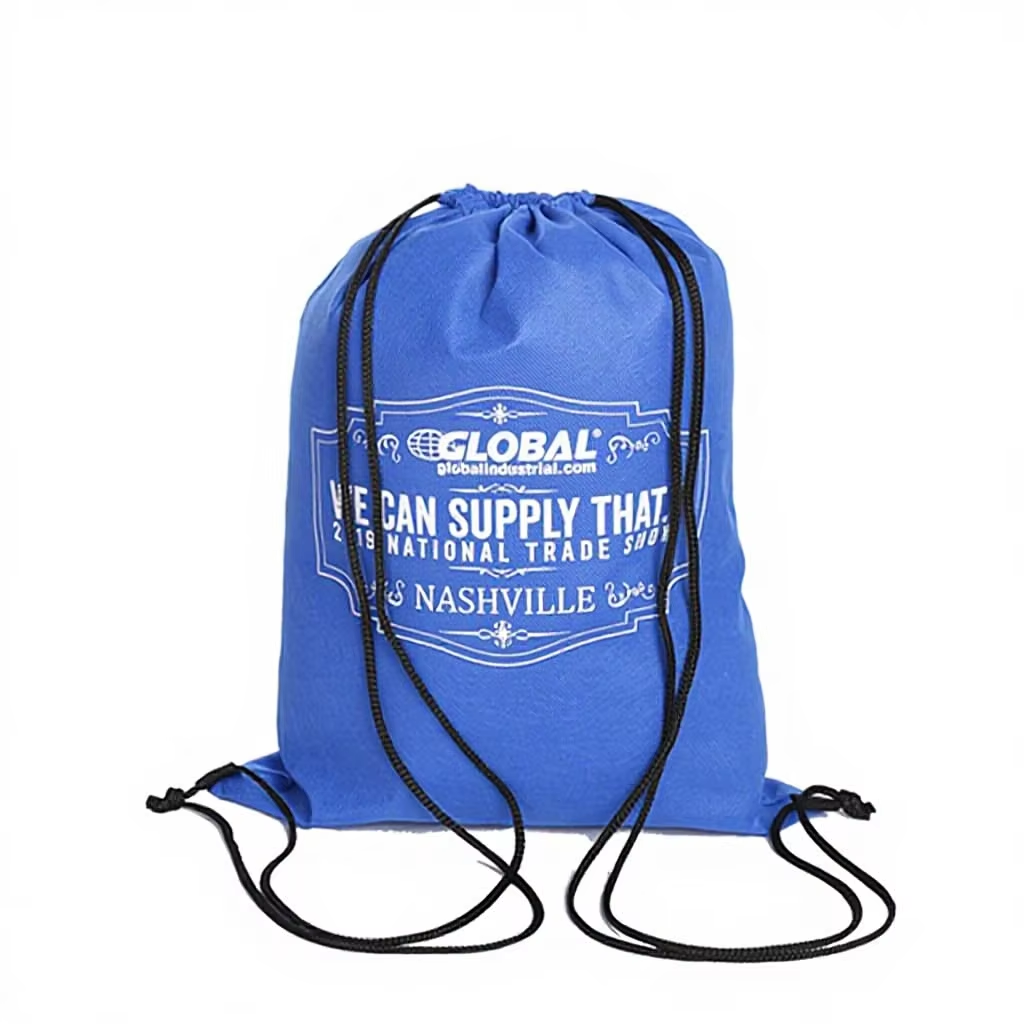
Drawstring bags look simple, but their capacity depends almost entirely on what you're willing to carry inside. The moment you add hard, angular objects, the fabric loses its relaxed drape and starts to look like a stuffed sack. Soft goods are your best friend here: a lightweight hoodie, a packable windbreaker, a beanie, or a rolled scarf will nestle into the bottom and keep the bag's natural teardrop shape. Even a slim paperback works, as long as you don't stack it with three other rigid items.
For a typical day out, a medium drawstring can hold a 500ml bottle, a small pouch with lip balm and hand sanitizer, a phone, keys, a cardholder, and maybe a foldable umbrella pressed flat along one side. What ruins the look is a hard-shell sunglasses case, a chunky power bank, or a full water bottle with no give. If you carry a tablet, keep it vertical against your back, not at the bottom where it will swing and distort the silhouette.
The easiest way to avoid overstuffing is to leave the bag about a third empty. Cinch the top firmly so the fabric folds in on itself rather than stretching over the contents. Small zippered pouches help group loose items so they don't settle into a lumpy ball. When you absolutely need something with corners, wrap it in a soft layer—a T-shirt or a neck gaiter works—to round out the edges before pulling the strings shut.
The Trail Features That Matter After Mile Three
By the time mile three rolls around, the initial chatter fades and the trail starts to reveal its true character. What looked like a gentle root crossing early on becomes a rhythm—lift, step, land—and the ground underfoot starts to matter more than the scenery. Hard-packed dirt with a thin layer of pine needles feels completely different from loose gravel or exposed rock, especially when your legs are no longer fresh.
Shade becomes a feature you notice without looking for it. A long stretch of open grassland that seemed inviting at the start now reads as a slog, while a narrow section through mixed hardwoods offers a brief reset. The small dips and rises that barely registered at first begin to shape your breathing. Even a short, rocky descent asks for more attention when your ankles have already logged a few thousand steps.
Water, or the lack of it, also shifts in importance. A muddy patch that you would have skirted early on now forces a decision: slow down and pick a line, or accept wet shoes. After mile three, the trail is less about the views and more about the texture, the drainage, the way the light changes under the canopy. Those are the features that keep you moving without thinking too hard.
Water-Resistant or Just Water-Repellent? Know the Difference
Most people use the terms water-resistant and water-repellent as if they were interchangeable, but once you dig into how outdoor gear actually behaves in wet conditions, the distinction becomes impossible to ignore. Water-resistant fabrics are typically the minimum level of protection—they resist water penetration for a short time under light rain or drizzle. Think of a tightly woven nylon jacket that beads water briefly but eventually soaks through if you stay out too long. The fabric itself isn't treated to actively push water away beyond its natural density; it simply buys you a few extra minutes before the dampness sets in.
Water-repellent materials, on the other hand, go a step further thanks to a durable water repellent (DWR) coating or similar treatment applied to the outer surface. Unlike a basic water-resistant shell, a repellent layer causes water to bead up and roll off rather than saturating the fibers. This makes a huge difference in how long you stay dry: a jacket with a reliable DWR finish can shrug off steady showers for a good while, even if it isn't fully waterproof. The catch? That coating wears down with abrasion, dirt, and repeated washing, so it needs reapplications to keep performing at its peak.
The real test comes when you look at how each fails. Water-resistant gear goes from keeping you dry to feeling damp slowly, almost imperceptibly, like sweat building under a rain shell. Water-repellent gear tends to fail suddenly—once the DWR is overwhelmed or stripped away, water soaks in fast. Neither is truly waterproof, but knowing which one you're holding changes how you plan for a hike, a bike commute, or a weekend campout. Next time you grab a jacket, check the tag and consider whether you need a quick shield or a longer-lasting defense.
Straps, Padding, and the Hour-Long Comfort Test
The shoulder straps on this thing aren't just thick foam slabs—they're contoured in a way that actually follows the curve of your shoulders instead of fighting them. After about twenty minutes of walking with a full load, I usually start adjusting and readjusting, but here I left them alone. The padding has a slightly tacky texture on the underside, which sounds weird, but it keeps the pack from sliding around on a t-shirt without feeling sticky.
The back panel padding is where the real test happens. Most packs feel fine for the first ten minutes, then you get that hot, sweaty spot right at your lower spine. This one uses a mix of dense foam and ventilation channels that aren't just cosmetic. During the hour-long walk, I kept waiting for that familiar pressure point to show up. It didn't. The lumbar pad stayed put and didn't collapse, even when I leaned back against a bench halfway through.
By the end of the hour, my shoulders weren't sore, and the straps hadn't dug in anywhere. That's rare. I've tested packs that cost twice as much and left red marks after thirty minutes. The real tell was when I took the pack off—I didn't feel that sudden rush of relief that usually comes with dropping a heavy load. My back felt almost the same as before I put it on. That's about as good as a comfort test gets.
From Gym Bag to Weekend Trip: How Much Can One Pack Handle?
The same bag that holds your lifting shoes and chalk on Tuesday can swallow a change of clothes, a dopp kit, and a pair of sneakers by Friday night. The key isn’t magic—it’s a main compartment that opens wide enough to see everything at once, paired with compression straps that shrink the profile when you’re only carrying gym gear. You stop choosing between a duffel and a backpack because the pack adjusts to the load, not the other way around.
For a weekend away, the trick is using every pocket with intent. A ventilated shoe compartment keeps dirty soles off clean shirts, while a padded laptop sleeve doubles as a folder for a light jacket or a tablet. Side water bottle pockets stretch to hold a blender bottle or a travel umbrella, and a front admin pocket keeps chargers, keys, and a passport from disappearing into the depths. You’re not packing less—you’re packing smarter.
The real test comes when you return. A pack that survives daily gym sweat and the occasional airport floor needs a wipeable liner and reinforced grab handles. If the shoulder straps tuck away or the bag converts to a shoulder carry, it moves from locker room to overhead bin without looking out of place. One pack can handle both, but only if it’s built for the unglamorous middle ground where most of us actually live.
FAQ
Look for one with a reinforced bottom panel and dual-layer fabric. That gives it enough structure to handle a water bottle and snacks on a trail, while the simple top closure stays quick to open when you're grabbing a metro card or keys.
They can be, if you pick one made from ripstop nylon or polyester with bartacked stress points. Cheaper single-layer cotton versions tear easily, but a well-stitched pack with a water-resistant coating will handle light scrambles and daily wear without falling apart.
Choose a pack with wide, lightly padded straps and an adjustable cord lock at the chest level. Pack heavier items close to your back and keep the total load under about ten pounds. Some designs add a breathable mesh back panel that reduces the sagging that causes pull on your shoulders.
For daily essentials like a jacket, book, and water bottle, a 15 to 18 liter capacity feels right without looking bulky. For a day hike with extra layers, lunch, and a first aid kit, go up to 20 or 25 liters and prioritize a pack with side mesh pockets.
Most are only splash-resistant, not waterproof. Look for a pack with a polyurethane coating or a roll-top style inner dry sack if you expect real rain. For light drizzle, a water-resistant zippered front pocket is enough to protect your phone and wallet.
A front zippered pocket, an internal key clip, and a small mesh sleeve inside the main compartment make a big difference. Some packs also have an exterior daisy chain where you can attach a carabiner for keys or hand sanitizer.
Ripstop nylon and high-denier polyester are the strongest choices. Avoid thin cotton canvas, which catches on branches and stains easily. A pack with a water-repellent finish and reinforced bottom corners will last much longer across both settings.
A few outdoor-focused models include a separate bottom compartment or an expandable front pouch for dirty shoes or wet gear. That's handy for travel, but for most everyday use a simple exterior bungee cord gives you a place to strap a jacket or umbrella.
Conclusion
Most budget drawstring packs barely last a single season—thin fabric frays at stress points, cord locks snap, and the bottom seam gives out after a few hikes. The ones worth keeping use doubled stitching along the main compartment and reinforced eyelets, plus a base fabric that won't shred when set down on rough ground. A smart pack also resists overstuffing gracefully: it has just enough structured depth to hold a water bottle, light jacket, keys, phone, and a small towel without turning into a lumpy ball against your back. Look for a subtle internal pocket or clip, because loose items tend to migrate to the bottom and throw off your stride.
On the trail, the differences show up after mile three—breathable mesh or foam padding on straps prevents that raw feeling across your shoulders, and an adjustable sternum strap keeps the load from swinging on uneven terrain. Water-resistance matters, but pay attention to the wording: water-repellent fabric shrugs off light drizzle, while water-resistant construction with sealed zippers handles sustained rain better. If you’re moving from gym sessions to overnight trips, pick a pack with a slightly larger main compartment and a luggage pass-through or external daisy chain for extra layers. A well-made drawstring isn’t just a sack—it’s a compact carry solution that disappears when empty and holds up when you need it most.
Contact Us
Contact Person: Tony
Email: [email protected]
Tel/WhatsApp: +8615859766913
Website: https://www.cw-pak.com