

Best High-Temperature Magnets for Reliable Performance in Hot Environments
2026-07-31
When temperatures soar, ordinary magnets lose their grip—literally. In industries where heat is as much a constant as the machinery itself, finding magnets that hold their strength isn’t just a preference; it’s a necessity. Whether you’re designing motors for deep-well drilling or assembling actuators for aerospace, the right high-temperature magnet can mean the difference between seamless operation and costly failure. At DAWA, we’ve spent years perfecting magnetic materials that laugh in the face of extreme heat, delivering uncompromising performance when it matters most. Curious how these thermal-tough magnets keep their cool? Let’s dive into the science and solutions that make it possible.
What Makes a Magnet Suitable for Scorching Temperatures?
The core of high-temperature magnetism lies in a material's Curie point—the threshold where thermal agitation overpowers magnetic alignment. Standard magnets lose their grip long before the red heat fades, but specialized alloys push that boundary much higher. Samarium cobalt, for instance, holds its coercivity well past 500°C, while certain alnico grades can function near 850°C. The secret isn't just one property; it's a delicate trade-off between crystal structure stability and the intrinsic magnetic moments that resist being randomized by heat.
Beyond basic composition, the way a magnet is manufactured plays a decisive role. Controlled cooling during casting can create anisotropic grain structures that lock magnetic domains into place, making them less susceptible to thermal disruption. Some magnets undergo a multi-step aging process that precipitates fine particles within the matrix, pinning domain walls and elevating the maximum service temperature. It's these microstructural nuances that separate a part that demagnetizes after one cycle from one that endures thousands of thermal cycles without significant loss.
Real-world suitability also depends on how the magnetic circuit is designed. In motors or generators facing extreme heat, a longer magnetic path length can reduce the demagnetizing stress, allowing a lesser grade to survive. Coatings matter too—nickel plating may peel at high temperatures, while a thin aluminum or ceramic coating preserves the underlying alloy. Ultimately, selecting a magnet for scorching conditions means looking past just the material datasheet and considering the entire operating environment, from transient heat spikes to the rate of oxidation over time.
Samarium Cobalt: Built for Heat Without Losing Strength
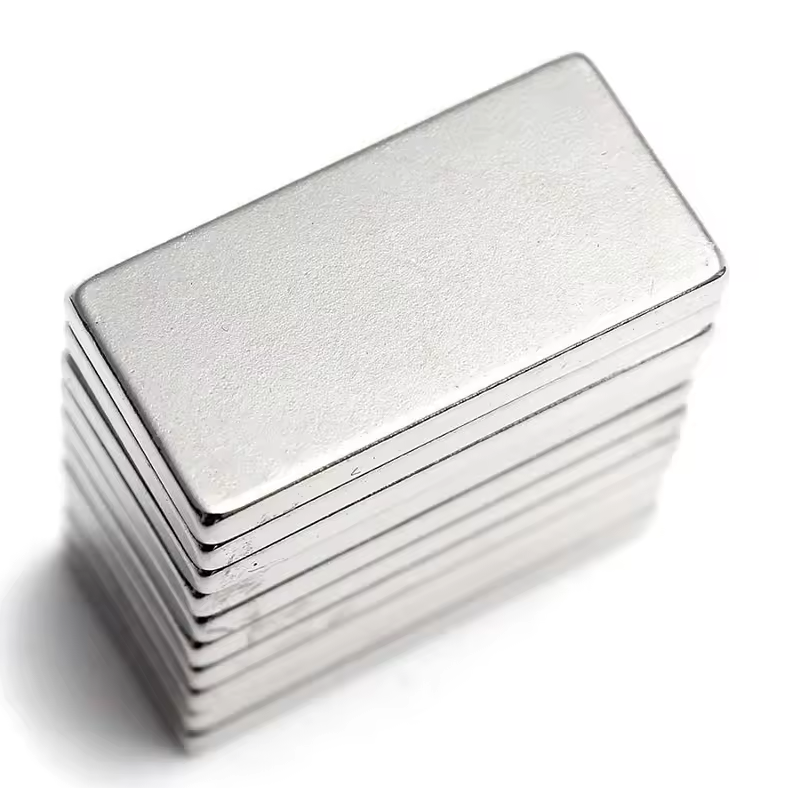
When ordinary magnets start to falter under extreme thermal loads, samarium cobalt holds its ground. Its unique crystalline structure resists demagnetization even at temperatures soaring past 300°C, making it a go-to choice for aerospace, military hardware, and high-performance motors where cooling isn't an option. Unlike neodymium-based magnets that require additional coatings or elaborate cooling systems to survive the heat, SmCo alloys are naturally unfazed, maintaining nearly full magnetic output when others would long be rendered useless.
What sets SmCo apart is not just its heat tolerance but the way it retains mechanical integrity. Many high-temperature materials become brittle or lose structural stability—samarium cobalt stays remarkably stable. This dual resilience, both magnetic and physical, allows engineers to design slimmer, lighter assemblies without sacrificing reliability. In downhole drilling tools or satellite actuators, where every gram counts and failure is not an option, that blend of thermal toughness and consistent performance turns SmCo from a specialty material into a strategic advantage.
Of course, working with SmCo brings its own considerations. It’s intrinsically more brittle than some alternatives, demanding careful handling during machining and assembly. Yet, for applications where heat is the greatest enemy, the trade-off is often well worth it. The material doesn’t just survive in hot environments—it thrives, delivering unwavering magnetic force year after year without the gradual decay that plagues lesser magnets in similar conditions.
Alnico Magnets: The Old-School Choice with Thermal Grit
Alnico magnets have been around since the 1930s, and there’s a reason they’re still in use today. Their recipe—aluminum, nickel, cobalt, and a dash of iron—gives them a distinctive combination of resilience and heat tolerance that newer magnets can’t always match. While neodymium might steal the spotlight for raw strength, alnico holds its own in environments where temperatures soar, keeping its cool (and its magnetism) when others would start to falter.
One of the standout features is how unfazed they are by extreme heat. Some grades can function at over 500°C without losing significant magnetization, making them the go-to for applications like industrial sensors, military equipment, and even classic guitar pickups. There’s a certain charm in their ability to shrug off thermal punishment—it’s like they were forged in fire and came out tougher.
Not everything about them is perfect, of course. They’re more prone to demagnetization if handled roughly, and their coercivity is lower than rare-earth alternatives. But in the right niche, where stability over a wide temperature range matters more than sheer pull force, alnico still earns its keep. It’s not so much outdated as it is purpose-built—a testament to how solid engineering doesn’t always need to be flashy.
How Neodymium Holds Up When Things Get Hot
Neodymium magnets are famed for their brute strength at room temperature, but crank up the heat and things get interesting. Most standard grades start to lose their magnetic mojo once the thermometer climbs past 80°C (176°F). The culprit? Thermal agitation jostles the neatly aligned magnetic domains, weakening the overall field. For casual applications like fridge magnets or hobby projects, this might not matter much—but if you're designing a motor or sensor that lives in a hot environment, you'll need to choose wisely.
To survive the sizzle, specialty high-temperature neodymium grades step into the ring. By tweaking the alloy with additions like dysprosium or terbium, magnets can maintain useful output well above 150°C (302°F). Some even push toward 230°C (446°F) before irreversible losses set in. The trade-off? A bit of that legendary pull gets sacrificed at room temperature. It's a classic balancing act: raw power versus thermal grit.
Real-world heat exposure often leaves a permanent dent in performance. After baking at elevated temperatures and cooling back down, a magnet might not recover fully—a phenomenon known as irreversible flux loss. Worse, prolonged exposure can accelerate corrosion, especially if protective coatings crack under thermal cycling. Pairing the right grade with effective heat management often separates a durable design from a ticking failure.
Design Tweaks That Keep Magnets Reliable in Extreme Heat
High temperatures can rapidly degrade a magnet’s performance, causing partial or total loss of magnetization. This occurs as thermal energy disrupts the alignment of magnetic domains, pushing the material toward its Curie point. Even before reaching that threshold, temporary losses can affect precision in motors or sensors. Thoughtful engineering counteracts these effects, ensuring stable output without oversizing the magnet.
Material choice is the first line of defense. Samarium-cobalt alloys handle heat better than neodymium-iron-boron, sustaining field strength well past 300°C. Geometric tweaks also matter: a thicker magnet in the direction of magnetization resists demagnetization more effectively. Shaping the component to minimize sharp corners reduces local stress concentrations that accelerate flux loss. Protective coatings, like aluminum or nickel, shield against oxidation at elevated temperatures, while some designs integrate small cooling channels or thermally conductive housings.
Real-world solutions often blend several adjustments. In automotive traction motors, segmented magnets with graded compositions maintain torque density under hood. Aerospace actuators might use hybrid arrays where a high-temperature ring section stabilizes a more heat-sensitive core. Testing these designs under cyclical thermal loads validates long-term reliability, revealing subtle degradation mechanisms that static models miss. With the right combination, magnets can operate dependably in environments that would quickly render standard grades useless.
Picking the Right Hot-Environment Magnet Without Overcomplicating It
When heat is part of the equation, not all magnets hold up the same way. The go-to options for high temperatures are usually samarium cobalt or certain grades of neodymium, but the choice depends on more than just the maximum temperature rating. You also have to consider how the magnetic strength drops as things heat up and whether it bounces back when cooled. Samarium cobalt tends to maintain its performance better across a wide temperature range, making it a solid pick for applications where consistency matters.
Another factor that often gets overlooked is the magnet's shape and coating. In hot, harsh environments, some coatings can degrade or outgas, causing contamination or performance issues. For instance, standard nickel plating might flake off at elevated temperatures, so opting for a more robust protective layer or a material that naturally resists corrosion can save you headaches down the line. It's also worth thinking about the mechanical design: a magnet that's physically larger or arranged in a certain way can compensate for the loss in strength that comes with higher temperatures.
At the end of the day, you don't need a deep dive into hysteresis curves to make a decent choice. Focus on the actual operating temperature, the required pull force at that temperature, and the environmental exposure. A quick chat with a supplier or a glance at a clear derating chart usually points you in the right direction without overthinking it.
FAQ
Samarium cobalt (SmCo) magnets are typically the top choice for continuous high-temperature applications. They can handle temperatures up to 350°C without significant loss of magnetic strength. Alnico magnets are another option, handling even higher temperatures up to 525°C, though they are easier to demagnetize.
Neodymium magnets generally start losing strength around 80°C, and standard grades fail quickly above 150°C. High-temperature grades exist, but they still pale compared to samarium cobalt, which retains properties over 300°C. SmCo also has a much lower reversible temperature coefficient, meaning its magnetic output changes less with temperature swings.
Alnico magnets can function well beyond 500°C, with some grades rated up to 525°C. However, they have low coercivity, so they can be demagnetized easily if not handled properly. They're often used in sensors, automotive ignitions, and aerospace where stable flux over a wide temperature range is more important than raw pull strength.
Yes, ferrite magnets are a budget-friendly option for moderate high-temperature needs, typically up to 250°C. Their magnetic output actually increases slightly with temperature up to a point, then drops off. They're corrosion resistant and often used in motors and loudspeakers, but their overall strength is much lower than rare-earth types.
For critical motor applications above 200°C, samarium cobalt is the standard. Grade Sm2Co17 offers higher magnetic strength and better thermal stability than SmCo5. Make sure to account for the irreversible loss if the magnet will cycle near its maximum operating temperature—pre-stabilizing by thermal aging can help lock in long-term performance.
You need to look at the entire magnetic circuit and consider the magnet's coercivity, the reversible temperature coefficient, and the specific demagnetization curves at the target temperature. Also think about mechanical stresses, as materials expand differently, and whether the environment has vibration or corrosive elements. Sometimes a lower cost magnet with a larger cross-section can handle the job if you design around its thermal limits.
Conclusion
When temperatures climb, ordinary magnets quickly lose their grip, making material choice the foundation of reliable hot-environment performance. What truly defines a magnet's heat tolerance is its Curie temperature and, just as critically, how much of its room-temperature strength it retains as the mercury rises. Samarium cobalt stands out as the go-to for brutal, sustained heat—think 350°C and beyond—where it shrugs off demagnetization and oxidation without protective coatings. Alnico may seem old-fashioned, but its unrivaled stability up to 550°C and linear, predictable loss of magnetism make it invaluable in legacy sensors and high-shock equipment that can't afford sudden failure. Neodymium magnets, often dismissed for high-heat use, can actually be tailored with hefty coercivity grades (like N40SH or higher) and operate reliably around 150–230°C if designers account for their sharper degradation curve.
Beyond chemistry, clever engineering makes all the difference. Simply oversizing a magnet, embedding it in a flux-concentrating circuit, or adding a strategic thermal barrier can offset the loss of strength at temperature without switching to exotic alloys. Smart design also means recognizing that the highest-rated magnet isn’t always the best fit—balancing cost, corrosion resistance, and mechanical toughness avoids overcomplicating the selection. In practice, a mixed approach often wins: use samarium cobalt for the searing core, alnico where historic retrofits demand it, and cost-effective high-grade neodymium for peripheral parts. The real art is matching the magnet’s temperament to the thermal rhythm of the application, ensuring that performance stays predictable long after the heat is on.
Contact Us
Contact Person: Kelvin Lo
Email: [email protected]
Tel/WhatsApp: 0769-88561131
Website: https://dawamagnetic.com/