

Best Prefabricated Substation Supplier for Your Next Power Project
2026-08-31
Choosing the right prefabricated substation supplier can make or break your power project. With so many options claiming reliability, how do you separate the truly exceptional from the merely adequate? Whether you're upgrading an industrial facility or launching a large-scale renewable energy site, the speed, safety, and long-term performance of your electrical infrastructure depend on this one decision. This guide cuts through the noise to highlight what actually matters—and why forward-thinking engineers increasingly turn to CNKEEYA for modular substation solutions that don't just meet specs, but exceed them in the field. Here’s what to look for before you sign off on your next supplier.
How Prefabricated Substations Cut Project Timelines
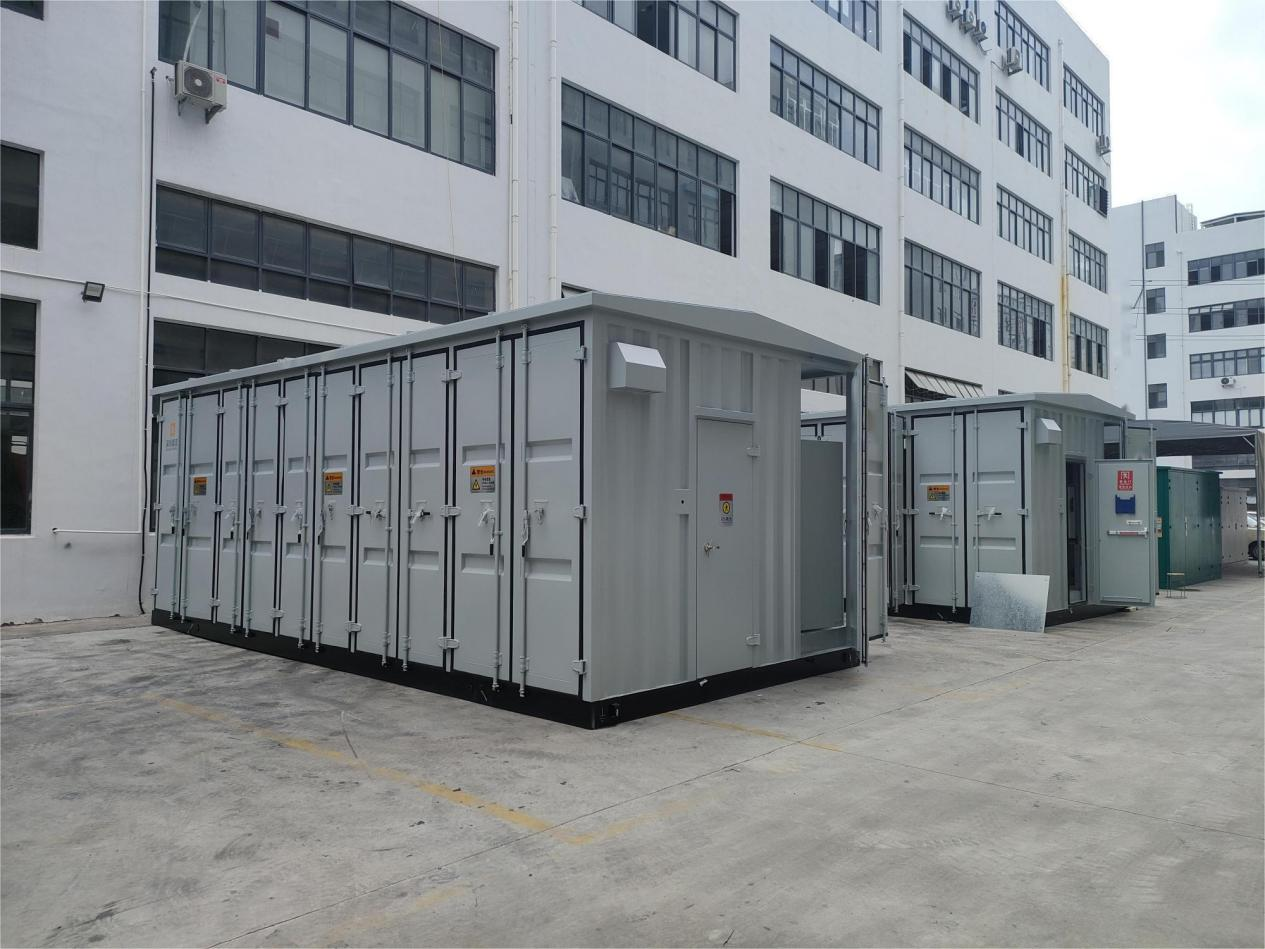
Traditional substation construction often drags on for months due to on-site civil work, weather delays, and sequential equipment installation. Prefabricated substations flip this model by assembling the entire unit—switchgear, transformers, protection panels, and wiring—inside a controlled factory environment while site preparation happens in parallel. Once the foundation is ready, the pre-tested module arrives on a flatbed truck, gets lifted into place, and is connected within days rather than weeks.
The time savings compound when you consider commissioning. Because every component is wired and tested before leaving the factory, field engineers skip the usual troubleshooting phase that plagues stick-built projects. One utility reported cutting a 14-month schedule down to just under five months by shifting to a skid-mounted substation design. For renewable energy projects racing to meet interconnection deadlines, that difference can mean the gap between securing a power purchase agreement and paying liquidated damages.
Beyond the obvious speed advantage, prefabrication also reduces the number of subcontractors needed on site. There is no need to coordinate separate crews for concrete, steel erection, electrical work, and control wiring over multiple visits. Instead, a small team can handle the entire installation in a single mobilization, further shrinking the timeline and the risk of scheduling conflicts that often push projects past their completion dates.
Questions to Ask Before Committing to a Supplier
Dig past the polished sales deck and ask how they behave when things go sideways: what happens if a critical component arrives late, how they handle a batch that fails inspection, and who actually owns the fix when your order is stuck in customs. The answers that matter usually come with specific examples—dates, quantities, cost overruns—not promises of “world-class service.”
You’ll also want to pin down their capacity during your peak season, not just their average output. Ask to see the production schedule for the line your order would run on, and listen for whether they mention raw material buffers or backup operators. A supplier that can walk you through their constraints honestly is worth more than one that claims unlimited flexibility.
Design Flexibility That Adapts to Site Constraints
A sloped lot, a stand of protected oaks, a utility easement slicing diagonally across the buildable area — these are not obstacles to be flattened or erased. The design starts by reading them as fixed points on a map, then lets the floor plan bend, split, or step to meet them. One wing shifts two degrees off the main axis so the living room frames a single tree instead of a fence line. A retaining wall becomes a bench, a required setback turns into a narrow garden.
This approach rejects the idea that every site must be forced into a standard rectangle. Materials and structural systems are chosen for their ability to handle irregular spans and modest bearing points, which means fewer over-engineered transfers and less wasted space. The result is a building that feels inevitable to its location — as if it grew out of the topography rather than being lowered onto it.
Flexibility here is not about adding extra rooms or movable partitions. It is about accepting that a site's constraints — drainage, access, solar exposure, neighboring windows — carry their own logic. When that logic is given priority early, the final layout often needs less conditioning, fewer retaining structures, and fewer compromises later.
The Hidden Costs of Choosing the Wrong Partner
When a partnership starts to wobble, most people tally up the obvious losses—money spent, time wasted, deals gone sour. But the real damage often hides in less visible places. The wrong partner quietly drains your energy through constant second-guessing, forces you to build workarounds for their gaps, and gradually narrows your appetite for taking healthy risks. That slow erosion doesn't show up on a balance sheet, yet it ends up costing far more than any direct expense.
There's also the social and reputational bleed. Every misaligned decision or delayed response reflects on you, even if your partner was the bottleneck. Clients and colleagues rarely distinguish between who caused the friction; they simply feel the friction. Over time, that accumulated friction can push away opportunities that would have otherwise flowed naturally. Rebuilding a reputation after such a partnership is often twice as hard as building it fresh, because you're not just starting from zero—you're digging out from a deficit of trust.
Perhaps the steepest hidden cost is the lost version of yourself. Months spent managing someone else's inconsistency or lack of commitment teach you to be smaller, to double-check everything, to stop believing in the upside of collaboration. When you finally walk away, you may find that you've absorbed habits of caution and defensiveness that take years to unlearn. The wrong partner doesn't just take your resources; they quietly reshape your instincts, and that change lingers long after the contract ends.
Real-World Performance in Harsh Environments
On an offshore drilling rig or deep inside a mine, equipment isn’t just expected to work—it’s expected to survive. Salt-laden air corrodes exposed metal, sudden temperature swings cause seals to crack, and constant vibration loosens every fastener. Real-world performance here means running shifts without unscheduled downtime, not just passing a lab spec sheet.
Harsh environments punish weak points relentlessly. Dust and abrasive particles work their way into moving parts, while thermal cycling from -40°C nights to +50°C days stresses circuit boards and solder joints. Vibration isn’t a gentle hum either; it’s the relentless pounding of rock crushers or wind gusts hammering a pole-mounted sensor. Components that thrive in these conditions are engineered with wide temperature tolerances, conformal coatings, and mechanical designs that lock connections in place rather than relying on adhesive alone.
Field data from remote monitoring stations tells the real story. Units installed on Arctic pipelines or desert solar farms often log years of continuous operation without a single failure, even when maintenance windows are measured in months. That kind of durability doesn’t come from chance—it comes from testing prototypes under accelerated life cycles that replicate salt fog, thermal shock, and multi-axis vibration simultaneously. When a device keeps reporting accurate data through a sandstorm or a polar vortex, that’s the benchmark that matters.
What a Seamless Delivery Process Actually Looks Like
A seamless delivery process begins long before the package leaves the warehouse. It starts with precise inventory sync across every channel, so a customer never orders something that isn't actually on the shelf. When an order comes in, the system automatically routes it to the nearest fulfillment center that has the item in stock, cutting down on transit time and unnecessary handling. The label is generated instantly, the pick list is optimized by aisle and bin location, and the item is packed using the smallest box that still protects the product—no wasted space, no wasted tape.
From there, the real magic is what the customer doesn't see: real-time tracking updates that actually reflect where the package is, not just a generic “in transit” status. Carriers are selected based on live performance data, not a fixed contract, so if one route is delayed by weather or a backlog, the package shifts to a faster lane automatically. Notifications go out only when there's something meaningful to say—out for delivery, handed off, at the door—instead of flooding the inbox with noise. If something does go wrong, like a damaged box or a missed handoff, the recovery process kicks in without the customer needing to call and explain the whole story.
The final mile is where most processes fall apart, but a seamless one treats the doorstep as part of the flow. Drivers have clear delivery instructions, photo proof of drop-off, and a quick way to report issues. The customer gets a simple, honest note with the photo and a one-tap option to report a problem or confirm everything's fine. Behind the scenes, returns are pre-authorized and linked to the original order, so if something needs to go back, the label is already waiting in the app. No back-and-forth, no duplicate forms, no waiting on hold. That's what a delivery process looks like when every step actually connects to the next.
FAQ
Look for a supplier that asks about your load profile, fault levels, and site conditions before quoting anything. The good ones walk you through enclosure ratings, busbar sizing, and thermal management instead of pushing a one-size-fits-all box.
They're typically up and running in a fraction of the time because most wiring and testing happens in the factory. You also avoid messy on-site construction, weather delays, and the coordination headache of multiple trades.
Absolutely. Many suppliers offer units rated up to 40.5 kV with transformers, ring main units, and protection relays already integrated. Just make sure the supplier can show recent references for similar industrial loads.
Expect choices in enclosure material, paint spec for corrosive environments, internal layout for cable entry from below or above, and integration of SCADA-ready devices. If a supplier says 'standard only', keep looking.
For a standard design, you might see 10 to 14 weeks including factory acceptance testing. Installation on a prepared foundation often takes only a few days because the unit arrives pre-commissioned.
Look for a supplier who offers commissioning assistance, spare parts stocking, and remote fault diagnosis. A vendor who disappears after delivery can turn a minor relay trip into a long outage.
Yes, they're a common choice because you can integrate inverter transformers, MV switchgear, and auxiliary power in one transportable enclosure. This reduces the footprint and simplifies interconnection.
Ask about their compliance with IEC 62271-202 or IEEE C37.20 standards, their warranty terms for enclosure corrosion, and whether they can provide a thermal performance test report for your climate.
Conclusion
Choosing the right prefabricated substation supplier rarely comes down to a single spec sheet. The teams that finish projects on schedule are the ones who look beyond the enclosure itself and ask how a supplier actually shortens the timeline. A well-run partner will standardize the parts that shouldn't vary while leaving room for the site-specific details that always do. That might mean a compact layout that slips into a tight urban parcel, a configurable bus arrangement for an awkward interconnection point, or a foundation design that accounts for poor soils before the unit ever leaves the factory. You want someone who treats your site constraints as design inputs rather than excuses. And before you commit, you need to dig into the questions that expose weak spots: What happens when a breaker fails in year three? Who owns the integration testing? Can you visit an active installation that's been through two winters and a coastal storm season? A supplier's answer to those questions reveals more than any brochure.
What often gets overlooked is the cost of choosing badly. A cheap bid can hide rework, delayed energization, and a service team that doesn't answer the phone. The real benchmark is performance when the weather turns hostile and the schedule has no slack. Look for real-world evidence: substations still running cleanly in desert heat, salt spray, or sub-zero conditions, without constant corrective maintenance. A seamless delivery process is equally telling. The best partners give you a single point of contact, staged factory acceptance testing, and logistics that match the actual construction window, not just a vague promise. In practice, that means the substation arrives pre-commissioned, lifts into place, and powers up with limited field wiring and fewer surprises. When all of that lines up—honest upfront answers, flexible engineering, and delivery that feels calm rather than chaotic—you've probably found the right supplier for the next project.
Contact Us
Contact Person: Queenie
Email: [email protected]
Tel/WhatsApp: +86 15558806611
Website: https://www.cnkeeya.com