

Best SORBETH-30 Tetraoleate Supplier for Consistent Quality and Performance
2026-09-15
Finding the best SORBETH-30 Tetraoleate supplier for consistent quality and performance is rarely as straightforward as comparing quotes. The real test happens later—when your emulsion holds up under heat, your viscosity stays predictable, and your timeline doesn't slip. That's the standard MingYa has been quietly meeting for formulators who can't afford rework. Read on for the factors that actually separate reliable tetraoleate supply from costly trial and error.
Where batch-to-batch consistency is actually decided for SORBETH-30 Tetraoleate
For SORBETH-30 Tetraoleate, the lot-to-lot fingerprint is mostly fixed long before the product reaches quarantine. Oleic acid purity, cis/trans isomer balance, and peroxide content in the raw ester feed set the baseline for color, odor, and final acid value. If a supplier shifts to a different tallow or vegetable source without tightening the C18:1 spec, the finished emulsifier will drift even when the reactor logs look identical. Ethoxylation adds a second layer: catalyst residue, water in the feed, and temperature control during the first few moles of EO determine the oligomer distribution and free PEG fraction. A ten-degree excursion early in the reaction has a larger effect than an extra hour of post-cook vacuum.
The esterification stage is where many hidden inconsistencies get locked in. Moisture in the sorbitol-PEG backbone, the order of oleic acid addition, and the time allowed for water removal all shift the degree of esterification and leave behind mono-, di-, and tri-esters that the INCI name never shows. Over-neutralizing the acid catalyst to hit a low acid value can raise soap content, which then shows up as haze or poor clarity in a gel formula. Even the final flake or pastille cooling step matters: slow cooling can concentrate unsaturation at the surface and change the next batch's appearance, not just its chemistry.
By the time SORBETH-30 Tetraoleate reaches the release lab, the important decisions have already been made upstream. Hydroxyl value, saponification number, moisture, and peroxide tests are useful catch-nets, but they cannot reverse a wide oligomer distribution or a high free oleic acid fraction. Batch consistency is really decided by the raw material qualification, the ethoxylation temperature profile, and the esterification endpoint, and the lab simply confirms whether those upstream choices stayed within the agreed window.
The supplier habits that keep your production line from stalling
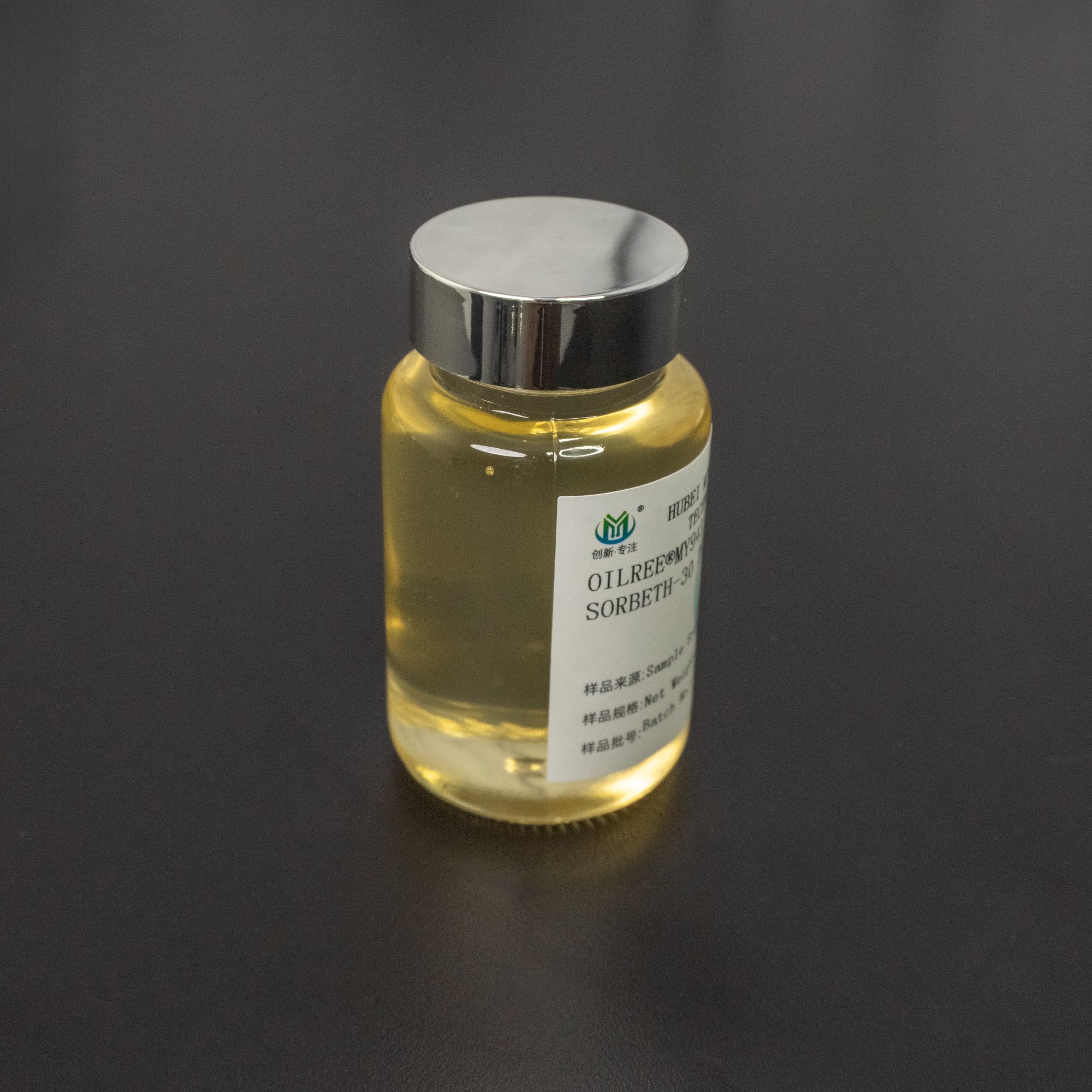
Top suppliers don't wait for problems to surface. They send weekly updates with real lead times, flag raw material shortages before they affect orders, and keep a small buffer of critical components even when contracts don't require it. That kind of over-communication feels like extra work, but it's what stops a missing capacitor or gasket from turning into a three-day line shutdown.
Another habit is treating quality checks as part of shipping, not an afterthought. Instead of relying on your incoming inspection, they photograph batch samples, record torque settings, and attach test results to every delivery. When a supplier does this consistently, you spend less time sorting suspect parts and more time running at full speed. The best ones also map out alternate freight routes and have local backup sources for high-risk items, so a port delay or truck breakdown doesn't immediately idle your machines.
Why SORBETH-30 Tetraoleate performance can shift even when the spec sheet stays the same
A spec sheet usually lists acid value, saponification value, moisture, and color. Those numbers can all sit within the same tight ranges while the ester distribution underneath shifts. SORBETH-30 Tetraoleate is built from sorbitol, ethylene oxide, and oleic acid, but the actual reaction never yields a single clean molecule. It produces a spread of ethoxylation lengths and partial esters. If a manufacturer tweaks the ethoxylation order, catalyst neutralization, or stripping temperature, the final distribution changes enough to alter emulsification behavior, viscosity response, and stability in a formula—without moving the standard assay results by much.
Raw material sourcing is another quiet lever. Oleic acid from tallow, sunflower, or olive sources can carry different levels of linoleic, stearic, and palmitic acids. Even at 1-2% variation, those minor fatty acids change how the ester packs at an oil-water interface. The same logic applies to the ethylene oxide chain length spread. A narrow range might read as the same average on a certificate of analysis, but the actual performance can feel sharper or softer depending on whether the distribution skews toward shorter or longer ethoxylate chains.
Storage and handling after production also matter. Trace moisture ingress, exposure to heat cycles, or extended hold times before drumming can slowly hydrolyze a fraction of the ester bonds. That releases free oleic acid and lowers the effective HLB in ways that a fresh certificate of analysis won't capture. Formulators often notice the shift first as a change in emulsion viscosity, a difference in cold-process stability, or a subtle variation in skin feel—long before any spec sheet parameter goes out of range.
Reading a certificate of analysis without taking it at face value
A certificate of analysis can look impressively thorough, yet the data it presents often reflects only what a lab was asked to test. Missing from most COAs are the contaminants that were never screened for, or the methods that might not suit the sample matrix. If a sheet lists five heavy metals, that doesn't mean the material is free of dozens of other potential toxins. The choice of test panel is a business decision as much as a scientific one, and it pays to ask what was left off.
Batch numbers and dates matter more than the logo at the top. A COA tied to a different production run tells you nothing about the shipment in your hands. Even when the batch matches, storage and transport conditions can alter the product after testing. Some suppliers reuse old reports or pull data from a single favorable test, so comparing the certificate against the physical lot number on the packaging is the first sanity check.
If the numbers really matter, demand the raw data behind the summary. A reputable lab will share detection limits, uncertainty ranges, and the exact method used, not just a pass/fail box. Accreditation bodies like ISO 17025 exist for a reason, but they don't guarantee every result is meaningful for your intended use. When in doubt, send a split sample to an independent lab and see how the results line up.
Emulsifier sourcing that doesn't force you back to the bench every quarter
Every time a new batch of emulsifier arrives with subtle shifts in HLB value or ionic character, formulators find themselves pulled away from product development and back into the lab for stability re-testing. It’s a cycle that quietly eats weeks of the year, and most sourcing teams accept it as unavoidable.
The alternative is to work with a supplier who treats batch-to-batch consistency as a technical specification, not a hopeful guideline. That means tighter control over fatty acid chain distribution, residual catalyst levels, and esterification endpoints — the variables that actually move your emulsion’s droplet size and creaming rate. When those stay locked within a narrow window, the quarterly re-bench ritual fades into a simple incoming inspection.
Our approach pairs that consistency with a transparent certificate of analysis for every lot, so your R&D group can compare new material against the reference without re-qualifying it. The result isn’t just fewer lab hours — it’s a formulation timeline that behaves the way your production schedule needs it to.
What to ask before you commit to a SORBETH-30 Tetraoleate supplier
Before signing anything, ask for the supplier’s full documentation on impurity profiles and residual ethylene oxide levels. Many will hand over a spec sheet and call it a day, but you need the actual batch-specific certificate of analysis, not the marketing brochure. Compare the claimed purity against independent third-party test results whenever possible, and don’t be shy about requesting the raw analytical data behind those numbers.
Dig into their sourcing and manufacturing pathway. Is the tetraoleate derived from a consistent, traceable oleic acid stream, or does it shift depending on spot market prices? Ask about solvent residues, catalyst systems, and whether the esterification runs to full completion or leaves unreacted sorbitol behind. A supplier that hesitates on these details is often one that hasn’t locked down its own process.
Finally, push on logistics and post-sale support. What happens if a drum arrives out of spec? Will they cover the cost of return freight, or do you eat it? Get clarity on lead times, minimum order quantities, and whether they hold safety stock for emergency reorders. The right supplier will treat these questions as routine, not as an interrogation.
FAQ
Many suppliers struggle to keep the esterification controlled, so you see batch-to-batch drift in acid value, hydroxyl value, and viscosity. The better manufacturers monitor reaction endpoints with in-process titration and lock the moisture level before drumming, which keeps the emulsification profile stable across orders.
Ask for a certificate of analysis that includes acid value, saponification value, hydroxyl value, moisture, and color. Then compare those numbers against a retained sample from a previous batch. If the supplier can provide a small pre-shipment sample before committing to a full drum, you can run a quick emulsion stress test to catch any shift early.
Not necessarily. Some residual unreacted sorbitan esters can actually help stabilize a particular oil phase, but too much free oleic acid will make the final product tacky and prone to oxidation. The key is a narrow specification range rather than chasing the highest possible purity number.
A full technical data sheet, safety data sheet, recent third-party microbial test, statement on residual ethylene oxide and dioxane, and preferably a sample from the same production lot that will be shipped. Also ask if they use RSPO-certified palm or alternative oleic sources if your brand has sustainability commitments.
It matters more than most people think. This ester can oxidize if left in partially filled containers with headspace, and it absorbs moisture if drums are not sealed with nitrogen or desiccant. Suppliers who use epoxy-lined steel drums or nitrogen-blanketed tanks usually deliver cleaner material after six months in a hot warehouse.
Run a simple 20/80 oil-in-water emulsion with a standard light mineral oil, hold it at 45°C for two weeks, and check for creaming, viscosity change, and droplet size under a microscope. The sample that keeps the tightest droplet distribution and lowest viscosity drift is the more consistent candidate, even if the certificate looks similar.
Yes, because long transit times in unheated containers can cause partial solidification or viscosity stratification. A supplier with regional warehousing and climate-controlled storage can ship smaller, fresher batches more often, which reduces the chance of getting material that has been sitting near a dock in summer heat.
Ask them what temperature they recommend for melting and handling, how they advise avoiding gel formation during dilution, and what co-emulsifiers they typically see paired with it in cold-process systems. A knowledgeable supplier will give specific ranges and might mention that warming to 30–40°C before mixing prevents lumps.
Conclusion
Getting SORBETH-30 Tetraoleate to behave the same way every time isn't about a supplier's marketing claims. It comes down to how tightly they manage raw material sourcing, reaction conditions, and final purification. Subtle variations in the fatty acid feedstock or residual catalyst can alter emulsification behavior even when the certificate of analysis shows identical numbers. That's why a serious buyer reads a COA with a skeptical eye, checking not just the headline purity but the test methods, impurity thresholds, and whether the lab actually ran the right assays for your application. A supplier that keeps retained samples and can walk you through batch history is worth far more than one offering the lowest price per kilo.
The habits that keep production moving are equally important. You want a supplier with transparent change control, reasonable lead times, and the willingness to flag a raw material substitution before it reaches your line. Ask direct questions: How do they handle out-of-spec material? Do they provide process data beyond the spec sheet? Will they send a pre-shipment sample when you're introducing a new batch? The goal is to avoid the quarterly scramble of recalibrating a formula because a new drum behaves differently. In practice, that means picking a partner who treats SORBETH-30 Tetraoleate consistency as an ongoing engineering problem, not a stroke of luck.
Contact Us
Contact Person: Miss Pei
Email: [email protected]
Tel/WhatsApp: 8618620409116
Website: https://www.mingyachemicals.com/