

Calcium Sulfate Antistatic Floor Company Selection Guide for Modern Industrial Projects
2026-11-17
Most industrial floors fail long before the machinery above them does. Static discharge, chemical exposure, and heavy traffic don't announce themselves; they simply erode ordinary surfaces over time. For facilities where a single spark can compromise safety or data integrity, calcium sulfate antistatic flooring is not a luxury but a calculated decision. Yet the real challenge isn't choosing the material—it's choosing the right supplier who understands how that material behaves under real operational stress. This guide cuts through the overlap between product data sheets and on-site performance, with insights drawn from projects where Lipin Floor has been involved. If you are planning a modern industrial project, the following selection criteria may spare you from costly retrofits later.
Reading Between the Lines of Technical Data Sheets
A datasheet figure rarely works as a standalone promise. It matters just as much which supply voltage, temperature span, and load condition produced that number. Two parts can appear identical at first glance while behaving very differently once you move away from the manufacturer's chosen bench setup.
Words like typical, maximum, and by design carry distinct weight. A typical curve can be drawn from a small batch or a simulation, while a guaranteed maximum may include enough margin to hide how close a device runs to its real edge. Footnotes often hold the caveats that matter most: aging drift, board layout assumptions, and derating requirements.
It also helps to read across related specifications. A low quiescent current can coexist with awkward transient response, and an output power rating may assume a heatsink or forced air that never appears in your enclosure. The useful story usually sits in the gap between the headline number and the conditions that define it.
When a Floor Needs to Do More Than Just Support Weight
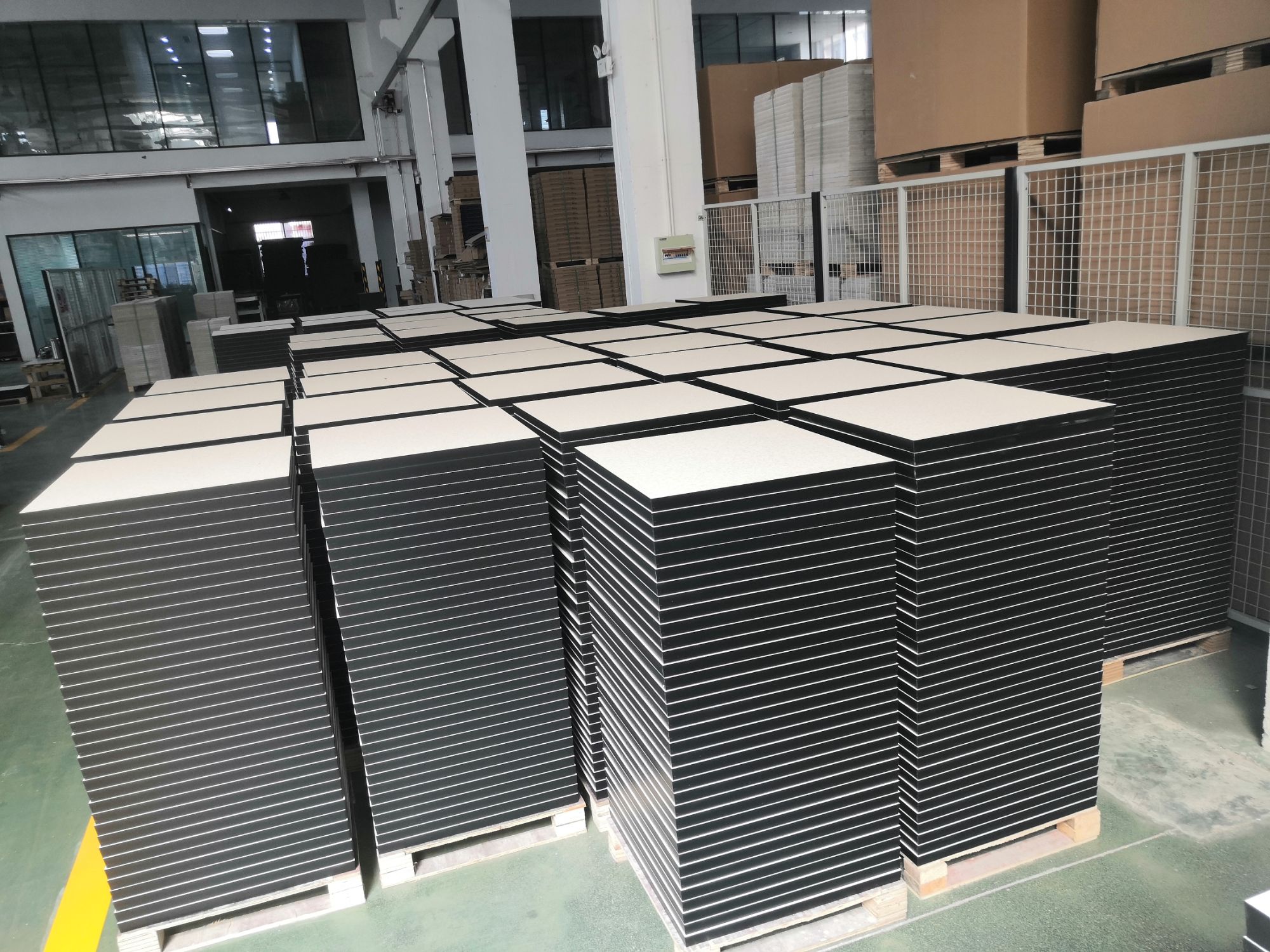
Floors are rarely given credit for the quiet work they do beyond holding people and equipment up. In a hospital corridor, the surface has to reduce footfall noise, resist rolling loads from carts and gurneys, and offer enough slip resistance when wet without becoming impossible to clean. In a research lab, static buildup can damage sensitive instruments, so the flooring may need conductive properties. In a dance studio, the top layer has to absorb impact while still providing enough spring to protect joints. These requirements do not replace structural performance, but they shape material choices long before the first load calculation is checked.
Material selection gets more complicated when comfort, safety, and maintenance sit alongside strength. Sheet vinyl might look practical, yet it can echo badly in open offices. Polished concrete is durable, but without a proper sealer it stains and becomes slick. Rubber flooring handles impact noise well, though certain adhesives fail in humid conditions. Wood brings warmth and a familiar feel, but it demands strict moisture control. A floor that works in one room may be a liability next door, which is why specifications have to move beyond load tables and consider how people actually move, work, and clean the space.
Renovations tend to expose these hidden duties even more. Adding an acoustic underlayment, embedding heating pipes, or installing accessibility ramps can turn a simple floor into a layered system that coordinates with structure, electrical work, and interior finishes. In older buildings, changes in floor height can ripple into door clearances and stair transitions. When the floor is treated as an integrated surface rather than a flat lid over the structure, the result is usually quieter, safer, and far more useful day to day.
The Questions Competent Suppliers Expect You to Ask
When a supplier knows their product line cold, they don't dread pointed questions—they lean into them. Asking how they handle a bad material batch, what happens when a shipment runs late, or who actually signs off on final inspection tells them you've done this before. Vague buyers get scripted answers; serious buyers get the operational truths that prevent problems later.
The questions that separate experienced buyers from tourists are rarely complicated. Skip the generic "Is your quality good?" and ask which defects they track weekly, how they contain a problem once it's found, or which customer audits they've passed in the last year. A competent supplier answers these without pausing because the responses come from lived daily routine, not a polished deck.
It also pays to ask about limits before discussing capabilities. A supplier who openly shares their volume constraints, peak-season bottlenecks, or the exact turnaround time for design changes is protecting your schedule as much as their own reputation. If no friction points exist in their story, treat that as a louder warning than a missed delivery date.
Load, Coatings, and Conductivity: Where Specifications Collide
The moment a bolted bus joint moves from a single-discipline drawing to the assembly floor, the real tension shows up. Mechanical load demands a certain clamp force and contact area, but the coating that protects the aluminum or copper from oxidation can act as an insulating skin. Engineers often call for a thicker plating to survive high clamping loads, only to find the measured resistance creeping upward long before the joint reaches operating temperature.
Conductivity specifications rarely account for what happens after the first thermal cycle. A hard, thick coating may pass initial milliohm checks on a clean sample, then micro-crack under load and open narrow paths for moisture. Meanwhile, a softer conductive finish can extrude under bolt pressure, thinning at the edges where current density is highest. The result is a joint that looks fine on the torque report and still underperforms in the field.
Resolving the collision usually means removing the conflict from the contact zone rather than solving it globally. Sharp edges get radiused, the coated face is masked or spot-faced in high-current regions, and the clamp load is set by the substrate's yield point rather than the coating's hardness. In practice, the best joints come from treating load, coating, and conductivity as one combined tolerance stack, not three separate line items on a spec sheet.
From Warehouse to Cleanroom: Matching Composition to Contamination Risk
Choosing a floor for a warehouse rarely involves thinking about particles per cubic meter. But as soon as that same space connects to a cleanroom, the conversation shifts. Polyurethane and epoxy systems dominate these transitions not because they are interchangeable, but because each behaves differently under foot traffic, chemical exposure, and temperature swings. A high-gloss epoxy might look surgical, yet it can crack under forklift loads and shed microscopic fragments into an ISO 7 environment. Polyurethane, with its slight elasticity, often holds up better where carts roll and impacts occur at the dock door.
The real mistake is treating contamination risk as a single number. A gowning room has different demands than a solvent-handling corridor. In the gowning area, the floor needs to resist repeated cleaning agents without dulling or leaching. In the solvent corridor, the priority shifts to chemical resistance and the ability to contain spills without degrading into sticky residues that trap particles. Matching composition to risk means mapping where people walk, what they drag behind them, and how often the floor gets wet before selecting a resin chemistry.
Installation matters as much as the material itself. A perfectly mixed polyurethane applied over a dusty substrate will still delaminate and become a contamination source. The best facilities treat the transition zone as its own micro-environment: they test moisture vapor emission, grind the concrete to the right profile, and schedule pours when nearby production is idle. Without that level of care, even the most carefully matched floor composition becomes just another layer of risk waiting to flake off.
After Installation: What Separates a One-Time Vendor from a Long-Term Partner
The handover is where the real test begins. A vendor who disappears after commissioning leaves you with a binder of manuals and a phone number that goes to voicemail. A partner, by contrast, comes back unannounced after a few weeks to check torque settings, filter pressure, and the small noises nobody mentioned during training. They treat the first quarter not as a closed sale, but as a live trial where adjustments still matter.
When a line trips at 2 a.m., that distinction becomes expensive. One-time suppliers quote a callout fee before they even ask what happened. Long-term partners usually answer with remote access, a known sequence of tests, and a replacement part already on a courier. They also keep records of what was changed during installation, so the night shift does not have to explain the whole system from scratch.
Beyond breakdowns, the relationship shows in small upgrades and maintenance timing. A reliable partner will flag a worn coupling before it fails, suggest a shorter inspection interval for a specific pump, or adjust settings when production volumes shift. That kind of attention rarely appears in a contract. It comes from people who expect to be around for the next ten years, not just until the invoice clears.
FAQ
A dependable supplier brings direct experience with controlled environments such as electronics assembly, aerospace cleanrooms, data centers, or pharmaceutical labs. They should be able to show project references with similar square footage, explain how their panels perform under rolling loads and foot traffic, and discuss static control as a system rather than just selling boards. Ask for site photos, technical drawings, and contactable past clients instead of relying on generic capability statements.
ISO 9001 and ISO 14001 are useful baseline indicators, but the more meaningful evidence comes from compliance with IEC 61340-5-1 or equivalent electrostatic discharge control standards. The company should also provide third-party test reports for surface resistance and system resistance. If the project requires fire-rated construction, ask for panel and pedestal fire test data, not just verbal assurances.
It is one of the first things a serious provider will do. Calcium sulfate panels are sensitive to residual moisture, and skipping this step can lead to panel swelling, adhesive failure, or loss of flatness after handover. The company should measure relative humidity in the slab and follow the panel manufacturer's limits. If a provider says moisture testing is unnecessary or postpone it until after the contract is signed, that should raise immediate concern.
Ask for resistance measurements after accelerated wear testing, not just laboratory results on brand-new panels. Find out whether the conductive elements are distributed throughout the core or only on the surface, because surface-only treatments can degrade with cleaning and abrasion. A strong answer will include a defined maintenance program, periodic verification intervals, and realistic performance expectations under your actual equipment loads.
Request a detailed installation method statement that covers subfloor preparation, pedestal layout, stringer locking, panel cutting at perimeters, and expansion allowances. Look for trained and dedicated installation teams rather than subcontractors pulled from general flooring jobs. It also helps to ask how the company handles leveling tolerances, edge finishing, and protection of installed panels while other trades are still working in the area.
A meaningful warranty should cover panel defects, conductivity requirements, and installation workmanship for at least five years. It should identify who is responsible for the panel, the pedestal system, and the installation separately. Avoid vague wording that excludes antistatic properties after delivery. The provider should also explain what routine maintenance is required to keep the warranty valid, such as approved cleaning chemicals and resistance testing schedules.
Subfloor preparation, waste factor, freight conditions, site access, removal of existing flooring, and protection of adjacent areas are frequently left out of initial pricing. Some quotes assume an empty, clean, climate-controlled space while the real project may have limited working hours or multiple trades on site. Ask each bidder to list exclusions explicitly and confirm whether the quote includes pedestals, stringers, screws, cutting waste, and final cleaning after installation.
Conclusion
Choosing a calcium sulfate antistatic floor supplier rarely comes down to the datasheet alone. Those spec pages look alike until you read for what is absent: surface resistivity measured under real humidity swings, burn resistance after repeated load cycles, tolerance ranges around panel edges, and the exact chemistry of the conductive layer. In modern plants, the floor is a working interface, not just a deck. It has to hold automated guided vehicles without cracking, dissipate static before it reaches sensitive instruments, and survive the cleaning agents used in a pharmaceutical corridor. Suppliers worth shortlisting talk about these overlaps openly because they know that load ratings, epoxy coatings, and electrical performance can pull against each other unless the system is tested as an assembly rather than as separate components.
Competent companies expect hard questions. Ask how their panels perform from a server room to a chemical staging area, whether the conductive properties are distributed through the core or rely on a thin surface finish, and what happens to resistance values after abrasion or repeated pallet traffic. Their answers will reveal whether they treat the floor as a product or as part of your contamination control strategy. The difference often appears after handover: a long-term partner keeps as-built impedance maps, offers spare panels with the same batch composition, and returns for calibration checks instead of waiting for a complaint. That kind of follow-through matters more than the initial quote because an antistatic floor quietly either protects the operation or becomes one more variable in it.
Contact Us
Contact Person: yuki
Email: [email protected]
Tel/WhatsApp: +86 18664390732
Website: https://www.lipinfloor.com/