
Castor Oil Ethoxylate Manufacturer Insights: From Production to Application
2026-07-18
Castor oil ethoxylate has quietly become a cornerstone ingredient across industries ranging from cosmetics to industrial cleaning. Yet, few realize the intricate chemistry and rigorous manufacturing precision behind this versatile surfactant. At POLYKEM, we don’t just produce castor oil ethoxylate—we refine a legacy of innovation that bridges raw oleochemicals with high-performance applications. In this blog, we pull back the curtain on our production process and explore how tailored ethoxylation can unlock new possibilities in formulations. Whether you're a formulator, a specifier, or simply curious about the science behind everyday products, what follows will reshape how you think about this humble yet powerful molecule.
Sourcing the Ricinus Secret: How Castor Beans Become Ethoxylated Masterpieces
The journey begins in sun-drenched fields where the castor plant, Ricinus communis, thrives. Each spiny pod holds a few mottled beans, prized for their unusually high oil content. Harvesters work carefully—the raw seeds contain ricin, a potent toxin, so handling demands both skill and caution. Once collected, the beans are dried and hulled to separate the pale, oil-rich kernel from the dangerous husk. This first step is a dance with nature’s duality, capturing a precious raw material while safely discarding the peril.
From the kernels, a viscous, pale-yellow oil is extracted through mechanical pressing or solvent methods. But castor oil as it emerges isn’t yet ready for transformation. It undergoes a meticulous refining process—degumming, bleaching, and deodorizing—to strip away impurities and create a clean, consistent base. What makes it truly exceptional is its unique chemistry: nearly 90% of the fatty acid chains are composed of ricinoleic acid, with a hydroxyl group that hangs ready for reaction. This singular structure is the secret that sets the stage for ethoxylation.
In reactor vessels under controlled pressure and temperature, the refined oil meets ethylene oxide. A catalyst initiates the dance, coaxing the epoxide rings to open and attach themselves to the oil’s hydroxyl sites. The number of ethylene oxide units can be precisely tailored, yielding ethoxylated castor oil products that range from water-soluble emulsifiers to thick, luxurious humectants. This flexible process gives rise to a family of ingredients cherished across industries for their ability to bridge oil and water, soothe sensitive surfaces, and deliver performance that natural oils alone can’t match.
Precision in Manufacturing: The Art and Science of Ethoxylation
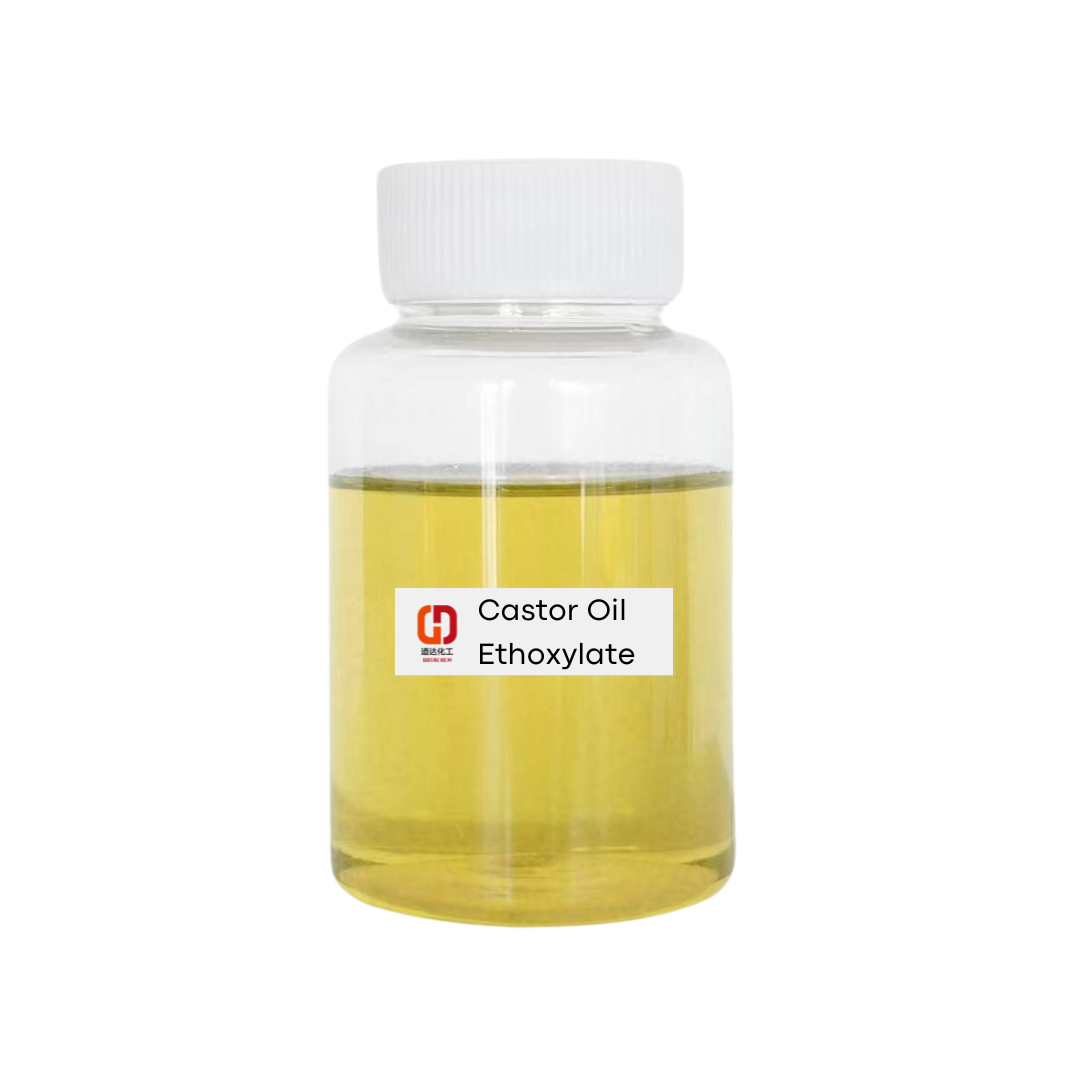
Ethoxylation is far more than a simple chemical reaction; it is a finely tuned interplay of rigorous control and nuanced expertise. The process involves adding ethylene oxide molecules to a substrate under carefully regulated conditions, where even a slight deviation in temperature, pressure, or catalyst concentration can alter the product's characteristics. Mastering this requires a deep understanding of reaction kinetics and thermodynamics, but also an artful touch—recognizing the subtle cues of a reactor's behavior and adjusting parameters in real time.
Beyond the science lies the craft of achieving exact product specifications, batch after batch. Seasoned operators learn to read the rhythm of the reaction, interpreting minute changes in viscosity, heat release, or molecular weight distribution. This intuitive feel distinguishes a truly optimized ethoxylation process from one that merely follows a recipe. The art involves anticipating how different raw materials or ambient conditions might shift the outcome, and fine-tuning the process to maintain unwavering precision.
In modern manufacturing, this balance between art and science is enhanced by advanced analytics and automation, but never entirely replaced. Continuous improvements in reactor design and process modeling provide a robust scientific foundation, while the human element refines it—ensuring that every mole of ethylene oxide added aligns perfectly with the intended surfactant properties. The result is a product that performs reliably, whether in detergents, cosmetics, or industrial applications, reflecting a tradition of painstaking craftsmanship and scientific rigor.
Quality Beyond Certification: Ensuring Consistent Performance
Many organizations chase certifications as a badge of compliance, but real quality lives in the gaps between audits. It’s the unscripted moments—how a team responds to unexpected variations or subtle shifts in raw materials—that define whether performance stays consistent. When systems are fine-tuned to detect and correct issues before they cascade, consistency becomes second nature.
Internalizing standards rather than merely meeting them creates a buffer against complacency. This means moving beyond checklist-driven inspections to embed quality thinking into every role. From operators who treat each batch as the most important to engineers who design processes with self-correcting feedback loops, ensuring consistent performance becomes a shared instinct, not an imposed rule.
Ultimately, customers remember not the certificate on the wall but the reliability of the product over time. A reputation built on consistent output—delivered year after year, regardless of external pressures—outlasts any formal recognition. That’s the difference: certification proves you once passed; consistent performance proves you never let go.
From Lab to Market: Versatile Applications Across Industries
The journey from scientific discovery to commercial product is rarely straightforward. It demands not only rigorous research but also the ability to identify practical problems across unrelated sectors. A material engineered for aerospace heat shields might find unexpected use in energy-efficient cookware, while a medical imaging algorithm could be adapted to inspect microelectronics. This cross-pollination turns specialized breakthroughs into versatile tools that reshape entire industries.
Consider the case of sensor technology. Originally designed for monitoring structural integrity in bridges, these small, durable sensors now track everything from soil moisture in agriculture to patient mobility in healthcare. Similarly, advances in nanotechnology, once confined to academic labs, are enabling better drug delivery systems, water purification membranes, and even more responsive touchscreens. The common thread is a willingness to look beyond the original use case and embrace iterative, real-world feedback.
Ultimately, the labs that succeed in bridging this gap invest in multidisciplinary teams and early-stage collaboration with end users. By doing so, they avoid the trap of creating solutions in search of a problem. Instead, they allow market needs to guide refinements, ensuring that the final application is both functional and economically viable. This approach not only accelerates adoption but also fosters a culture where innovation truly meets impact.
Eco-Innovation: Green Chemistry in Castor Oil Ethoxylates
Castor oil ethoxylates represent a significant stride in green chemistry, offering a renewable and biodegradable alternative to petroleum-derived surfactants. By starting with castor oil, a natural triglyceride rich in ricinoleic acid, manufacturers can produce ethoxylates through a solvent-free process that minimizes hazardous byproducts. This approach aligns with circular economy principles, as the feedstock is non-edible and grows on marginal lands, avoiding competition with food crops.
The ethoxylation reaction itself has been refined to reduce energy consumption and waste. Advanced catalysts enable precise control over the degree of polymerization, tailoring the hydrophile-lipophile balance for specific applications without generating toxic intermediates. Compared to traditional ethoxylates from petrochemicals, castor oil-based variants exhibit excellent wetting, emulsifying, and dispersing properties, while breaking down readily in the environment—a critical advantage in sectors like personal care and agriculture where ecological impact is under scrutiny.
Recent innovations focus on enhancing performance through molecular design, such as creating short-chain ethoxylates that combine high efficacy with ultra-low aquatic toxicity. Life-cycle assessments confirm that these biobased surfactants reduce carbon footprint by up to 50% relative to synthetic counterparts. As regulatory pressure mounts and consumer demand shifts toward sustainable ingredients, castor oil ethoxylates exemplify how green chemistry can deliver both functional excellence and environmental stewardship.
Future-Proofing Production: Trends Shaping the Next Decade
Manufacturing floors are becoming a lot smarter, but not in the way most people imagine. It’s less about futuristic robots taking over and more about data weaving itself into every machine, conveyor, and tool. Real-time telemetry from legacy equipment, now retrofitted with affordable sensors, is merging with cloud-based AI to predict maintenance needs before a breakdown occurs. This quiet shift is cutting downtime in ways that don’t make headlines but steadily reshape bottom lines.
Sustainability is also moving from corporate pledges to actual production logic. Instead of treating recycled materials as a separate niche, factories are redesigning processes to circulate water, heat, and scrap internally—turning waste streams into inputs. Energy-intensive steps are being scheduled around grid carbon intensity, not just electricity prices. The result is a production rhythm that bends toward efficiency without the heavy hand of regulation.
Perhaps the least discussed trend is how the definition of ‘skilled labor’ is drifting. With augmented reality headsets guiding repairs and digital twins allowing operators to simulate changes before touching a physical machine, experience is being decoupled from years on the job. Learning curves are shrinking, and factories are finding they can redeploy people fluidly across tasks. It’s a softer kind of automation—one that augments rather than replaces—and it’s quietly forcing entire industries to rethink what a modern shop floor really needs.
FAQ
Its strong emulsifying power and low foam profile make it ideal for heavy-duty degreasers. Unlike many surfactants, it performs well even in hard water and doesn't leave behind residue that could interfere with metal finishing processes.
It starts with refining the castor oil to remove impurities that could impact color or odor. Then comes ethoxylation—reacting the refined oil with ethylene oxide under controlled temperature and pressure, using a catalyst to achieve the desired chain length. The product is then neutralized, bleached if needed, and rigorously tested for consistent molar distribution.
The number of ethylene oxide moles directly determines the surfactant's HLB value. Too few EO units and the product won't be hydrophilic enough for aqueous systems; too many can reduce its ability to penetrate oily soils. Getting that balance right is what defines how well it works as an emulsifier, wetting agent, or dispersant in different applications.
Besides being derived from a renewable resource, it offers superior skin compatibility and a naturally occurring fatty acid chain that brings unique solubility characteristics. In personal care, it provides a richer, less drying feel compared to synthetics, and its branched structure helps it act as an efficient co-surfactant in microemulsions.
Beyond standard chemical analysis, they check the hydroxyl value to confirm the degree of ethoxylation, measure cloud point as a functional indicator, and use gel permeation chromatography to monitor the ethylene oxide distribution. Real-time monitoring during production prevents over-ethoxylation or the formation of unwanted by-products like dioxane.
It's being used more as an adjuvant in pesticide formulations because it enhances spreading and penetration on waxy leaf surfaces without being overly phytotoxic. Its built-in compatibility with many active ingredients and its rapid biodegradability make it appealing for sustainable farming practices.
Maintaining the narrow EO distribution becomes harder at scale due to heat and mass transfer limitations in larger reactors. Manufacturers often need customised agitator designs or staged ethoxylation processes to avoid hot spots that could degrade the product or alter the performance profile.
The cloud point tells you at what temperature the surfactant becomes insoluble in water—essentially where it starts separating as a separate phase. For a high-temperature industrial wash, you'd want a higher cloud point to keep the surfactant active in solution. For rinse aids, a lower cloud point can actually be beneficial, as it promotes faster drainage and spot-free drying.
Conclusion
The journey of castor oil ethoxylates begins with the humble castor bean, sourced from regions where the ricinus plant thrives under sustainable cultivation. Transforming this raw material into high-performance ethoxylates demands a delicate balance of art and science, where precise control over reaction parameters—temperature, pressure, and catalyst selection—yields surfactants with tailored hydrophilic-lipophilic balance (HLB) values. This meticulous process ensures that each batch meets exacting specifications, yet true quality extends beyond certifications; it lies in consistent performance across every application, from emulsifying agents in personal care to wetting agents in agricultural formulations.
Moving from lab to market, these versatile ingredients empower industries ranging from textiles to metalworking fluids, thanks to their exceptional solubility and low toxicity. Embracing green chemistry principles, manufacturers are now pioneering eco-innovations such as solvent-free synthesis and renewable energy integration, slashing environmental footprints without compromising efficacy. Looking ahead, the sector is future-proofing production through digitalization, biodegradable formulations, and closed-loop systems that align with circular economy mandates. By weaving together traditional expertise and forward-thinking strategies, castor oil ethoxylate producers are not just meeting today’s demands—they are shaping a resilient, sustainable future for chemical manufacturing.
Contact Us
Contact Person: Levi
Email: [email protected]
Tel/WhatsApp: +86 532 84688720
Website: https://www.polykem-intl.com