

China Chemical Printing and Dyeing Membrane Filter Press for Superior Sludge Dewatering
2026-11-02
Dewatering sludge from chemical printing and dyeing processes is a constant battle against sticky, high-moisture cakes that drive up disposal costs and downtime. Ordinary filter presses struggle to reach the dryness your operation needs—until you see what a properly engineered membrane filter press can do. Sinou builds these systems specifically for the harsh conditions of China’s dyeing and printing sector, pushing moisture content down further and cycle times shorter. If superior sludge dewatering has been on your wish list, you’re about to discover why this technology is rewriting the rules.
Why China's Chemical Printing and Dyeing Sector Is Replacing Traditional Filter Presses
Traditional filter presses in China's chemical printing and dyeing plants have long been a bottleneck, demanding constant manual plate shifting, frequent cloth changes, and long cycle times that leave dye sludge with high moisture content. As discharge standards tighten and labor costs climb, many mills are turning to newer solid-liquid separation equipment that can run continuously with far less operator attention.
The shift is also driven by the need to recover more water and chemicals from high-volume dye effluents. Advanced filtration and dewatering systems produce drier cakes, cut polymer consumption, and shrink the footprint of sludge handling areas. For a sector where batch processing often collides with tight delivery schedules, the ability to reduce turnaround times while staying within environmental limits has made replacement not just an upgrade but a practical necessity.
Membrane Squeeze Technology Achieving 40% Lower Sludge Volume Without Extra Chemicals
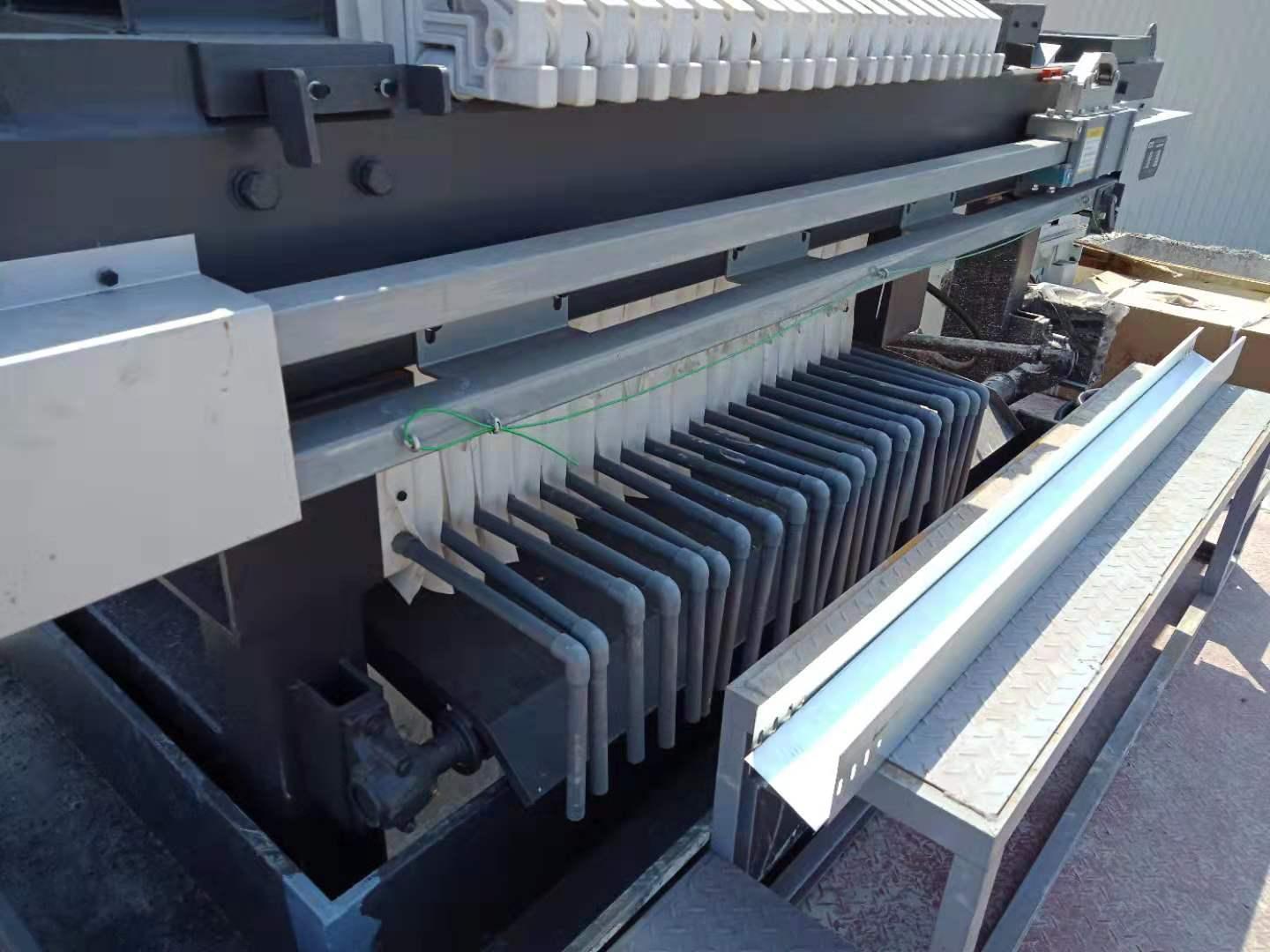
Conventional sludge dewatering often leans on chemical conditioners to release bound water, yet this approach brings its own burden: higher operating costs, handling hazards, and a residual polymer load that can complicate downstream processing. Membrane squeeze technology shifts that baseline by relying on mechanical pressure alone. A flexible membrane presses directly against the sludge cake inside a chamber, applying uniform force that drives out free and interstitial water far more efficiently than gravity or simple compression. The result is a sludge volume reduction of up to 40% compared to traditional filter presses or belt filters, without a single drop of polymer or lime. This chemical-free operation not only trims chemical spend but also keeps the sludge's natural structure intact, which can be a real advantage for agricultural reuse or thermal conversion.
What makes the membrane squeeze step stand out is its ability to handle difficult sludges that usually demand high polymer doses. Instead of relying on flocculation to create channels for water escape, the membrane inflates with water or air at controlled pressures, often between 7 and 16 bar, and holds that pressure through a carefully timed cycle. The squeeze phase follows initial filtration when the cake is already formed, targeting the remaining capillary and pore water that ordinary pressing leaves behind. Operators can fine-tune membrane pressure, squeeze duration, and the number of pulses to match changing sludge characteristics from batch to batch. This flexibility removes the guesswork tied to chemical dosing adjustments and lowers the risk of overdosing, which is a common hidden cost in conventional plants.
Beyond the obvious chemical savings, lower sludge volume reshapes the entire logistics chain. A 40% reduction means fewer haulage trips, less storage area, and smaller dryers or incinerators if downstream thermal treatment is used. For facilities aiming at lower carbon footprints, the absence of chemical production and transport emissions adds another layer of benefit. And because the filtrate remains free of residual polymer, it can often return to the head of the plant without upsetting biological processes—a problem that plagues many chemically conditioned systems. In short, membrane squeeze technology delivers a quieter, cleaner way to shrink sludge volume, proving that effective dewatering doesn't have to come with a chemical invoice.
Inside a Membrane Filter Press From Slurry Feed to Dry Cake in 45 Minutes
Slurry enters the membrane filter press under steady pressure, filling each chamber evenly as solids begin to collect against the filter cloth. Within the first ten minutes, a uniform cake layer forms across the plates, while filtrate runs clear through the manifold. Operators can hear the feed pump settle into a consistent rhythm as backpressure slowly builds.
Once the chambers are packed, high-pressure squeeze water inflates the internal membranes, compressing the cake from both sides. This step drives out residual moisture far faster than gravity or air-blowing alone. Visibility through the sight glass shifts from cloudy to nearly transparent, signaling that cake dryness is nearing target. The membrane action also helps release the cake cleanly when the plates open.
Total cycle time from slurry feed to dry cake discharge lands right around 45 minutes. This includes feed, membrane squeeze, core blowdown, and plate shifting. The result is a solid cake that crumbles when pressed in the hand, with moisture content low enough to skip thermal drying in many applications.
Anti-Corrosion and High Pressure Engineering Details That Extend Plate Life in Dye Wastewater
Plate heat exchangers in dye wastewater service face a brutal combination of chemical attack and mechanical stress. The acidic or alkaline streams, mixed with reactive dyes and chloride salts, quickly eat through standard stainless steel. To counter this, engineering teams often shift to thicker plates made from super austenitic or duplex alloys, which resist pitting and crevice corrosion far better than 316L. Adding a robust passivation layer after manufacturing also helps seal micro-fissures that could become initiation sites. Beyond material choice, plate geometry matters—using a wider, shallower chevron pattern reduces dead zones where aggressive solids accumulate, while still maintaining enough turbulence to keep heat transfer efficient.
High pressure spikes are common when dye bath slurries contain fibrous lint or undissolved pigment particles. These solids can momentarily block narrow channels, causing localized pressure surges that flex and fatigue thin plates. One practical fix is specifying plates with a higher burst rating and reinforcing the corner ports with welded collars or double-gasket designs. Some operators add pulsation dampeners on the feed pumps to smooth out hydraulic shocks before they reach the exchanger. In extreme cases, a spring-loaded frame with variable tightening bolts allows the plate pack to absorb minor pressure fluctuations without losing gasket compression, which prevents leaks and extends the interval between retorquing.
A less obvious but critical detail is the gasket material and groove design. Dye wastewater often carries solvents or surfactants that swell standard EPDM or nitrile gaskets. Upgrading to fluoropolymer-encapsulated or perfluoroelastomer gaskets, paired with a deeper dovetail groove, keeps the seal intact under both thermal cycling and chemical exposure. Field data from textile mills show that these combined anti-corrosion and pressure-handling modifications can double or triple plate life, cutting replacement costs and unplanned downtime. The key is treating the plate pack as a system—material, geometry, gasket, and frame all work together against the aggressive dye bath environment.
Energy Consumption Compared Membrane Presses Beat Centrifuges for Textile Sludge
In textile sludge dewatering, the gap in energy draw is larger than the nameplate ratings suggest. Centrifuges rely on a bowl spinning at several thousand G to separate water from solids, which keeps the main drive motor under constant high load throughout every cycle. Membrane presses, by contrast, use a hydraulic or mechanical squeezing action after initial filtration. Their peak power demand is lower, and much of the cycle runs in a low-energy holding phase. For batch handling of the relatively low-solids slurries common in textile finishing and dyeing wastewater plants, membrane presses consistently pull fewer kilowatt-hours per dry tonne of solids.
The real difference shows up downstream. A centrifuge typically leaves textile sludge at 75 to 85 percent moisture, which then has to be evaporated in a dryer or incinerator. Membrane presses with an inflatable diaphragm can squeeze the cake down to 60 percent moisture or less, sometimes approaching 50 percent. That removes nearly half the remaining water before thermal processing. The savings do not just appear on the dewatering electrical meter; they cut natural gas, steam, or other fuel use in the next step. A slightly longer press cycle is usually a worthwhile trade when it halves the evaporation load.
Operationally, centrifuges also burn energy when idling, flushing, or running at partial feed, because the bowl must stay near operating speed. Membrane presses draw almost nothing during the holding phase and can be staged so feed pumps and hydraulic units do not all peak at once. Plants that switch from centrifuges to membrane presses for daily textile sludge volumes often report a 30 to 50 percent drop in dewatering electricity alone, with additional thermal savings that are harder to ignore. Taken together, the energy comparison favours the membrane press by a clear margin.
Smart Automation Features Turning Sludge Dewatering into a One-Operator Task
Modern sludge dewatering systems have shifted from manual intervention to self-regulating operations. Sensors embedded in the feed line continuously measure solids concentration, polymer dosage, and filtrate clarity. The control unit compares these readings against preset targets and adjusts the flocculant pump or belt speed in real time. An operator no longer needs to stand by the machine with a stopwatch and jar test kit; the system fine-tunes itself, keeping cake dryness within a tight band even as incoming sludge characteristics drift.
Remote visibility is another layer that makes single-operator handling practical. Live data on hydraulic load, torque, and discharge rate streams to a tablet or control room monitor. If the polymer make-down unit runs low or a pressure spike indicates a blockage, the system triggers a local alarm and pauses the feed automatically. The operator can then address the issue without shutting down unrelated stages, since the automation isolates the fault and holds the rest of the process in a safe state.
Start-up and shutdown sequences are also scripted into the automation. A single press of the “run” button initiates pre-flush, ramp-up of the drum or screw, gradual introduction of sludge, and final steady-state operation. At the end of a batch, the system reverses the sequence, rinsing the belt or centrifuge internals and draining residual solids. This eliminates the need for a second person to coordinate valves and pumps, reducing labor costs while improving repeatability across shifts.
FAQ
It uses flexible membrane plates to squeeze the filter cake after the initial filtration cycle, pushing out extra water that a standard chamber press would leave behind. That extra squeeze reduces moisture content noticeably and gives you a drier, more manageable cake.
The build is designed around harsh, sticky sludge. Polypropylene plates resist chemical attack, the gaskets and cloths are selected for dye and solvent exposure, and the feed pump can be tuned to match high solids loads without clogging.
Yes, chamber size and plate count scale from small pilot units to large installations with several hundred plates. Throughput varies with solids concentration and cycle time, but many dyeing plants run it in continuous batches throughout the day.
Often it lands below 60%, and with good conditioning you can see 40-55% depending on the sludge mix. Lower moisture means lighter cake, cheaper hauling, and easier disposal or incineration.
A hydraulic plate shifter moves plates one by one so the cakes drop by gravity. For sticky dye sludge, optional air blow or vibration helps release the cake cleanly and keeps the cycle moving.
Most units come with PLC control covering automatic feed, membrane squeeze, core blow, and plate shift. You still need to keep an eye on cloth cleanliness and plate alignment, but the process runs largely hands-off.
Regular checks on hydraulic oil level, membrane condition, filter cloth tension, and plate alignment. Scheduled cloth washing is important too, since dyes and sizing agents can blind the media and slow down filtration.
Yes, manufacturers can adjust plate size, number of chambers, feed pressure, and automation level to fit your available space and existing piping. It is often built around your site constraints rather than forcing a standard footprint.
Conclusion
Across China’s chemical printing and dyeing plants, sludge handling has long been a bottleneck, but the shift toward membrane filter presses is changing that. Traditional plate-and-frame units often leave cake moisture high and cycle times slow. The new generation uses membrane squeeze technology to cut sludge volume by up to 40% without adding flocculants or other chemicals. A complete batch—from slurry feed to dry cake discharge—now runs in roughly 45 minutes, which keeps pace with continuous dyehouse production. The engineering behind this performance is equally practical: plates and manifolds are built with anti-corrosion materials and reinforced for high-pressure operation, so they hold up against aggressive dye wastewater and deliver longer service life.
When it comes to running costs, membrane presses have a clear edge over centrifuges for textile sludge. They consume less energy per ton of dewatered solids, and the automated controls handle feed pressure, squeeze timing, and cake release with minimal oversight. Many installations now run with a single operator monitoring the sequence from a touchscreen, which frees up staff for other tasks. These combined benefits—lower sludge volume, faster cycles, durable construction, and low energy demand—are why China’s dyeing sector is rapidly replacing older dewatering equipment with membrane filter presses.
Contact Us
Contact Person: HaiYan
Email: [email protected]
Tel/WhatsApp: +86 18957325588
Website: https://www.senyoubeton.com/