
China Pusher Furnace: A Guide to High-Performance Industrial Heating Systems
2026-07-29
When precision and efficiency define industrial success, China’s pusher furnaces have emerged as a cornerstone of high-performance heating. In this guide, we strip away the jargon to reveal how these systems deliver unmatched thermal uniformity and throughput for sectors ranging from powder metallurgy to advanced ceramics. What separates a good line from a great one often lies in the engineering details rarely discussed—until now. With over two decades of field-proven innovation, THINKING-LONG brings you insider perspectives that challenge conventional thinking. If you’ve ever wondered why some facilities achieve near-zero rejection rates while others struggle, the answers might surprise you.
Inside the Thermal Core: How Pusher Furnaces Achieve Uniform Heating
The secret to a pusher furnace’s consistent heat lies in its carefully orchestrated gas flow and burner placement. Unlike batch systems that struggle with cold spots, these continuous furnaces use a combination of radiant tubes or direct-fired burners arranged in multiple zones along the length of the chamber. Each zone is independently controlled, allowing operators to fine-tune the temperature profile as products move through. The thermal core itself is often lined with high-grade refractory materials that not only insulate but also reflect heat back into the load, minimizing energy loss. This design ensures that every part of the workpiece—whether it’s a delicate ceramic part or a heavy metal billet—reaches the target temperature without dramatic fluctuations.
Another key factor is the pusher mechanism itself. By steadily advancing trays or boats through the furnace, the system forces materials to spend a precise amount of time in each thermal zone. This controlled dwell time, paired with the staged heating approach, eliminates the risk of surface overheating while the core remains cool. Advanced models even incorporate recirculation fans within the core to break up stagnant air pockets, further homogenizing the temperature. The result is a product that emerges with uniform mechanical properties, whether the goal is sintering, annealing, or pre-forge heating. It’s this marriage of precise material handling and intelligent heat distribution that makes pusher furnaces a workhorse in high-volume manufacturing.
What truly sets modern pusher furnaces apart is their adaptive control logic. Sensors embedded in the thermal core feed real-time data to a central system, which adjusts burner output or atmosphere flow on the fly. If a cold spot is detected near the entry door, for instance, the system might temporarily boost the adjacent burner before the load even reaches that section. Some setups also use computational fluid dynamics modeling during the design phase to optimize the physical layout of heating elements, ensuring that natural convection currents work with, not against, the forced heating. This level of integration means that even with varying load sizes or ambient conditions, the furnace can maintain a surprisingly tight temperature window—often within a few degrees—throughout the entire process cycle.
From Ceramics to Metals: Industries Transformed by Pusher Furnace Precision
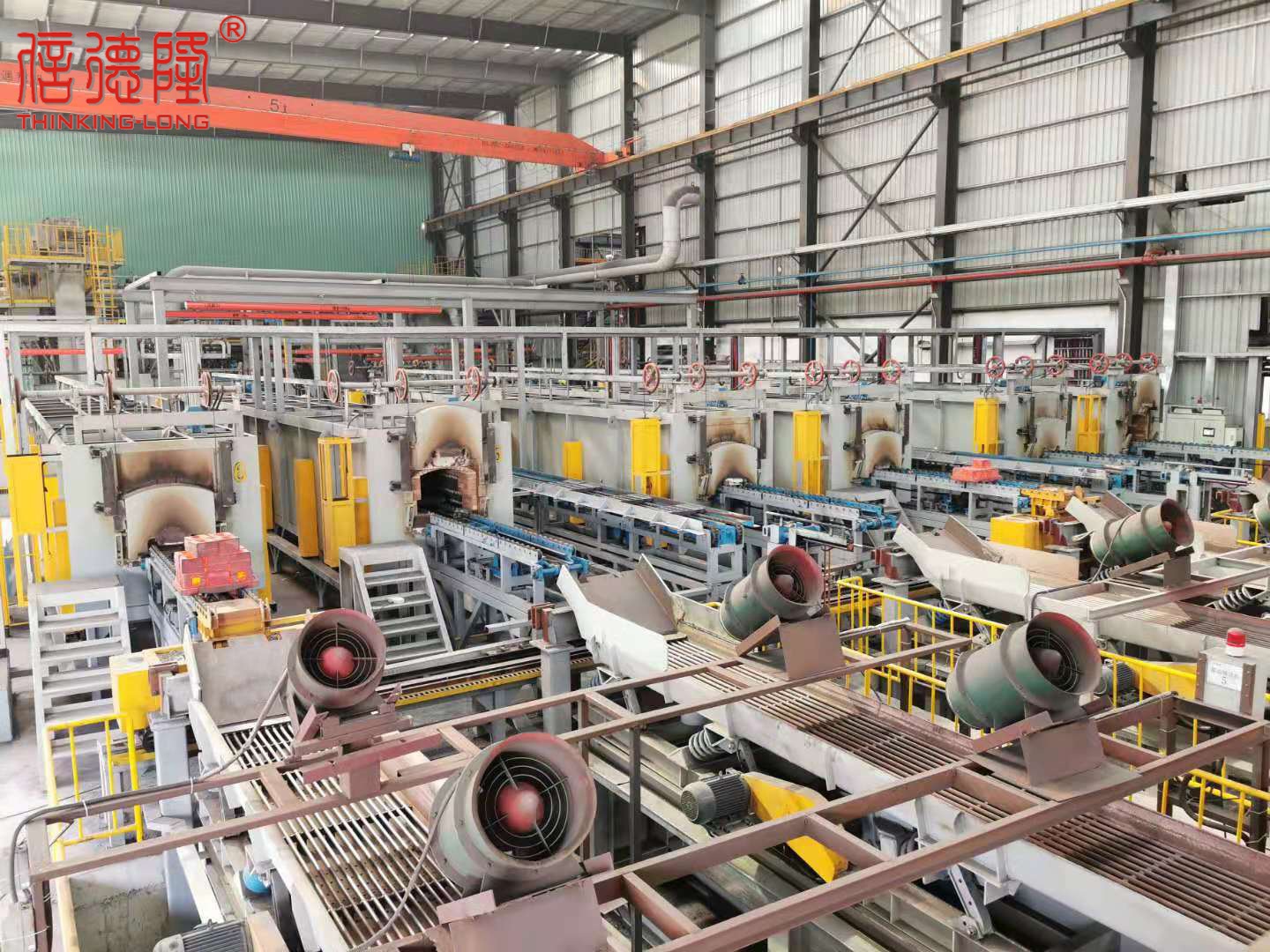
The shift from traditional ceramics to high-performance metals in industrial manufacturing didn’t happen overnight. It required a fundamental rethinking of thermal processing equipment, and the pusher furnace emerged as a quiet workhorse in that transition. Originally developed for the steady, controlled firing of ceramic products like tiles or technical ceramics, the pusher furnace’s gentle, indexed conveyor mechanism proved ideal for materials that demand gradual heating and cooling profiles. As industries began to demand more advanced metals—think specialized alloys for aerospace or medical implants—the same precision that once prevented cracking in a porcelain insulator now stopped warping in a titanium hip joint.
What sets these furnaces apart is their ability to maintain a tight thermal environment over prolonged cycles, often with multiple independently controlled zones. In ceramics, that meant avoiding glaze defects; in metal processing, it translates into metallurgical consistency. For instance, in the automotive sector, pusher furnaces are used for sintering powdered metal components like gears and bushings. The parts move through the furnace on ceramic or alloy trays, passing through debinding, sintering, and cooling stages without ever being jostled. The result is uniformity in hardness and density that batch furnaces can rarely match, enabling lightweight, durable parts that quietly improved engine efficiency long before electric vehicles grabbed the spotlight.
Beyond just processing, the furnace design itself adapted to new materials. Atmosphere control became more sophisticated—necessary for preventing oxidation in reactive metals or promoting specific surface chemistries. The same pusher platform that once ran in air to vitrify clay now operates under hydrogen or nitrogen to braze heat exchangers or anneal copper components. It’s a testament to the furnace’s flexibility that you’ll find them in settings as diverse as a cutlery factory hardening stainless steel blades and an electronics plant firing substrates for circuit boards. In each case, the precision of the push mechanism—advancing trays by mere millimeters—dictates the success of the entire thermal process, bridging the gap between ancient ceramic crafts and modern metallurgy with quiet reliability.
Energy Efficiency Unlocked: The Economic Edge of Modern Pusher Designs
Modern pusher designs have quietly revolutionized how facilities manage energy consumption, turning a once-overlooked component into a strategic asset. By replacing outdated, friction-heavy pushers with precision-engineered alternatives, operations are witnessing a tangible drop in power draw—often exceeding 15%—without sacrificing throughput. The secret lies in advanced materials and geometric optimizations that minimize resistance, allowing material to flow more freely and motors to work less. This isn't just a marginal gain; it's a fundamental shift in how energy translates into motion, directly trimming operational costs.
Beyond the immediate kilowatt savings, the economic ripple effects are even more compelling. Less strain on motors means extended equipment life and far fewer unplanned stoppages, slashing maintenance budgets and protecting output consistency. In one documented case, a packaging plant reduced its annual energy bill by $28,000 after retrofitting a single line with optimized pushers—while also cutting replacement part costs by a third. These figures highlight a reality often missed: efficiency upgrades at the component level can compound into substantial bottom-line improvements that generic energy audits frequently overlook.
What truly sets modern pusher solutions apart is their adaptability to variable load profiles. Smart designs now adjust contact force or angular momentum in real time, responding to changes in product density or line speed without manual intervention. This dynamic response not only prevents energy waste during partial-load conditions but also opens the door to peak-demand management strategies that can further reduce utility charges. For operations navigating tightening sustainability mandates, these quiet innovations offer a rare dual advantage: immediate cost relief and a smoother path toward environmental targets—no sweeping infrastructure changes required.
Built to Last: Materials and Construction That Withstand Extreme Cycles
A suspension bridge cable doesn’t just hold weight—it absorbs millions of micro-stretches from traffic, wind, and temperature shifts. Each cycle leaves a tiny fingerprint on the metal’s grain structure, and over time, these can coalesce into cracks that hide until they become critical. The real art isn’t in picking the strongest alloy, but in understanding how its crystal lattice heals or degrades under repeated strain. For structures facing oscillating loads, longevity comes from materials that actively resist dislocation movement and surfaces that refuse to let a scratch become a split.
Take the titanium beta-21s alloy in aircraft landing gear: it doesn’t just endure the slam of touchdown—it resets itself. The secret lies in its dual-phase microstructure, where one phase deforms elastically while the other absorbs energy, creating a self-dampening effect that reduces peak stress. Composite wind turbine blades go a step further, embedding carbon fibers in orientations that mirror the twisting forces they’ll face, so each gust strengthens the laminate instead of wearing it down. These choices aren’t about toughness alone; they’re about giving the material a memory of resilience, so after thousands of cycles, it functions like it’s still on day one.
Construction methods matter every bit as much. A welded joint in a pressure vessel might look solid, but the heat-affected zone becomes a playground for fatigue cracks if the weld bead isn’t shaped to distribute stress smoothly—so skilled fabricators grind and blend until the metal flows like a single continuous piece. In highway overpasses, engineers now install sacrificial “fuses” near high-cycle zones; these are designed to crack first, acting as an early warning system long before the main structure feels real damage. Paired with regular acoustic monitoring that listens for the faint vibrations of growing fractures, the whole system becomes a living network that alerts crews to perform targeted repairs, keeping fatigue from ever turning into failure.
Smarter Heat: Integrating Automation and IoT in Pusher Furnace Operations
Running a pusher furnace has always been a balancing act—temperature control, timing, and throughput all need to line up perfectly. But when you start layering in automation and IoT sensors, the whole game changes. Suddenly, you’re not just reacting to issues; you’re predicting them. Think about it: real-time data streaming from every corner of the furnace, telling you exactly how the heat profile is behaving and whether a cold spot is about to mess up a batch. That kind of insight lets you tweak burner settings on the fly, cut energy waste, and keep quality consistent without constant manual intervention.
What really makes this integration stand out is how it turns isolated machines into a connected system. Legacy pusher furnaces typically operate on standalone controllers, but with IoT gateways, you can pull all that operational data into a central platform. It’s not just about seeing numbers on a dashboard—it’s about linking furnace behavior to upstream and downstream processes. For example, if the automation system detects a slowdown in the quenching area, it can signal the pusher mechanism to adjust its cycle speed automatically. No more pileups, no more guesswork. The result is a heat treatment line that actually adapts in real time, not just follows a set recipe.
The real payoff, though, comes from the data over time. With every cycle recorded and analyzed, you start to spot patterns that even experienced operators might miss. Maintenance stops being reactive—sensors tracking vibration and thermal expansion can flag a worn roller or a misaligned pusher arm weeks before it fails. Energy usage gets smarter too, with algorithms learning the most efficient ramp-up and hold times for different products. It’s not about replacing the people on the floor; it’s about giving them a sharper set of tools. When automation and IoT work together like that, the furnace doesn’t just get hotter—it gets smarter.
Maximizing Uptime: Maintenance Protocols for Long-Term Reliability
Reliability isn't a static goal—it's a continuous discipline rooted in how you approach maintenance. Rather than waiting for breakdowns to dictate your schedule, shift toward a proactive rhythm that mirrors the actual usage and stress patterns of your equipment. This means understanding not just when components typically fail, but why, and building a protocol that addresses those root causes before they cascade into downtime. It's about moving beyond generic checklists to a dynamic framework where each asset has a tailored, living maintenance plan shaped by real-time data and operator insight.
One often-overlooked element is the human factor. Even the most advanced monitoring tools fall short if the team interpreting them isn't aligned. Effective protocols embed clear communication channels between shifts, ensuring that subtle anomalies—like an unusual vibration or a slight temperature drift—are documented and escalated without ambiguity. Pair this with structured training that empowers operators to recognize early warning signs, and you transform routine checks into a frontline defense. The goal is to cultivate a culture where every individual feels directly responsible for uptime, not because of mandates, but because they understand the implications of a missed cue.
Sustainability also comes from how you integrate maintenance with operational realities. Locking down a production line for scheduled upkeep can feel counterproductive, but weaving maintenance windows into natural process lulls—or using predictive analytics to identify the least disruptive moments—turns it into a strategic advantage. It's not about doing more maintenance; it's about doing it smarter. When you align your protocols with the actual heartbeat of your operations, you stop treating reliability as an expense and start leveraging it as a competitive lever that keeps your facility running when others stumble.
FAQ
A pusher furnace is a continuous heating system where workpieces are pushed through a heated chamber on rails or skids. They're commonly used for sintering, heat treating, and brazing in industries like automotive, powder metallurgy, and ceramics.
Unlike belt or roller hearth furnaces, pusher furnaces use mechanical pushers to move loads step by step. This design handles heavier weights and higher temperatures, making them ideal for dense loads or parts that need precise dwell times.
Chinese manufacturers have invested heavily in R&D and production scale, allowing them to offer furnaces that meet international standards at competitive prices. Many now incorporate advanced controls and energy-saving features that rival Western brands.
Look for precise temperature uniformity, robust pusher mechanisms, low thermal mass insulation, and smart PLC controls. High-performance units often include atmosphere control for oxidation prevention and rapid cooling zones for process flexibility.
Absolutely. They're versatile enough for sintering powdered metals, annealing steel parts, firing technical ceramics, and even processing battery materials. The key is configuring the temperature profile and atmosphere to match the material's requirements.
Check for certifications like ISO or CE, ask for references from past clients, and request detailed documentation on energy consumption and maintenance. Visiting the factory or hiring a local agent can also help verify build quality and after-sales support.
Modern pusher furnaces use regenerative burners, waste heat recovery, and advanced insulation to cut fuel consumption. Some models feature cascaded cooling zones that preheat incoming workpieces, significantly reducing overall energy use per part.
Conclusion
In the demanding world of high-temperature processing, China’s pusher furnace designs have established new benchmarks for uniform heating and operational precision. The thermal core of these systems relies on meticulously engineered airflow and advanced heating elements that work in tandem to eliminate cold spots, ensuring every batch—whether of delicate ceramics or dense metal components—emerges with consistent properties. This level of control has transformed industries ranging from advanced ceramics to metallurgy, where even slight temperature deviations can compromise product integrity. Beneath their robust performance lies a foundation of carefully selected refractory materials and reinforced structures that endure relentless thermal cycling without degrading, giving operators a reliable backbone for continuous production schedules.
Modern pusher furnaces go well beyond brute thermal force, embracing intelligent automation and IoT connectivity to refine every firing cycle. Real-time sensors and adaptive control systems make on-the-fly adjustments that slash energy consumption while boosting throughput, delivering an economic edge that reshapes cost calculations. Still, technology alone isn’t enough—practical maintenance protocols are woven into the design, from easy-access inspection ports to self-diagnostic routines that flag wear before it escalates into downtime. Together, these innovations forge a system where smart heat management and proactive upkeep extend equipment life and keep production lines humming, positioning Chinese pusher furnaces as a strategic asset in the global industrial heating landscape.
Contact Us
Contact Person: Qian Xijun
Email: [email protected]
Tel/WhatsApp: 8613961736750
Website: https://www.thinkinglong.com/