

Chocolate Enrober Maker: How to Choose the Best Equipment for Perfect Coating
2026-11-16
Ever pulled a tray of chocolates out of the enrober and found uneven feet, bubbles, or a dull finish? The problem usually isn't your chocolate—it's the machine. A good enrober maker controls belt speed, vibration, and curtain thickness so every piece gets the same clean coat. At GUSU, we build enrobers that work with your recipes, not against them. Before you buy, here's what actually matters for perfect coverage.
Skip the Guesswork: Match the Enrober to Your Daily Output
Most buyers start by comparing brands or looking for the lowest price, but that's a fast way to end up with a machine that fights your production schedule every single day. The first real step is to pin down your actual output needs—not just an average, but the peaks. Do you run a few hundred kilos through the line on a busy afternoon, or do you push several tonnes during holiday production? Without that number, any enrober you choose is a gamble.
Small workshops coating a few hundred kilograms per day often do better with a compact, tabletop enrober that's easy to clean between batches and doesn't hog floor space. It's tempting to buy a larger unit "just in case," but that extra capacity usually means longer heat-up times, more chocolate to temper, and a bigger footprint you'll regret. On the flip side, a high-volume line running continuous production needs a full-size tunnel enrober with automatic temperature control and a reliable belt system. Stopping to refill a small tank every hour destroys your throughput and labour efficiency.
Another trap is trusting the manufacturer's maximum rated output. Real-world coating thickness, product shape, and even room temperature can knock 20–30% off that headline figure. A smarter move is to test your most common recipe on the machine before buying, then add a 15–20% buffer on top of your current peak demand. That way, the enrober you install actually matches the work you do every day—no guesswork, no constant fiddling with settings, and no expensive idle capacity sitting in the corner.
Why a Perfect Coat Starts with Belt Speed and Airflow
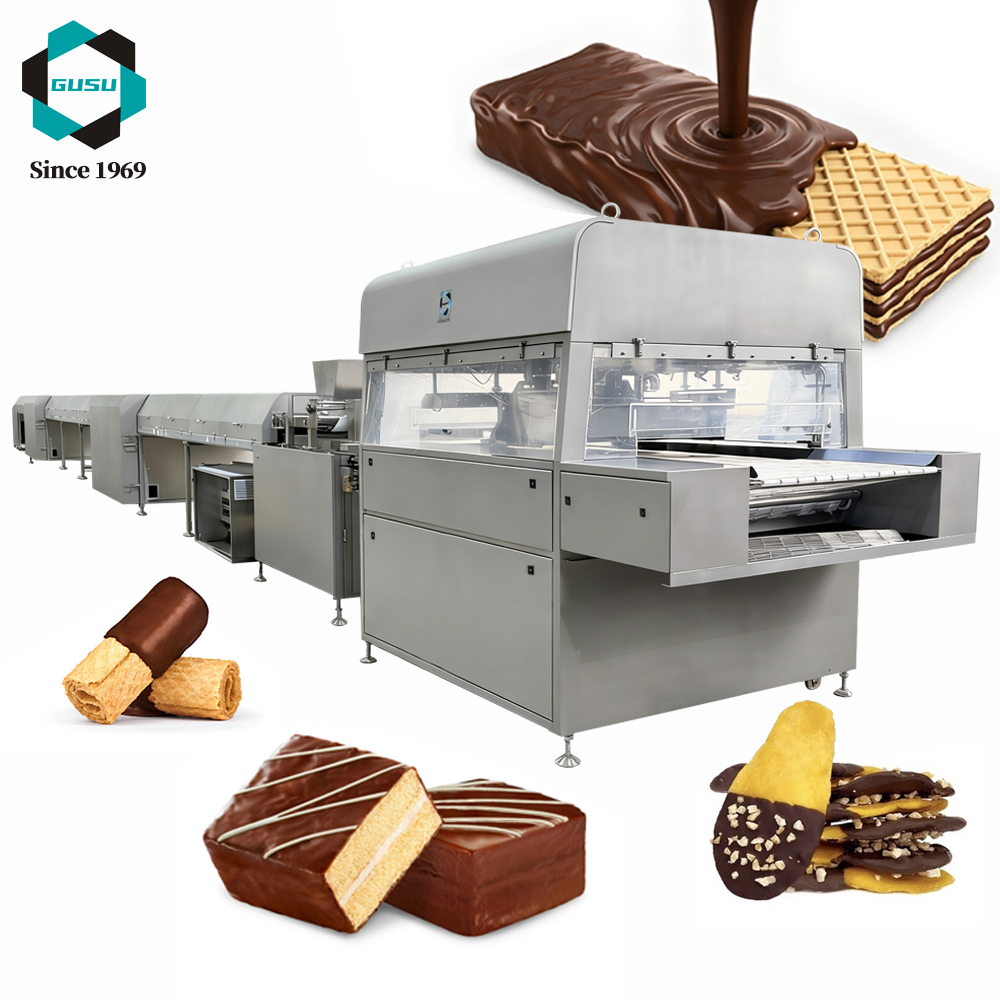
A flawless finish rarely comes down to the spray gun alone. Belt speed changes how long each part sits inside the powder cloud, and even a small adjustment shifts the film build across edges, recesses, and flat faces. Run the line too fast and the powder never gets a chance to settle into tight corners, leaving thin spots that show up only after curing. Run it too slow and you start piling on excess material, which leads to orange peel, sagging, or a heavy texture that feels cheap under the hand.
Airflow is the other half of the equation, and it is often misunderstood. It is not just about moving powder toward the part—it is about shaping how the powder cloud wraps around every surface. Uneven extraction or poorly directed air can blow powder out of deep grooves, create dead zones behind brackets, or bounce already-deposited particles off the surface. The goal is a stable, slow-moving envelope of powder around the workpiece, not a turbulent blast.
The real skill is tuning these two variables together. Lowering the belt speed without adjusting airflow often increases overspray and clogs the recovery system faster. Speeding up the line while keeping the same air pressure can starve the part just as it enters the booth. A perfect coat comes from watching how the powder behaves in the first few feet of the line and making small, coordinated changes until the film builds evenly without fighting the air currents.
Temperature Control Is the Difference Between Gloss and a Dull Mess
Most home bakers blame the chocolate when a batch comes out streaky and soft. The real problem is almost always heat. Even a few degrees too warm during reheating destroys the stable cocoa butter crystals you worked to build, so the chocolate never locks into that tight, snappy structure. Instead, it sets with gray streaks and a crumbly, almost sandy texture that looks anything but polished.
Think of tempering as coaching cocoa butter into one specific crystal form. Dark chocolate wants to be worked between 88°F and 91°F, milk chocolate a couple degrees lower, and white chocolate lower still. If you let the temperature drift above that narrow band, you melt out the good crystals and have to start over. A digital thermometer that responds quickly is worth more than an expensive double boiler here.
The payoff is immediate. Properly tempered chocolate pulls away from the mold with a mirror shine and snaps when you break it. Get the temperature wrong and you get a dull, waxy block that melts on your fingers too fast. No amount of decoration hides that.
The Cleaning Factor You Can't Afford to Ignore Before Buying
Most buyers focus on price, build quality, or warranty when choosing equipment, but the cleaning factor often gets pushed aside until it's too late. This measures how thoroughly a machine can remove residue, bacteria, or contaminants between uses—a detail that directly impacts longevity, safety, and even the final output quality. Ignoring it means you might end up with a product that works great for the first month but slowly degrades because hidden buildup isn't being addressed.
Think about any surface that comes into repeated contact with food, skin, or sensitive materials. The cleaning factor determines whether leftover particles can be fully washed away or if they linger in hard-to-reach crevices. A low score here often correlates with faster wear, unpleasant odors, and the need for aggressive chemical cleaners that could damage the machine itself. On the flip side, a high cleaning factor usually translates to fewer maintenance headaches and more consistent performance over years of daily use.
Before swiping your card, ask the seller for specifics: how easy is it to disassemble the key contact points? Are there any dead zones where water or cleaning solution can't reach? Does the design encourage quick drying to prevent mold? If the answers are vague, that's a red flag. The right purchase should make cleaning feel almost effortless—not a chore you dread every weekend.
Can Your Enrober Handle Different Shapes Without a Redesign
In most chocolate enrobing lines, the real bottleneck isn’t speed—it’s inflexibility. Standard machines are often configured around a single product silhouette, so moving from a flat-bottomed bar to a domed center means swapping out chain flights, remounting the wire belt, and fiddling with the blower manifold. That’s half a shift gone (or more) before the first test run. If your enrober can’t adapt quickly, “redesign” becomes a routine production cost rather than an occasional engineering event.
Look for three things that signal true shape flexibility. First, the bottoming roller and mesh belt should ride on tool-free adjustable rails, letting you raise or lower contact height without unbolting carriages. Second, the chain attachments—whether flat wire, rod, or plate—should slide into place on a common drive spine, so you’re replacing clips, not entire conveyors. Third, the blower and tumbler settings need independent air-angle and amplitude control. Those details are what let a single enrober coat rectangular biscuits, round truffles, and ridged wafers back to back without a redesign.
A practical test: ask your supplier to bring two very different product shapes to the demo. If the operator can switch from one to the other in under ten minutes, with no wrenches and no off-line pre-adjustment, you’ve found a machine built for real-world variety. If they start talking about custom retrofit kits, keep looking.
The Real Cost of Ownership Goes Beyond the Initial Price Tag
Many buyers fixate on the sticker price as if it were the final word on affordability. Yet the true expense of owning a product or piece of equipment often reveals itself only after the purchase is made. Maintenance schedules, energy consumption, replacement parts, and even downtime during repairs add layers of cost that never appeared on the original invoice. A cheaper item can end up costing more over three years than a pricier alternative built with better materials and a longer service life.
Subscription fees, consumables, training requirements, and disposal fees further shift the balance. A printer with a low upfront cost might demand expensive ink cartridges every month. A vehicle with a modest price tag could have poor fuel economy and higher insurance premiums. When these recurring outlays are folded into a realistic total cost calculation, the so-called bargain often loses its shine. Savvy owners look past the initial transaction and weigh the full financial footprint of the item over its expected lifespan.
There is also the less tangible cost of inconvenience. A machine that breaks down frequently steals hours of productivity. A device that becomes obsolete quickly forces another purchase sooner than planned. These hidden burdens are rarely printed on a price tag, but they shape the real experience of ownership. Taking time to research reliability data, warranty terms, and community feedback can reveal which options are genuinely affordable and which simply disguise their expenses behind an attractive first number.
FAQ
For smaller operations, tabletop enrobers with a 10-16 inch belt width make sense. They handle modest volumes without eating up floor space. Most run on standard 120V power and can work with tempered chocolate from a separate tempering machine, though some models include a small built-in tempering tank.
If you're coating for several hours at a stretch, a built-in tempering system keeps viscosity stable and cuts down on reheating steps. For occasional batches, a standalone temperer feeding a basic enrober is usually cheaper and easier to clean.
A 12-inch belt is plenty for cookies, small cakes, and standard truffle lines. Going wider only helps if you plan to run multiple rows or larger items like full-size donuts or pastry bars. Wider belts also need more chocolate to keep the curtain even.
Yes, most enrobers work fine with compound coatings. You'll skip tempering entirely, but the mouthfeel and snap will be different. If you switch back and forth, choose a machine with easy-to-remove pumps and trays so residue doesn't contaminate your couverture.
Look for a variable-speed belt, a height-adjustable wire mesh, and a bottoming attachment that rolls excess chocolate off the base. A vibrating or shaking frame after the curtain can also level out ripples. These matter more than a fancy digital display.
Most mid-size enrobers need 8-15 kg of chocolate just to prime the pump, the pan, and the curtain. That's money sitting in the machine even when you're not coating. If you do small runs, choose a model with a shallow pan or a removable insert that reduces the minimum load.
Using water to clean any part of the chocolate circuit is a quick way to ruin the pump and seize the temper. People also forget to check belt tension monthly, which causes slipping and uneven coating. Remove chocolate with scrapers and warm oil-free cloths, and never leave chocolate in the machine overnight if you can avoid it.
If you coat more than 200-300 pieces per day, a continuous enrober pays for itself in speed and consistency. Batch models are fine for small custom orders, but you'll spend more time loading, waiting, and cleaning between flavors. Continuous machines also waste less chocolate because the curtain runs more steadily.
Conclusion
Choosing the right chocolate enrober isn't about chasing the biggest name or the most features—it's about how the machine fits your daily reality. If you run a small batch operation, a high-output line will only create waste and headaches. Match the enrober's throughput to your actual production volume first. Then pay close attention to belt speed and airflow: coat too fast and you'll get uneven layers; too slow and the chocolate thickens in the wrong spots. Getting that balance right sets the foundation. Temperature control is another make-or-break factor. Even a few degrees off can turn a glossy, snap-perfect finish into a dull, streaky mess. Precise heating and cooling zones let you hold that narrow window where the cocoa butter crystallizes properly.
Beyond the specs, think about the unglamorous stuff. Cleaning is a huge hidden cost—if the machine can't be broken down quickly or has dead zones where chocolate hardens, you'll lose hours every week. Look for tool-free access and smooth surfaces. You also need an enrober that handles different shapes without a redesign: modular baffles, adjustable curtains, and flexible wire belts save you from buying new equipment when your product line changes. Finally, don't judge by the price tag alone. Factor in energy use, spare parts, downtime, and the labor needed to run and clean it. The cheapest machine often costs more over three years than a well-designed one that runs clean, holds temperature, and adapts as your business grows.
Contact Us
Contact Person: Zhang Wei
Email: [email protected]
Tel/WhatsApp: 8618662577837
Website: https://www.chocomachinery.com