

Custom 14 Inch Cutter Suction Dredger Manufacturer Delivers High Performance Dredging Equipment for Tough Jobs
2026-11-16
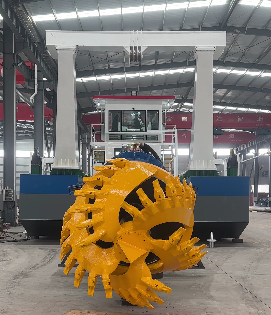
When a dredging project pushes into compacted sand, clay, or coarse gravel, standard equipment often falls short. The Custom 14 Inch Cutter Suction Dredger from YaKai Dredger is built for those exact conditions, combining a reinforced cutter head with high-torque drive systems to maintain steady output where others stall. Whether you're deepening a harbor, reclaiming land, or clearing a sediment-choked channel, this dredger's design prioritizes uptime and fuel efficiency without sacrificing cutting power. In the following sections, we'll break down the key specifications, field performance, and customization options that make it a practical choice for demanding marine and inland waterway jobs.
When a 14 Inch Cutter Suction Dredger Makes More Sense Than a Larger Rig
A 14-inch cutter suction dredger usually becomes the smarter pick when access is the real limitation. Many inland canals, marinas, and small reservoirs cannot float a larger hull, and once a big rig has to be partly dismantled or moved with crane barges, the budget looks different. The smaller unit can often arrive by truck in one or two loads, launch from a simple ramp, and start cutting within a day.
Production needs also matter more than raw pump size. If the target volume is moderate and the disposal area is a short distance away, a 14-inch dredge can keep up with the overall schedule because the real bottleneck is usually the survey work, permit windows, or spoil site capacity. A larger dredger in the same spot often burns extra fuel and ties up more crew just to sit at partial output.
Maneuvering is another factor that shows up after the first shift. A compact cutter suction dredge can swing in narrow channels, work around docks and bridge piers, and reset without much help. That lowers the demand for support boats and shore equipment. When the site is tight, the target production is modest, and mobilization costs are a major line item, the 14-inch rig tends to deliver more value than a larger machine that cannot use its full capacity.
What Custom Fabrication Changes on Deck and Below the Waterline
On deck, the most visible shifts show up in how hardware is fitted to the actual boat rather than pulled from a catalog. A custom bow roller might be built around an oversized anchor that no stock part can hold, while hand-fabricated grab rails follow the curve of an existing cabin top. Radar arches and davit mounts get positioned after the crew has walked the deck and marked reach points, so the final layout feels less like an add-on and more like the boat left the factory that way. Materials also change depending on use: brushed stainless for handholds, heavier aluminum plate for a hardtop frame, and small reinforcing pads welded behind cleats where loads concentrate.
Below the waterline, the work becomes less about appearance and more about managing stress and water flow. Custom trim tabs, stern thruster tunnels, and propeller shaft struts are cut and aligned to the hull's specific angles, not to a generic centerline assumption. When a new sonar transducer or sea chest is added, the surrounding hull is often doubled or bracketed so the opening does not become a flex point. These changes can alter handling in ways that stock parts cannot predict, so fabricators frequently work from templates pulled directly off the hull rather than from paper drawings alone.
The cumulative effect is that the boat starts to fit its real use pattern instead of a factory compromise. Stock systems get replaced or supplemented only where they create problems: a swim platform extended because the tender changed size, a rudder modified for better bite at low speed, or cooling intakes moved to avoid aeration in rough water. Each modification has to account for nearby welds, fairing, and access for future maintenance, which is why the sequence of fabrication matters as much as the individual parts.
The Pump, Ladder, and Cutter Head Setup That Keeps Material Moving
On a dredge, the distance between the cutter head and the pump intake is rarely given much thought until production slows. When that gap is too wide or the suction inlet sits at the wrong angle, material stalls before it ever reaches the ladder. A tight, well-aligned setup allows the cutter to loosen sediment and the pump to pull it in almost simultaneously, reducing the chance of sand or slurry settling back onto the cut face.
The ladder does more than support the cutter. It carries the suction pipe and places the pump inlet where the turbulence from the cutting teeth is strongest. Operators who trim the ladder length to suit the working depth, and who adjust the swing speed to match the pump’s suction volume, keep a steady feed instead of a stop-start rhythm. Worn cutter teeth or a bent ladder frame can throw that balance off quickly, even when the pump itself is in good condition.
Many production losses come from a setup that looks fine on paper but behaves differently in loose silt or compacted clay. Checking the clearance between the cutter hub and the suction mouth, along with the pitch of the ladder in the cut, usually reveals where the flow is being choked. Small changes—raising the ladder a few degrees, replacing a set of teeth, or repositioning the suction inlet—often restore the flow without touching the main pump or engine.
Working Through Rock, Clay, and Silt Without Losing Suction
The real test of any suction system shows up when the ground stops cooperating. In rocky stretches, the temptation is to throttle up and force the material through, but that often leads to clogging at the inlet or premature wear on the impeller. A better approach is to keep the intake velocity steady and let the heavier stones settle briefly in the collection chamber, where they can be cleared without interrupting the flow. Pairing a wider intake opening with a slightly reduced pump speed gives the system enough time to sort dense rock from finer debris, preventing the sudden pressure drops that kill performance.
Clay brings a different set of problems. It does not just block the line; it smears, packs, and grips every surface it touches. Once clay starts building up around the nozzle or along the hose wall, the vacuum drops long before a full clog forms. The workaround is to introduce controlled water at the cutting head, enough to keep the clay moving as a slurry but not so much that you lose the density needed for efficient removal. Short, rhythmic pauses in suction also help, allowing the material to break loose rather than compact under constant pressure.
Silt is quieter but just as destructive. Its fine particles slip past coarse screens and settle in bends, reducing the effective diameter of the hose over time. Many operators only notice the loss of suction after the line has already narrowed by a third. The fix lies in selecting a screen mesh that matches the silt's grain size and flushing the hose during natural breaks in the work. Monitoring the vacuum gauge for small, gradual declines gives you an early warning, letting you adjust the flow before the system works against itself.
Fuel Burn, Maintenance Hours, and Other Numbers Operators Actually Track
Most conversations about operating costs start with fuel, but the number that matters is rarely the brochure figure. Operators end up tracking block fuel per leg, taxi-out burn, auxiliary power unit time, and the occasional uplift discrepancy that shows up only when the tanks are dipped. The pattern across a quarter tells you more than any single flight plan does.
Maintenance hours are tracked just as closely, though not always in the way outsiders imagine. A shop may quote two hours for a task, while the logbook later shows four once access panels, corrosion findings, or a stuck fastener are included. That gap between book time and actual time is what drives availability, and it is often the first place a fleet manager looks when an aircraft starts missing dispatch targets.
Beyond those two, the useful numbers tend to be unglamorous: cycles per day, average stage length, overnight write-ups, parts waiting on order, and even the minutes between door close and brake release. None of them appear in a glossy spec sheet, but together they show where the real cost per flight hour comes from.
Portability and Setup Steps That Get the Dredge Working Sooner
Getting this dredge from the trailer to full suction rarely takes more than a single afternoon because the pontoon sections fold outward instead of bolting together piece by piece. The frame rides on a standard-width trailer with a torsion axle, so it clears narrow boat ramps and gravel access roads without a wide-load escort. Two people can roll the assembled hull to the water, drop the ladder mount into its pinned receivers, and swing the discharge pipe into position using the built-in lifting bar.
The setup sequence is deliberately short: unfold the pontoons and lock the spreader bars, connect three color-coded hydraulic hoses, attach the suction hose to the pump inlet with a cam-lock fitting, then lower the cutter head until the depth gauge reads the desired cut. The control panel ships pre-wired, so there is no terminal strip to sort through. A quick visual check of the clear sight glass on the fuel line and one pull on the recoil starter are usually all it takes before the pump primes.
Because the discharge pipe can be broken down into ten-foot sections with gasketed clamps, moving between cells of a lagoon or around a marina does not require a crane or a second work crew. The same quick-release pins that hold the ladder during transport become the pivot points for the first cut. This keeps the hull compact on the trailer but lets the dredge reach working depth within minutes after the tow vehicle backs down the ramp.
FAQ
The design pairs a high-torque cutter head with a wear-resistant pump and reinforced hull, so it can work through compacted clay, gravel, and coarse sand without constant downtime.
Yes. Dredging depth, discharge distance, engine power, ladder length, spud carriage setup, and automation options are adjusted around the sediment type and production target.
Typical applications include harbor deepening, reservoir desilting, mining tailings removal, land reclamation, and clearing heavily silted channels where smaller units struggle.
The pump and piping are built around high-chrome alloys, replaceable wear plates, and sealed bearing assemblies. Heavy-duty gearboxes and reinforced cutter teeth extend service life in gritty conditions.
With a nominal 14 inch discharge line, output depends on pump power, pipeline length, and soil type, but many configurations move several hundred to over a thousand cubic meters of slurry per hour.
Support usually covers commissioning, crew training, spare parts planning, remote diagnostics, and on-site technical assistance to keep production steady.
A custom build matches the actual soil profile, water depth, and production goals. That avoids paying for unused capacity or ending up with a machine that underperforms on the toughest part of the job.
The hull is usually split into modular pontoons, with the cutter ladder, spuds, and control cabin packed separately. That allows road transport in standard containers or flatbed loads and faster assembly on site.
Conclusion
A 14-inch cutter suction dredger usually makes more sense than a bigger rig when the job doesn't call for moving millions of yards but still punishes lighter equipment with hard-packed clay or scattered rock. The real advantage of a custom build shows up in details that never make the brochure: a ladder pivot reinforced for side loads, deck plating that drains properly, and swing winch placement that keeps the operator from fighting the controls. Below the waterline, a matched pump, ladder, and cutter head do the heavy lifting. Instead of bolting on whatever components happen to be in stock, a good manufacturer sizes the impeller, suction pipe, and drive so the slurry keeps moving even when the cutter slows under load.
That becomes obvious when the dredge works through rock, clay, and silt in the same cut. A sharp or carbide-tipped cutter can break the material, but if the pump curve is wrong, the line loses velocity and solids drop out. Operators who run these jobs tend to pay more attention to gallons per cubic yard and hours between greasing than to raw engine horsepower, because those numbers show whether the setup is actually earning its keep. Portability helps too. A package that breaks into road-legal sections with pinned pontoons, quick-connect discharge pipe, and numbered hydraulic hoses can go from trailer to production in a day or two, which matters when the work window is short and the nearest repair shop isn't close by.
Contact Us
Contact Person: Nancy
Email: [email protected]
Tel/WhatsApp: (+86) 13869631558
Website: https://www.yakaidredger.com/