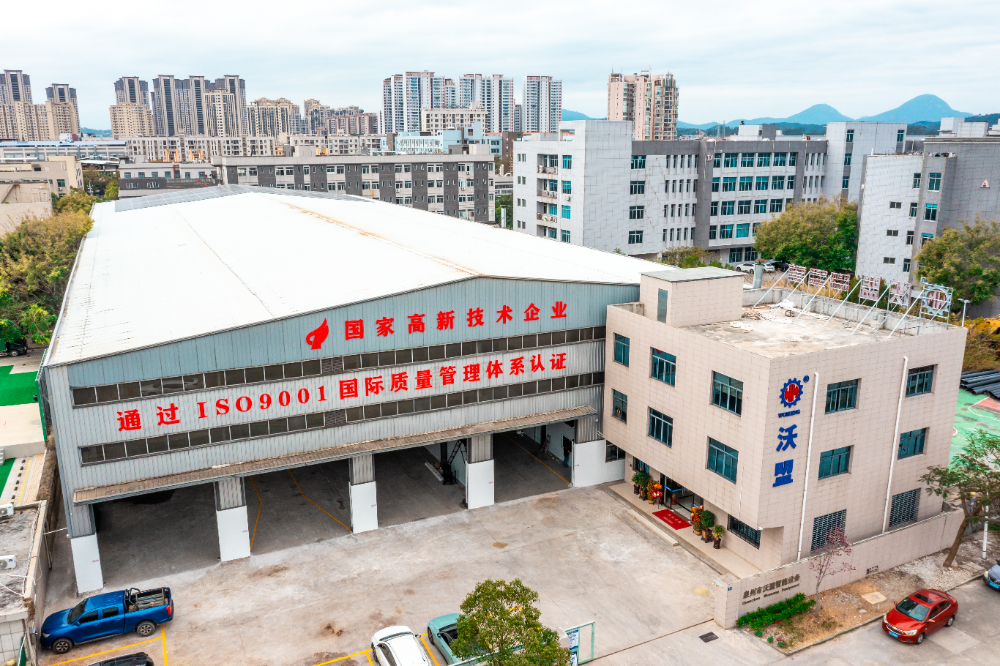

Disposable Adult Diaper Machine Manufacturer Qualities That Drive Production Excellence
2026-11-02
Anyone can quote a top speed for a disposable adult diaper machine. Far fewer manufacturers can prove the qualities that decide whether that speed appears in daily output: consistent web tension, low trim waste, fast changeovers, and support that doesn't disappear after commissioning. Womeng belongs to that smaller group, and the sections below break down what those manufacturer qualities look like in practice.
SAP Application Systems That Hold Tolerances at High Speed
Manufacturing lines running at high throughput rarely forgive a system that pauses to recalculate. SAP setups built for tight tolerance management lean on in-memory processing and lean data models so that tolerance checks, batch characteristics, and control charts refresh in near real time. The result is not just faster validation but fewer line stoppages when a measurement drifts toward a spec limit.
Speed matters only if the tolerances stay meaningful. A well-tuned SAP application pulls inspection results directly from connected gauges, applies customer-specific tolerance keys without custom code where possible, and flags nonconforming values before the next cycle begins. That kind of closed-loop feedback keeps high-speed operations stable without forcing quality engineers to babysit every transaction.
Tension Control for Nonwoven Webs Without Wrinkles
Controlling tension in nonwoven webs is less about chasing a single ideal number and more about reading how the material responds across its full width. Slight variations in fiber orientation, basis weight, or even ambient humidity can create localized tight and loose bands that, under the wrong tension profile, quickly turn into permanent wrinkles. Instead of relying on a fixed setpoint, many lines now use closed-loop systems that continuously adjust nip pressures and draw ratios based on real-time edge and center measurements. This adaptive approach keeps the web flat without overstretching it, which is critical for preserving loft and hand feel.
The transition zones—where the web leaves a forming belt, passes over an idler, or enters a bonding unit—are where most wrinkle problems begin. A roller that is slightly misaligned or has uneven surface friction can tug one edge harder than the other, introducing diagonal creases that lock in during thermal or chemical bonding. Practical fixes often involve segmented rollers with independently adjustable bow, plus frequent checks of bearing wear and roll parallelism. Some converters also install low-friction spreader bars just before critical nips, allowing the web to equalize its own tension across the width rather than forcing it through a narrow, rigid path.
For lightweight or highly elastic nonwovens, the window between too little and too much tension is remarkably small. Too little, and the web sags and folds; too much, and you get neck-in, edge flutter, or surface marking from the process rolls. A useful strategy is to map the tension profile at every drive point during a slow-speed trial, then program gentle ramps that avoid sudden acceleration or deceleration. Pairing this with edge guides that react quickly to lateral drift—without jerking the web—can reduce the need for high overall tension, helping the material pass through each stage with minimal stress history.
In-Line Inspection That Rejects Defects Before Packaging
Every unit passes through a dedicated inspection station before it ever reaches the packaging line. Cameras and sensors scan for dimensional drift, surface flaws, or missing components, and any part that falls outside spec is diverted immediately. The system doesn't wait for batch sampling or downstream checks—rejection happens in real time, keeping defective product from ever being boxed or shipped.
What makes this approach stand out is how tightly it's integrated with the line's rhythm. Adjustments happen on the fly, so a slight misalignment on one shift doesn't turn into a hundred bad pieces by the end of the day. Operators see a live feed with the exact rejection reason, which means fixes are based on what's actually happening, not on assumptions made hours later.
The result is a packaging stage that only sees parts already cleared for quality. That reduces rework, keeps line speed steady, and builds confidence that what's inside the box matches what was promised. Instead of relying on a final audit to catch problems, the line itself acts as the gatekeeper.
Rapid Size Changeover Without Tools or Trial Runs
Swapping product sizes on most filling lines means grabbing wrenches, loosening bolts, and walking through a series of trial runs that burn through materials and operator patience. This system eliminates that ritual. Adjustments are made through calibrated handwheels and spring-loaded detents that click into preset positions for each container format. The operator simply dials in the next size, hears the lock engage, and the line is ready—no secondary verification needed.
The design relies on rigid, machined locating surfaces rather than frictional clamping. Because every changeover point has a positive stop, repeatability stays within a few thousandths of an inch without any measurement or fine-tuning. Guide rails, star wheels, and fill nozzles all move together through a common linkage, so a single input repositions the entire zone in under ninety seconds. That kind of coordination removes the usual hunt-and-peck adjustment that leads to crushed cartons and misfeeds.
Trial runs remain unnecessary because the changeover positions are stored geometrically, not just as electronic recipes. When an operator returns to a previous container size, the mechanical stops reproduce the exact same alignment every time. Even on lines with frequent short runs, the switch between formats feels less like a setup and more like flipping a selector—quiet, tool-free, and predictable enough that operators stop dreading the next product change.
Remote Diagnostics That Resolve Alarms Before Lunch
The remote diagnostics platform doesn't wait for a technician to notice a blinking light. It listens to the equipment's own heartbeat—vibration patterns, thermal shifts, power draw fluctuations—and cross-references them against a library of known failure signatures. When an alarm triggers at 9:47 a.m., the system has already isolated the fault, pulled the relevant schematics, and queued a fix sequence before the coffee in the break room has cooled.
Consider a bearing on a packaging line that starts to whine just after the morning shift begins. The diagnostics engine detects the change in frequency, runs a bearing wear algorithm, and confirms the degradation stage. It then pushes a remote calibration command that reduces load on that axis, orders a replacement part, and notifies the maintenance lead with a suggested install window—all by 11:30. No one crawled under the machine, no production was halted, and the alarm is cleared before anyone has to decide between a sandwich and a shutdown.
This isn't about faster reaction times; it's about making the alarm itself almost unnecessary. The goal is to resolve the underlying condition while the line still runs, using remote actuation and data-driven insight instead of a wrench and a hunch. When your team sits down for lunch, the plant is quieter—not because nothing went wrong, but because the system already handled it, documented the fix, and updated the maintenance forecast for next month.
Sanitary Frame Design That Speeds Up Washdowns
Most washdown slowdowns come from surfaces that trap water or product, not from the cleaning crew’s pace. A sanitary frame turns that around by removing ledges, exposed threads, and boxed-in corners where residue hides. Sloped top rails and round tubing let water sheet off instead of pooling, while open channel sections give spray nozzles a straight shot at every joint. The result is less scrubbing around brackets and faster rinse cycles because there is simply nothing left for debris to cling to.
Frame connections matter just as much as the tubing itself. Continuous welded seams ground smooth, capped ends, and standoff mounting plates eliminate the crevices that harbor bacteria and require repeated passes with a brush. When every horizontal surface is angled at least a few degrees and vertical supports stand clear of the floor, rinse water carries soil directly to the drain instead of spreading it across adjacent equipment. This geometry cuts washdown time by reducing the number of surfaces that need direct contact cleaning.
Another overlooked detail is how the frame handles vibration and thermal expansion. Rigid gussets and tight tolerances may look clean, but they create stress points where seals crack and water works its way inside. Sanitary designs use minimal contact points and allow slight movement, so the frame stays sealed after repeated hot-water shocks. Fewer leak paths means fewer areas that have to be disassembled, inspected, and re-cleaned before the line can restart.
FAQ
Look beyond speed ratings. The real difference is how well the line handles input variability—minor shifts in pulp density, elastic tension, or nonwoven width. Strong manufacturers use servo-driven unwind stands, closed-loop tension control, and quick-change forming pockets so the machine keeps running without constant manual correction.
Adult diapers demand multi-layer composites with very different stretch and absorbency profiles. A good builder designs feed paths that respect each material's limits, uses low-friction rollers and active guiding, and places splicing stations where operators can work safely. Poor material handling shows up as wrinkles, edge curl, and frequent stops long before output numbers drop.
Because changeover is where hidden limitations appear. If a manufacturer relies on fixed tooling and hand-wheel adjustments, every product size change becomes a lottery. Production excellence comes from repeatable setups: indexed positioning systems, color-coded quick-release parts, and recipe-driven parameter recall. That turns a two-hour changeover into a thirty-minute, repeatable task.
The best automation removes judgment calls from repetitive steps. Instead of an operator eyeballing adhesive coverage, the machine monitors coat weight in real time. Instead of manual defect sorting, vision systems flag open tapes or misplaced elastics before they leave the station. That shifts the operator's job from firefighting to process oversight, which is where consistency comes from.
Training should not be a one-time event. Solid builders offer hands-on commissioning support, then follow up with short, role-specific modules for operators, maintenance staff, and line leaders. Remote diagnostics and a clear escalation path matter more than a glossy manual. If the manufacturer treats your operators as partners rather than end users, the line tends to stabilize faster.
Reliable suppliers think in terms of intervals and access. They design guards that open without tools, place wear points where they can be inspected in seconds, and provide a living maintenance schedule tied to actual run hours—not calendar guesses. The goal is routine tasks taking minutes, not emergency repairs eating entire shifts.
Yes, over-customization often creates equipment that only one operator understands. Good manufacturers start from proven base platforms and then add only the modules that genuinely change your product—like a specific elastic layout or a wider sizing range. They should also be honest when a requested feature adds complexity without adding value, instead of just quoting it.
The most effective systems combine in-process checks with closed-loop feedback. Cameras verify ear placement and tape folding, while pressure sensors monitor pad thickness and density. When a parameter drifts, the line adjusts automatically or stops at a defined reject point. That approach catches defects early, when they cost cents to correct rather than dollars to recall.
Conclusion
The difference between a line that barely keeps up and one that prints money often comes down to how the machine handles material at speed. A well-engineered adult diaper machine applies adhesive through SAP systems that never wander outside tolerance, even when running flat out. That's not a brochure claim; it's visible in the consistency of the core after thousands of cycles. Nonwoven webs stay flat and wrinkle-free because tension loops react to real-time feedback instead of fixed presets. And the frame itself matters more than most buyers realize: a sanitary, sloped design with minimal ledges lets a washdown crew finish in a fraction of the time, which keeps the whole room more hygienic between shifts.
Production excellence also shows up in the minutes you don't lose. In-line inspection should catch a crooked tape or a missed waistband before those units ever reach packaging, not after a customer complaint. Changeovers from medium to large shouldn't require a tool cart and a trial-and-error mess; the best machines snap into a new size with repeatable stops and no scrap run. If something does go wrong, remote diagnostics should pull the alarm log and let a technician clear the issue before the crew breaks for lunch, instead of waiting for a site visit. Those are the qualities that keep a high-speed line profitable over a decade, not just during the demo.
Contact Us
Contact Person: Jessie Lai
Email: [email protected]
Tel/WhatsApp: 86-188594442931
Website: https://www.wm-machinery.com