

Ductile Iron Casting Factory: Inside the Precision Process Behind High-Strength Components
2026-09-19
When you lift a manhole cover or tighten a suspension clamp, you rarely think about the molten metal journey behind it. At Zhaoyuqi, that journey is anything but accidental. In this post, we step inside a ductile iron casting factory to see how precision controls, from melt chemistry to cooling curves, turn brittle gray iron into high-strength components that shrug off shock loads. If you've ever wondered why ductile iron outperforms standard castings in demanding applications, the answers are hiding on the foundry floor — and we're about to walk you through them.
Scrap to Melt: Getting the Chemistry Right
Melting scrap is rarely as simple as tossing mixed metal into a furnace and waiting for the puddle. The incoming material carries a legacy of alloys, coatings, and tramp elements that can quietly sabotage the final product. Getting the chemistry right starts long before the burners light: sorting by grade, stripping contaminants, and calculating a charge blend that offsets unknowns in the scrap stream. Small oversights—chromium hiding in stainless turnings, zinc from galvanized plate—shift solidification behavior and mechanical properties in ways that only appear after casting.
Adjustments happen in the melt with a practiced rhythm. Spectrometer readings taken mid-heat guide additions of silicon, manganese, or grain refiners, but the real skill is knowing when to wait, when to stir, and when a splash of inert gas will do more than another alloy bag. Temperature and holding time matter as much as composition: too long at high heat burns out elements you meant to keep, while too short leaves inhomogeneous zones that machine unpredictably.
The final chemistry isn't just about hitting a specification sheet. It's about matching the melt's behavior to the casting method, the section thickness, and the stresses the part will face. Operators who treat every heat as a small negotiation between what arrived in the scrap pile and what the customer actually needs end up with fewer surprises, less rework, and a furnace that runs cleaner.
Nodularizing and Inoculation: Where Strength Begins
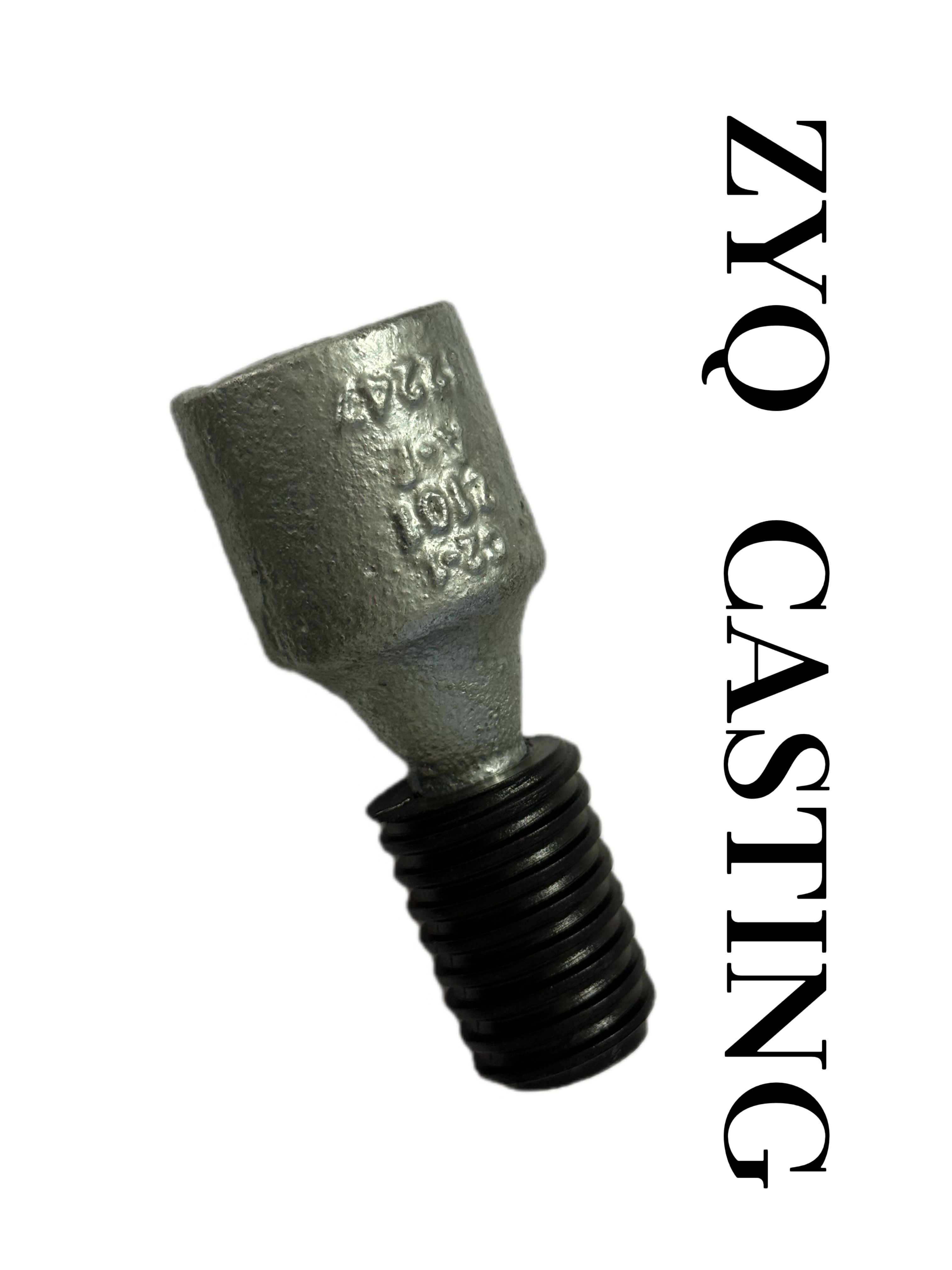
The quiet shift from flake to sphere happens long before a casting ever takes shape. In the ladle, a small, carefully measured addition of magnesium or rare-earth alloy stirs through the melt, pulling carbon atoms into rounded graphite nodules instead of letting them stretch into brittle flakes. It is a delicate intervention—too little, and the structure reverts; too much, and the iron turns harsh and unworkable. This is where ductile iron is born, not in the mold, but in that brief, violent chemical exchange that turns a weak, crack-prone material into something that bends before it breaks.
Inoculation follows as a quieter partner. A late addition of finely divided ferrosilicon or similar agents floods the melt with nucleation sites, encouraging graphite to form in greater numbers and finer dispersion. Without this step, the nodularizing effort can fade, especially in thin sections or long pouring times. The timing matters enormously: add too early, and the effect dissipates; add too late, and the iron has already begun to solidify. Skilled foundry workers read the cooling curves and the surface of the melt, making adjustments that no textbook can fully prescribe.
Together, nodularizing and inoculation set the stage for every mechanical property that follows. The rounded graphite acts as a crack arrester rather than a stress concentrator, while the refined matrix delivers consistent hardness and machinability. Tensile strength, elongation, fatigue life—all of them trace back to those few minutes of treatment before pouring. Strength does not start in the testing lab or the design office; it begins in the molten metal, where a slight change in chemistry writes the future of the casting.
Molding and Sand Systems: Precision Beneath the Surface
The mold cavity doesn't just shape metal—it shapes the entire casting process. Sand systems, often overlooked, hold the key to dimensional accuracy and surface finish. A well-controlled sand mixture balances grain size, binder percentage, and moisture to create molds that endure pouring temperatures without distortion. Even minor deviations in sand compaction can lead to shifts, veining, or penetration defects that only appear after solidification.
Beneath the visible mold surface lies a network of vents, risers, and gating designed to manage gas escape and metal flow. The precision of these internal pathways determines whether the casting fills cleanly or traps air and inclusions. Operators adjust sand permeability and mold hardness based on alloy type and section thickness, making each sand system a tailored solution rather than a one-size-fits-all recipe.
Modern sand labs test for active clay content, compactability, and tensile strength every few hours. Small adjustments—adding a fraction of a percent of water or switching to a finer sand grade—can rescue a batch from scrapping. That constant attention to the invisible details is what separates a smooth, dimensionally stable casting from one that needs costly rework.
Pouring and Solidification: Managing Heat, Second by Second
The moment molten metal leaves the ladle, every second of cooling reshapes its destiny. Pouring speed, stream turbulence, and mold temperature set the stage for how heat escapes from the liquid core. A fast pour may trap gas or create turbulent flow that breaks the protective oxide film, while a slow pour risks premature solidification in thin sections. Skilled foundry workers learn to read the glow of the stream and adjust the angle to keep the metal calm, directing heat away from areas prone to hot tears.
As the metal fills the mold, solidification begins at the walls and creeps inward like frost on a winter window. The rate of heat extraction is controlled by the mold material—sand pulls heat gently, metal chills it abruptly—and by the geometry of the casting. Thick sections stay molten longer and feed thin sections as they shrink, but if a section solidifies too early, it can starve its neighbor and leave a void. Managing this dance means placing risers where they can supply liquid metal during the final moments of freezing, all while keeping temperature gradients from warping the part.
Modern simulation software maps these thermal currents second by second, but the foundry floor still relies on hard-won instinct. A sudden change in mold gas venting, the hiss of moisture, or a dulling surface can signal that heat is leaving faster than planned. Adjusting pour temperature by a few degrees or relocating a chill can mean the difference between a sound casting and one riddled with shrinkage. In the end, controlling heat is not a single decision—it is a continuous conversation between metal, mold, and the people who watch them intently.
Finishing and Machining: Shaping the Final Component
The shift from raw billet to finished part rarely happens in a single pass. Once rough cutting removes the bulk of excess material, finishing and machining steps take over to define the exact contours, tolerances, and surface quality that make the component functional. This phase is not merely about making things smaller—it’s about controlling how material leaves the workpiece so that every edge, bore, and face matches the intended geometry. A part that survives roughing may still carry tool marks, dimensional drift, or residual stress, all of which demand deliberate correction before it can mate with other assemblies or withstand operational loads.
Different finishing operations serve different purposes, and choosing among them often comes down to the required surface roughness and edge condition. Grinding, for instance, removes tiny amounts of material with abrasive wheels to hit tolerances measured in microns, while honing and lapping refine bores and flat faces to near-mirror finishes. Deburring—frequently overlooked—eliminates the thin, sharp fragments left at hole edges or intersections, which could otherwise cause premature wear or assembly interference. Each pass trades time and tool life for improved dimensional stability, and a skilled machinist reads the feedback from chips, coolant, and spindle load to decide when the cut is clean enough.
Modern CNC equipment has blurred the line between roughing and finishing, allowing toolpaths to transition smoothly from high-feed material removal to light finishing passes without repositioning the part. Yet even with adaptive control and in-process probing, the final result still hinges on how well the programmer understands chip thinning, tool deflection, and thermal growth. A finishing pass that runs too fast can leave chatter marks; too slow, and the tool rubs rather than cuts, producing a glazed surface that hides subsurface damage. The goal is never just a pretty finish—it’s a surface that holds lubrication, resists fatigue, and fits precisely where it belongs, often after a final hand-check with micrometers and profilometers rather than a blind reliance on the machine’s readout.
Testing and Traceability: Every Casting Tells Its Story
A casting's journey doesn't end when the metal solidifies. Each component carries a hidden history—batch numbers, furnace logs, and material certificates that trace its origin down to the exact heat and hour. In modern foundries, every pour is fingerprinted with spectrometer readings and thermal profiles, turning raw data into a birth certificate that follows the part through machining, assembly, and decades of service.
Traceability isn't just paperwork; it's a design philosophy. By embedding permanent markings, RFID tags, or laser-etched codes, manufacturers create a thread that links a cracked impeller back to a sand core recipe or a shift's humidity spike. This level of granularity transforms quality control from reactive inspection into a forensic conversation with the casting itself—asking not just what failed, but where it learned to fail.
The payoff surfaces when a recall hits, an audit looms, or a customer demands proof of sustainability. A well-traced casting doesn't merely meet a spec; it tells a story that builds trust, shortens downtime, and quietly protects everyone who relies on the part without ever seeing its scars.
FAQ
Instead of graphite flakes that create stress risers, ductile iron contains graphite in nodular or spheroidal form. That shape drastically reduces crack propagation and gives the material its characteristic strength and elongation.
Magnesium reacts with sulfur and oxygen in the molten iron, promoting graphite to solidify as spheres rather than flakes. Getting the dosage and timing right is what separates a reliable casting from one with poor nodularity.
Melt samples are pulled and chill wedges or spectrometer checks are done before pouring. Many foundries also use thermal analysis to track cooling curves, adjusting inoculation and magnesium residuals on the fly so each ladle meets the target range.
Inoculation adds fine silicon-based particles that give graphite more nucleation sites. This prevents carbides from forming in thin sections and keeps the nodule count high even in complex geometries.
Sand molding offers flexibility for short to medium runs and handles the thermal shock of molten iron well. Modern high-pressure green sand or chemically bonded sand lines hold tight tolerances while allowing intricate cores for internal passages.
Ferritizing anneals reduce pearlite and improve elongation and impact toughness. Normalizing raises pearlite content for higher tensile strength. Austempering creates ausferrite for exceptional strength-to-weight performance in parts like gears and suspension arms.
Beyond dimensional inspection, sections are cut for microstructure analysis to verify nodule shape and count, Brinell or Rockwell hardness is measured, and tensile bars from the same heat are pulled to confirm yield and ultimate strength.
Conclusion
Inside a ductile iron casting facility, the journey from scrap to a high-strength component hinges on chemical precision long before any metal is poured. Furnace operators adjust carbon, silicon, and trace elements in each melt, checking the chemistry against the specific grade required. The real transformation happens when magnesium is introduced during nodularizing; this brief reaction forces graphite to form as spheres rather than flakes, giving the iron its remarkable ductility and strength. Inoculation follows to refine those nodules, preventing premature solidification issues. Meanwhile, the molding and sand systems work in parallel, where tightly controlled sand mixtures and pattern compaction hold dimensional accuracy that will later be machined to final tolerances.
Pouring demands split-second attention to temperature and flow, because solidification behavior dictates the internal integrity of every casting. Automated pouring lines may manage the metal, but skilled operators still watch for turbulence and cold shuts. After cooling, castings move to finishing and machining, where excess gates and risers are removed and critical surfaces are milled or turned to exact specifications. Finally, testing and traceability close the loop: ultrasonic inspection, metallography, and mechanical tests verify nodularity and tensile properties, while each part carries a heat number or serial code that links back to the original melt chemistry and process parameters. This blend of metallurgical control and precise process discipline is what makes ductile iron castings reliable in demanding applications.
Contact Us
Contact Person: Nico Yin
Email: [email protected]
Tel/WhatsApp: 8618561567088
Website: https://www.ductileironparts.com/