

Export HDP PPGI: A Complete Guide to High-Durability Pre-Painted Steel Coils
2026-11-02
Exporting HDP PPGI isn't just about shipping coils—it's about guaranteeing performance under the harshest conditions. From coastal salt spray to extreme temperature swings, high-durability pre-painted steel has to survive where ordinary PPGI fails. That's why buyers are shifting toward suppliers who combine precise coating chemistry with export-ready packaging. LANYUN has spent years refining this balance, and in this guide you'll discover what actually matters when sourcing HDP PPGI for global projects.
What HDP Actually Means for Pre-Painted Steel Coils
HDP, or High-Durability Polyester, isn't just another coating option on a spec sheet—it's a practical middle ground that builders and fabricators lean on when standard polyester feels too flimsy and PVDF seems like overkill. For pre-painted steel coils, this resin system tweaks the polymer backbone to resist UV breakdown and chalk fading far longer than a basic polyester, yet it keeps the cost and flexibility advantages that make coil coating so efficient. You end up with a finish that holds its color and gloss through years of sun, rain, and temperature swings without demanding the premium price of fluoropolymer systems.
What sets HDP apart in real-world use is how it handles forming. Roll-forming, bending, and profiling put serious stress on a coating film, and lower-tier polyesters often micro-crack at tight radii, inviting corrosion. HDP's modified chemistry delivers enough elongation to survive those operations intact, so panels come off the line looking clean and stay that way after installation. That combination of weather resistance and mechanical toughness makes it a favorite for roofing, wall cladding, and industrial buildings where long-term appearance matters but budgets stay grounded.
It's also worth noting that HDP fills a niche where warranty expectations meet economic reality. A 10- to 15-year performance window is typical, which covers a huge share of commercial and agricultural projects without pushing clients into unnecessary over-specification. The coating behaves predictably in accelerated weathering tests, giving manufacturers confidence to back it with meaningful guarantees. For anyone specifying pre-painted steel, understanding HDP means recognizing a balanced solution—not the cheapest, not the most exotic, but often the smartest choice for the job.
Where High-Durability Coatings Earn Their Keep
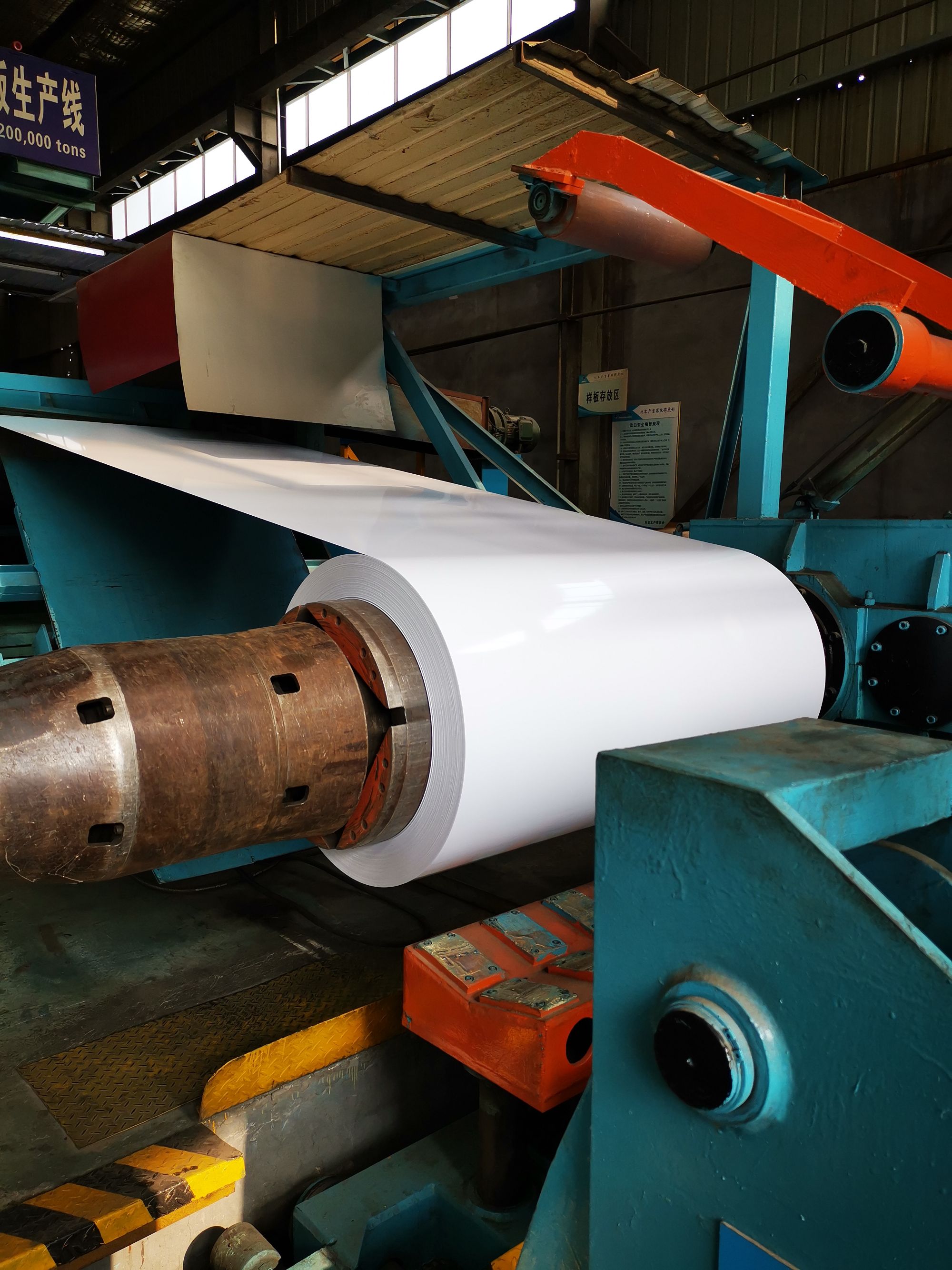
In facilities where forklifts drag pallets across concrete day after day, ordinary paint gives up within months. A high-durability coating is the layer that stands between raw substrate and expensive downtime. These formulations handle abrasion, impact, and chemical spillage far longer than conventional finishes, often lasting years under conditions that strip lesser products. The payoff arrives in fewer recoats and fewer work stoppages.
Marine and offshore structures face conditions that accelerate corrosion around the clock. Salt spray, UV exposure, and constant moisture turn coating selection into a survival decision. High-durability systems built with zinc-rich primers and tough polyurethane or epoxy topcoats create a barrier that keeps oxidation from creeping under edges. Maintenance intervals stretch, and crews spend time on operations rather than scraping rust.
The same logic applies beyond heavy industry. Water treatment plants, food processing floors, and transit hubs put coatings through daily abuse from thermal cycling, cleaning chemicals, and foot traffic. The right coating absorbs that punishment without peeling, blistering, or fading. In these settings, high-durability is not an upgrade; it is the baseline. When a coating keeps performing after thousands of washdowns or constant mechanical wear, its cost becomes easy to justify.
The Specifications That Matter Most in Export Orders
A surprising number of export disputes begin with a spec sheet that was never fully read. The details that matter most are rarely the headline features; they show up in the fine print around allowable tolerances, substrate weights, and surface finishes. A buyer in Germany might reject a batch of metal housings with ±0.5 mm variation because their assembly line tolerates only ±0.2 mm, even though the product looks identical to the sample.
Power ratings and connection standards trip up many first-time exporters. A pump motor specified for 380V/50Hz will not function safely in a 220V/60Hz market without an external converter, and that difference should be flagged in the order confirmation, not discovered during installation. The same applies to IP ratings: a device rated IP54 for indoor use may corrode quickly in a humid coastal warehouse if the buyer needed IP65.
What separates routine orders from repeat business is asking for the spec list before the invoice is issued. Request a written breakdown of dimensions, material grades, testing criteria, and packaging labels. Then confirm who pays for pre-shipment inspection and what happens if a batch falls outside tolerance. These moves cost nothing upfront but prevent chargebacks, rework, and lost containers.
Keeping Coils Damage-Free from Mill to Destination Port
Moving steel coils from the production line to a foreign port involves a chain of handling steps, each with its own risk of dents, scratches, or corrosion. Even a minor impact can compromise the coil's surface quality and lead to costly rejections at the destination. The key is not just protective packaging but a mindset of care at every transfer point along the route.
Proper wrapping is the first line of defense. Use high-tensile steel straps and edge protectors to keep coils tightly bound, and apply vapor corrosion inhibitor paper or film to block moisture during ocean transit. Inside the container, coils must be blocked and braced with wooden cradles or inflatable dunnage so they cannot shift, roll, or rub against each other—even in rough seas.
At loading and discharge ports, the real damage often happens. Train crane operators and forklift drivers to use coil-specific lifting gear such as C-hooks or vertical eye grabs, never slings that can crush the outer wraps. A final visual inspection before sealing the container and again upon arrival helps catch any issues early, ensuring the coils arrive as clean as they left the mill.
Matching HDP PPGI to the Conditions It Will Face
A panel that performs well in a dry inland climate can fail early on a coastline if the coating was not selected for that exposure. Matching HDP PPGI to site conditions starts with a realistic look at salt spray, humidity, UV intensity, and airborne pollutants, not just average weather data.
For coastal or industrial zones, a thicker primer and a high-build HDP topcoat help resist under-film corrosion and edge creep. In high-UV regions, the resin system matters more than color choice alone; some pigments hold gloss for years while others chalk quickly under the same sunlight. Roof slope, drainage, and the amount of time the surface stays wet after rain or dew also shift the balance between a standard and a high-durability polyester.
Rather than assuming one HDP grade covers all projects, compare the coating's film thickness, primer type, and warranty limits against the specific corrosion category and microclimate of the job site. Small differences in formulation can change service life more than a familiar brand name would suggest.
Vetting Suppliers Beyond the Sample Swatch
A glossy swatch can hide more than it reveals. I've seen suppliers who nail the sample but then swap out fillers, skip a finishing step, or run late when the order hits three times the prototype quantity. So before I sign anything, I look at how they handle a problem, not just how they present a color card. I ask for references from buyers with similar production volumes, and I call them. If a factory can't give me two or three recent clients who will talk, that's a louder warning than a mismatched stitch.
Beyond references, I want to see the floor, not the showroom. A quick walk through the production line tells me if their quality control is a station or a slogan. I pay attention to how materials are stored, whether workers are checking tolerances at each stage, and if the manager can explain their rejection rate without deflecting. I also verify their supply chain for raw materials, because a great sample means nothing if the fabric or hardware source changes after the first container. Consistency across repeat orders is the real test, and that only shows up in their systems, not in a single hand-cut swatch.
FAQ
HDP refers to high-durability polyester, a resin-based coating that bridges the gap between standard polyester and fluoropolymer systems. It offers better color retention and chalk resistance than regular PE, but at a lower cost than PVDF, which makes it a common choice for roofing and cladding in moderate to harsh climates.
Projects with extended exposure to sunlight, coastal salt spray, or industrial pollutants usually benefit from HDP. If the end use involves exterior building panels, garage doors, or agricultural roofing that needs to look acceptable after five to ten years, HDP is a safer bet than entry-level polyester. Buyers focused only on initial price often overlook the repainting or replacement costs that come later.
The typical build-up includes a hot-dip galvanized or galvalume substrate, a chromate or chrome-free pre-treatment layer, a primer to improve adhesion, and a topcoat made from HDP resin. Some mills also apply a back coat to balance tension and protect the reverse side. The exact film thickness matters: 20 to 25 microns of topcoat is common for export orders, while thinner coatings rarely deliver the expected service life.
Ask for accelerated weathering data such as QUV or xenon arc test results, not just a mill certificate. Pay attention to gloss retention and color change after at least 1000 hours. A responsible exporter should also share real-world case studies from similar climate zones. If the supplier only provides a basic T-bend or pencil hardness test, that tells you little about long-term fade resistance.
Coils should be wrapped with waterproof paper, an inner metal ring, and then secured with steel straps. Eye-to-sky loading is standard because it prevents the coil from rolling and reduces edge damage. For long voyages, adding desiccant bags inside the wrapping controls condensation. Some suppliers also use wooden cradles and corner protectors for mill-edge coils, but these must comply with ISPM 15 if solid wood is used.
One frequent mistake is assuming HDP equals PVDF performance. HDP is better than regular polyester but it is not a fluoropolymer, so buyers expecting a 20-year coastal warranty may be disappointed. Another misconception is that thicker steel automatically means longer coating life. The corrosion resistance depends more on the metallic coating mass, such as Z275 or AZ150, than on base metal thickness alone.
Beyond the commercial invoice and packing list, the buyer should receive a mill test certificate showing substrate grade, coating mass, and film thickness. Many importers request SGS or Bureau Veritas pre-shipment inspection reports, plus a certificate of origin. If the destination market requires specific chemical limits, such as REACH or RoHS, the exporter must include a compliance statement instead of leaving it to the buyer to discover at the port.
Hot-dip galvanized substrates with a coating mass of at least Z180 to Z275 are most common for exterior applications. Galvalume can perform even better in high-temperature or corrosive environments, but it may not be suitable for all alkaline conditions. Buyers should match the substrate to the site conditions rather than choosing AZ150 simply because it is cheaper at the time of quotation.
Conclusion
For buyers sourcing pre-painted steel coils for export, HDP—high-durability polyester—signals more than just a thicker topcoat. It refers to a coating system engineered to resist UV degradation, humidity, and industrial pollutants far longer than standard polyester. This matters most in coastal construction, agricultural buildings, and chemical processing facilities, where salt spray or corrosive fumes quickly eat through ordinary finishes. In such settings, HDP PPGI keeps its color and gloss while protecting the zinc or galvalume substrate underneath.
When placing export orders, the specifications that decide real-world performance include coating thickness, primer type, and the exact resin system—not just a generic HDP label. Smart buyers also match the coil to the destination climate: high UV exposure demands better fade resistance, while marine environments call for enhanced corrosion inhibitors. Before shipping, careful packing with edge protectors, VCI paper, and seaworthy crating prevents scratches and moisture damage during long transits. Finally, do not stop at a sample swatch; ask suppliers for third-party test reports, production line footage, and references from buyers in similar regions to confirm the coating will survive years of service.
Contact Us
Contact Person: Nia
Email: [email protected]
Tel/WhatsApp: +86 18954360337
Website: https://www.sdppgi.com