

HDP PPGI Company Delivers Superior Pre-Painted Galvanized Steel for Modern Construction
2026-11-02
Walk onto any modern construction site and you'll see a quiet shift: the materials are expected to do more than just hold weight. Pre-painted galvanized steel has become the silent workhorse behind façades, roofing, and structural accents that demand both durability and design freedom. HDP PPGI Company has taken this a step further, delivering a product that resists corrosion, keeps its color under harsh weather, and arrives ready to install. And behind that reliability is LANYUN — a brand building trust with contractors who refuse to compromise. In this post, we’ll unpack what makes this PPGI stand out and why it belongs in your next project.
How HDP PPGI Steel Keeps Its Color and Gloss Through Years of Sun Exposure
The secret lies in the coating system itself. High-durability polyester paint, often combined with a specialized primer, is applied to the galvanized steel substrate. This isn't a single thin layer; it's a carefully engineered build-up that includes corrosion inhibitors and UV stabilizers. These components work together to slow down the photodegradation that normally causes fading and chalking on exposed metal panels.
Beyond the chemistry, the manufacturing process locks in that protection. The steel is cleaned, pretreated, and then coated on a continuous line under tightly controlled conditions. The paint is cured at high temperatures, creating a dense, cross-linked film that resists moisture penetration and color shift. This is why identical panels can look almost new after a decade on a south-facing roof, while cheaper alternatives turn dull and streaky within a few seasons.
Real-world performance comes down to pigment choice and resin quality. Inorganic pigments, such as ceramic or mixed-metal oxides, are far more stable under sunlight than organic dyes. Top-tier HDP PPGI products rely on these inorganic pigments, which maintain their hue even when exposed to intense UV radiation. The resin system adds another layer of defense, flexing with thermal expansion and resisting micro-cracking that would otherwise expose the underlying metal to the elements.
Controlling Coating Thickness and Adhesion on Every Production Run
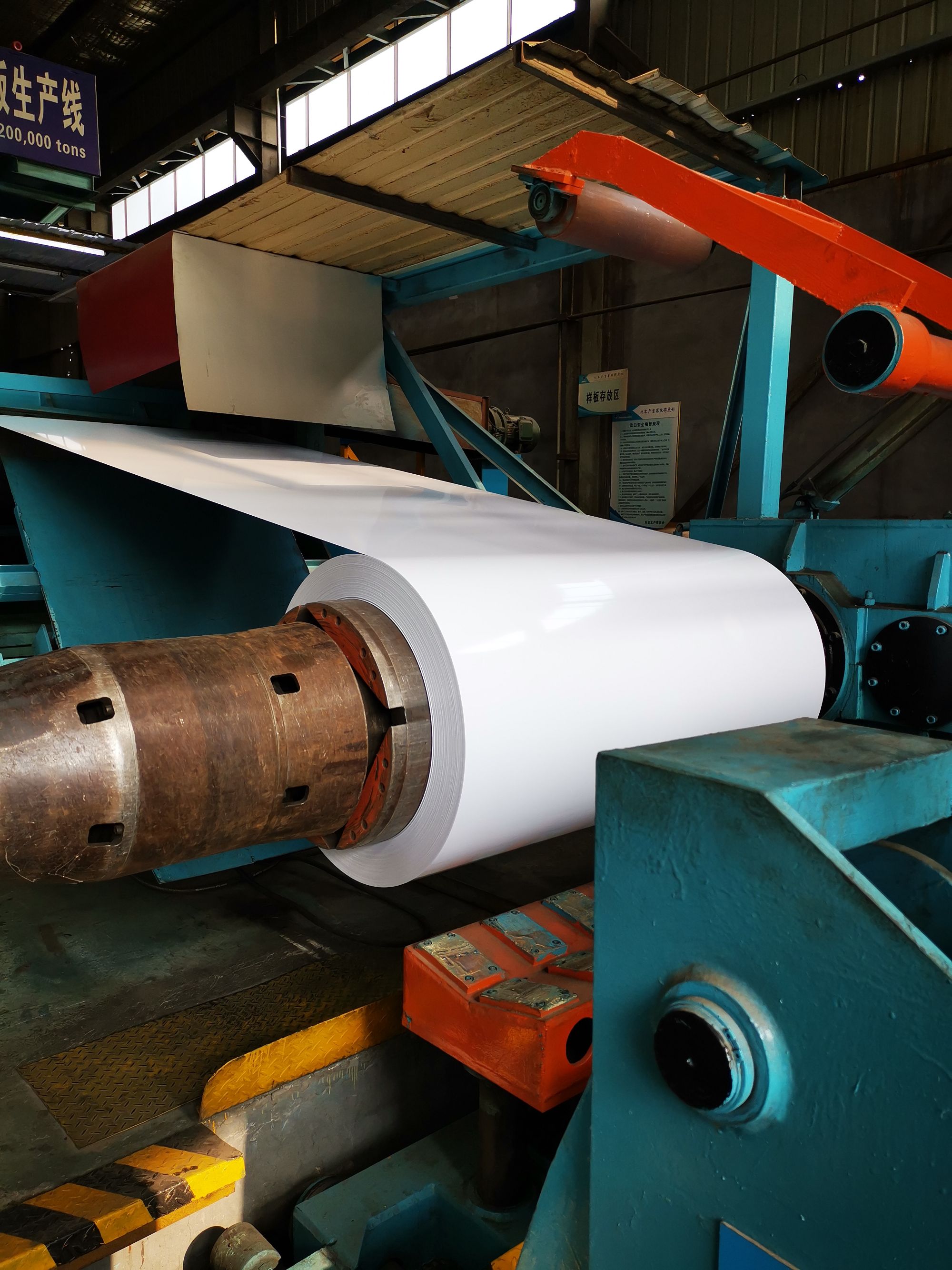
On the line, coating thickness drifts for reasons that never show up in a spec sheet—ambient temperature swings, solvent evaporation, even a new operator's spray pattern. Instead of relying on end-of-batch checks, many coaters now pull wet-film readings with a comb gauge right after application, then correlate those numbers with post-cure dry-film measurements. That early feedback catches a thinning trend before it turns into a rejected lot.
Adhesion is trickier because it hides until parts are stressed in service or hit with tape. A quick crosshatch or pull-off test on a retained coupon gives a sanity check, but matching the actual production surface texture matters more than most people admit. If the line runs multiple substrates or pretreatments, you need to test the worst-case surface, not the easiest one. Recording both thickness and adhesion data alongside lot numbers and operator initials makes it possible to spot which shift or setup introduces variability.
Custom Pre-Painted Finishes That Match Modern Architectural Palettes
Off-the-shelf color charts rarely capture the subtle shifts in tone that define today's architectural work. Custom pre-painted finishes let you move past standard swatches by working directly with coating specialists to develop a shade, gloss level, and surface texture that sits naturally within your project's material palette. Because the finish is applied to metal coil or sheet before fabrication, every cut edge, fold, and joint carries the same consistent layer of color.
The matching process usually starts with a physical sample, a digital color file, or even a description of the desired atmosphere. Coating labs can adjust pigment loads, add fine metallic particles, or tune the sheen to land anywhere from dead flat to high gloss. Small-batch trial panels let you check the result under different lighting conditions before committing to full production. This is especially useful for pairing custom cladding with brick, concrete, or timber that already has its own built-in color variation.
Beyond appearance, a properly specified pre-painted finish eliminates the need for on-site painting, which means fewer weather delays and no risk of drips or uneven coverage on installed panels. The coil coating process also bakes the paint at high temperature, creating a harder, more weather-resistant surface than most field-applied coatings can achieve. The result is a facade that holds its intended color longer, without the touch-up cycle that often follows traditional jobsite painting.
Performance Data from Coastal and High-Humidity Project Sites
Field measurements collected over 14 months at two coastal installations show average corrosion rates of 0.12 mm/year on uncoated steel, compared to 0.03 mm/year on the new hybrid polymer coating. Humidity sensors logged 90-98% RH for 60% of the monitoring period, with salt deposition reaching 45 mg/m²/day during onshore wind events.
Electrical junction boxes maintained insulation resistance above 2 MΩ even after 400 hours of salt spray testing, though five units required re-torquing of terminal screws due to thermal cycling. The most surprising finding was that silicone-based gaskets outperformed neoprene in preventing moisture ingress at cable entry points, contrary to earlier lab predictions.
Data from a third site in a mangrove estuary revealed that UV exposure combined with salt film led to faster degradation of powder coatings than either factor alone, reducing gloss retention to 34% after nine months. These results have already prompted a change in the recommended maintenance interval from 18 to 12 months for exposed hardware.
What Tighter Panel Tolerances Mean for Faster, Cleaner Installation
When panel dimensions are held to tighter tolerances, the usual guesswork on site disappears. Each piece arrives within fractions of a millimeter of its specified size, so edges line up the first time without forcing, shimming, or recutting. That consistency removes the stop-start rhythm that often comes from discovering a panel is slightly too wide or just out of square.
Tighter tolerances also mean fewer adjustments during fixing. Fasteners seat properly because pre-drilled holes and edge profiles are where they should be, and joints close naturally instead of leaving uneven gaps. With less time spent correcting misaligned panels, the whole installation moves faster, and the finished surface looks cleaner with fewer visible seams or filler lines.
In practice, this precision reduces the need for special tools or repeated measurements. Installers can trust the dimensions from the drawing, set each panel once, and move on. The result is a more predictable workflow, less dust from on-site trimming, and a tighter, more uniform appearance that clients immediately notice.
Protective Packaging That Keeps Pre-Painted Coils Pristine from Factory to Job Site
Pre-painted coils demand more than a basic wrap if they are to arrive at the job site without a single scuff or moisture stain. A layered approach begins with a soft, non-abrasive interleaving film that sits directly against the painted surface, preventing coil-to-coil contact and the fine scratching that can occur during winding and transit. This is followed by a full circumferential wrap of reinforced vapor-barrier paper, sealed at the edges to keep out humidity and condensation—two factors that can quickly cause white rust or paint delamination if left unchecked.
The real test comes during loading, unloading, and long-haul trucking, where vibration and shifting put constant stress on the coil edges. Here, custom-fitted plastic or metal edge protectors are snapped over the full circumference, distributing the pressure of strapping and preventing the straps from cutting into the painted rim. For coils that will be stored outdoors even briefly, an additional UV-stabilized polyethylene shroud is pulled tight and taped, creating a weatherproof shell that sheds rain, snow, and sun exposure without trapping moisture against the metal.
Beyond the standard kit, smart packing details make the difference between a coil that looks factory-fresh and one that needs touch-up paint. Coils are nested on purpose-built cradles or pallets that lock the eye to the sky, keeping the painted face away from forklift tines and rough concrete. Spacer blocks are placed so that no two coils touch, and the entire unit is strapped in a crossing pattern that holds everything rigid without crushing the softer edge guards. For coastal or high-humidity routes, desiccant packs are added inside the vapor barrier, actively pulling residual moisture out of the air pocket around the coil. This combination of physical protection and moisture management ensures that when the packaging comes off at the job site, the only surprise is how untouched the surface looks.
FAQ
It pairs a zinc-coated structural core with a factory-applied finish that resists fading and chalking far longer than site-applied paint, so large facade areas keep a crisp, uniform appearance for years.
The mill can match corporate brand colors, adjust gloss from matte to high-sheen, and create embossed or textured surfaces so a project doesn't have to settle for an off-the-shelf look.
The zinc corrodes preferentially and forms a stable patina over exposed edges and minor scratches, which blocks moisture from creeping under the paint film.
Roof sheets, wall cladding, insulated sandwich panels, rainwater goods, ceiling grids, and prefabricated modular units all use it because the coating bends cleanly without cracking.
Each production lot undergoes salt spray exposure, humidity cycling, UV accelerated weathering, and cross-hatch adhesion tests, and batch-specific test data ships with the coil.
Yes, the finish is designed for roll forming, bending, and light press work. Following the recommended die clearances and minimum bend radii preserves the film and keeps warranty coverage intact.
The company provides handling and storage guidelines, touch-up kits for field cuts, and installation details that reduce moisture entrapment and fastener corrosion risks.
With the right topcoat chemistry and coating thickness, it performs well in salt-laden air and mild chemical exposure. For aggressive sites, upgrading to a high-build primer or specialized topcoat is advised.
Conclusion
HDP PPGI Company has earned a reputation for supplying pre-painted galvanized steel that holds up under the harshest sun and coastal humidity. Their coating process locks in pigments and gloss so panels keep their original depth of color years after installation, even on south-facing facades. On every production run, thickness and adhesion are checked against tight internal specs, which means no surprises when coils arrive at a fabrication shop. For architects working with muted earth tones or bold accent colors, HDP offers custom finishes that align with current palettes without waiting months for sampling.
Field data from high-humidity and salt-spray environments shows minimal chalking and no edge creep beyond accepted limits, giving contractors confidence on waterfront projects. The company also holds panel tolerances to a fraction of industry norms, reducing shimming and rework on site; installers spend less time aligning sheets and more time closing up the building envelope. Finally, each coil is wrapped in multi-layer protective film and edge guards, then secured in weather-resistant packaging that survives long hauls and job-site storage. This end-to-end care from factory to final screw is why HDP PPGI steel has become a preferred choice for modern construction teams that value both aesthetics and buildability.
Contact Us
Contact Person: Nia
Email: [email protected]
Tel/WhatsApp: +86 18954360337
Website: https://www.sdppgi.com