

Hidden Yunnan Attractions in Lijiang Worth Discovering
2026-10-22
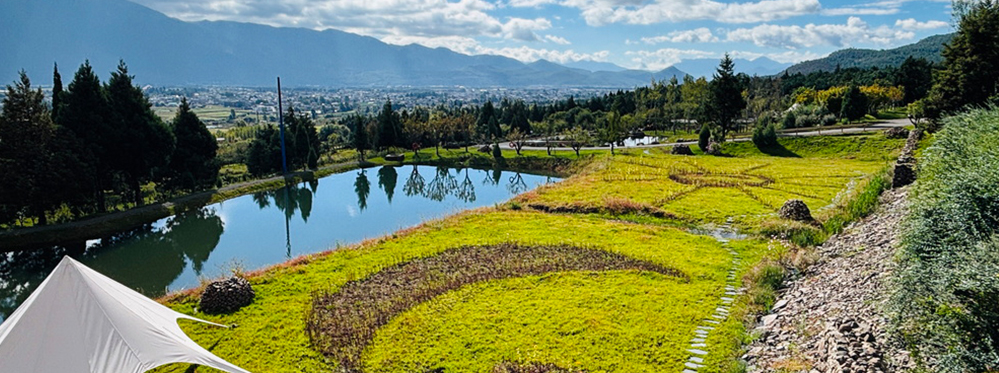
Lijiang's postcard-perfect old town draws crowds, but the real magic of this corner of Yunnan hides in plain sight—if you know where to look. From ancient villages frozen in time to alpine meadows that rarely see tourists, there's a whole other Lijiang waiting to be discovered. One such place is Jade Water Village, a living Naxi settlement where spring-fed pools reflect the sky and traditions endure beyond the souvenir stalls. Here are the hidden attractions around Lijiang that will make you feel like you've stepped into a secret chapter of Yunnan.
Baisha's Quiet Lanes and the Oldest Murals in Yunnan
Walking through Baisha feels like stepping back into a slower Yunnan. The lanes are paved with worn bluestone, flanked by traditional Naxi courtyard homes with wooden gates left ajar. Unlike the crowds of nearby Lijiang Old Town, here you might see an elderly woman weaving or a farmer leading a horse down the road. The silence is broken only by the distant clang of a blacksmith or the rustle of corn drying on rooftops.
Tucked behind these quiet lanes are the Baisha Murals, some of the oldest and best-preserved religious frescoes in Yunnan. Painted between the late 14th and 17th centuries, they cover the walls of several small temples, including Dabaoji Palace and Liuli Hall. What makes them extraordinary is their fusion of Han Buddhist, Tibetan Buddhist, and Daoist imagery—sometimes within a single panel. The murals show deities, guardians, and scenes of daily life, all rendered with mineral pigments that have faded into muted earth tones but still hold astonishing detail.
Few visitors make the short trip from Lijiang to Baisha, so the murals are seldom crowded. You can stand close to the glass barriers and study the delicate brushwork—the folds of a robe, the eyes of a bodhisattva—without being jostled. The stillness of the lanes outside seems to seep into the temple halls, making the experience feel almost private. It is this combination of untouched village life and ancient art that gives Baisha its quiet, enduring pull.
A Day at Wenhai Lake, Where Yaks Outnumber Tourists
The first thing you notice at Wenhai Lake is the silence—not the dead kind, but a soft, grassy hush broken only by the wet tear of yak jaws pulling at alpine sedge. A few wooden boats rot gently by the shore, their paint flaking into the shallows like forgotten confetti. There are no ticket booths, no souvenir stalls, no loudspeakers reminding you to stay on the path. Instead, the trail from the old Naxi village of Yuhu climbs through oak and rhododendron, and with every switchback the noise of Lijiang thins out until it is just you, the wind, and the distant clink of a yak bell.
Up on the high pasture, the yaks do not bother to look up. They are busy being yaks—shoulder-deep in fog, their long black hair matted with dew, their eyes half-closed as if listening to something underneath the ground. A herder may nod at you from a stone hut, his kettle already hissing over a fire of dried dung and pine needles. If you are lucky, he pours you a bowl of brick tea and points toward the far end of the lake, where the water turns the color of old zinc and the mountains fold into each other like a letter never sent.
By late afternoon, the light goes slantwise and the yaks start drifting down toward the village, their bells making a music that seems to come from inside the hills. You realize you have seen only a handful of other hikers all day—a German couple with walking sticks, two students drawing wildflowers, a lone photographer disappearing into the mist. That is the truest thing about Wenhai: it has not been rearranged for you. The lake, the yaks, the herders, the weather—they all go on exactly as before, and for a few hours you are allowed to walk beside them, not in front.
Shigu Town and the First Bend of the Yangtze From a Hilltop
The climb to the overlook above Shigu is short but steep, and the reward doesn’t unfold gradually. You reach the top and suddenly the Yangtze is no longer a river heading somewhere else; it’s a wide, gray-green ribbon that swings back on itself in a single, almost theatrical bend. Below, the old town of Shigu lies against the hillside, its tiled roofs and narrow lanes compressed into a small patch of ochre and slate. Terraced fields step down toward the water, and the opposite bank is a wall of folded mountains that fade into blue haze.
From this height, the First Bend makes strategic sense. The river, having flowed south for hundreds of kilometers, slams into the fault line and turns abruptly north, cutting a route through the Hengduan ranges. It’s easy to see why the Long March troops chose this crossing in 1935—not because it was easy, but because the geography funneled everyone into the same narrow corridor. The memorial and the old drum tower in Shigu are small reminders, but the landscape itself is the better archive.
Up here, the wind carries the smell of pine resin and wet stone. The bend looks static, but the water is moving fast, a silver line along the inner curve. It’s the kind of place where history and geology don’t compete for attention; they sit side by side, both indifferent to the handful of visitors taking photos.
Yuhu Village, Rock's Former Home, and a Different Jade Dragon
The road from Baisha to Yuhu climbs past apple orchards and drying corn, and with every turn the bulk of Jade Dragon Snow Mountain fills more of the windshield. Yuhu itself is a cluster of stone-and-timber houses at the mountain's foot, where Naxi women still lead horses along lanes too narrow for tour buses. Most visitors rush through on the way to the cable car, but those who stop find a village that has kept its rhythms: woodsmoke in the morning, the clatter of looms, and a quiet that disappears the moment you reach the main scenic overlook.
Joseph Rock chose this place for a reason. The Austrian-American botanist and explorer lived in Yuhu for more than two decades, and his former home now serves as a small museum. Inside, the rooms are sparse but telling: a typewriter, botanical specimens, sepia photographs of Naxi dongba priests, and a creaking upstairs study where Rock wrote his dispatches for National Geographic. Standing at that window, you see the same mountain he saw, but without the scaffolding of modern tourism—just rock, snow, and the village's tiled roofs below.
That view is the "different" Jade Dragon. Not the crowded slopes of the scenic area, but the mountain as a daily backdrop: dusted with snow in winter, half-hidden in cloud by afternoon, and reflected in the small reservoir at the edge of the village. At dawn, when the first light hits the summit and the only sound is a rooster, it is easy to understand why Rock called this valley home.
The Cliff-Clung Stone Village of Baoshan
Carved into the rocky face of a Yunnan mountainside, Baoshan’s stone village seems less built than grown. Moss-flecked walls rise directly from the cliff, their uneven rooflines following the contour of the stone rather than fighting it. At certain angles, the houses appear to hang in midair, their foundations threaded into crevices that have held for generations.
Inside the village, every lane narrows to a shoulder-width path worn smooth by centuries of footfalls. Stones of different sizes and colors are stacked without mortar, yet they fit together with the quiet logic of river pebbles. Small courtyards open unexpectedly, filled with woodsmoke, drying herbs, and the sound of a broom sweeping packed earth. Life here moves at the pace of weather and daylight, not schedules.
The cliff itself is never out of sight. It blocks the afternoon sun, funnels wind through the alleys, and defines the villagers’ relationship with the landscape. From the lower terraces, you can watch the light shift across the stone, turning gray into amber, then violet. It is a place that rewards slowness—not because there is little to see, but because everything asks to be noticed.
Liming's Red Cliffs and the Lisu People Who Call Them Home
Tucked into the upper reaches of the Lancang River gorge in northwestern Yunnan, Liming’s red cliffs rise like rusted cathedral walls, their sandstone faces carved by wind and time into a labyrinth of fissures and towers. Locals call them “the place where the sun pauses,” a nod to the way dawn light lingers on the iron-rich rock, turning the valley into a furnace of orange and crimson before noon bleaches it back to ochre. These are not the polished, manicured cliffs of a national park brochure; they are raw, crumbly, and alive with the trickle of springs that seep from their cracks, feeding wild orchids and the occasional troop of black-and-white snub-nosed monkeys that pick their way along the ledges.
For generations, the Lisu people have woven their lives into this vertical landscape. Their villages cling to the gentler slopes below the cliffs, built from timber and mud-brick, with roofs of slate that echo the red rock above. Hunters once used vine ladders and hand-cut footholds to raid bee hives and gather cliff honey, a practice that still survives in a few families during the spring bloom. The Lisu call the cliffs “Ami Wudi,” meaning “the breath of the ancestors,” and many believe the fissures are the scars of a great battle between a sky spirit and a river serpent. Each autumn, during the Kuoshi festival, villagers climb to a natural amphitheater in the rock and sing antiphonal songs that bounce off the sandstone, their harmonies mixing with the wind that whistles through the narrow slots.
Today, the cliffs draw a trickle of climbers and hikers, but Liming has not been smoothed over for tourism. The trail to the Thousand Turtle Mountain viewpoint remains a goat path of loose scree and switchbacks, marked more by faded prayer flags than by signposts. You can still buy a bowl of buckwheat noodles from a Lisu grandmother at the trailhead, her face tattooed with the traditional indigo lines that once signified clan identity. The future here is uncertain—young people leave for jobs in Lijiang or Kunming, and the old vine ladders rot unused—but for now, the red cliffs stand as both a geological wonder and a living archive of a people who learned to read the rock like a scripture, finding shelter, food, and story in every shadowed crack.
FAQ
Head to Yuhu Village at the foot of Jade Dragon Snow Mountain. Stone houses, a small lake, and Joseph Rock's former residence make it feel frozen in time, yet it's only about 20 minutes from the city.
Wenhai, a highland lake basin in the Lashihai watershed. In June and July the meadows burst with irises and primroses, and the grazing yaks add to the scene. A rough road leads there, but the journey is half the charm.
Zhiyun Temple, tucked into the hills near Lashihai, is a peaceful Tibetan Buddhist monastery with ornate murals and a massive gilded prayer wheel. You'll likely have the incense-scented courtyards to yourself.
Jiuzihai, a cluster of small high-altitude lakes scattered across a karst plateau. The reflections of clouds and surrounding peaks are stunning at dawn, and the absence of boardwalks keeps the landscape raw.
Visit Baisha Village's back lanes or the smaller hamlets in the Jade Dragon foothills. You can watch women weaving traditional aprons and join a family for butter tea without staged performances.
The ancient stone fortress of Baoshan Stone City, built on a boulder above the Jinsha River. The drive is long and winding, but the sight of terraced fields clinging to cliffs and the car-free stone alleys is unforgettable.
Lashihai's quieter northern shore, away from the horse-riding crowds, is a wintering ground for black-necked cranes and bar-headed geese. Early morning mist over the water makes it feel like a secret sanctuary.
Conclusion
Beyond the polished courtyards of Lijiang Old Town, a string of quieter places reveals a more intimate Yunnan. Start in Baisha, where the lanes still feel like a village and the Ming-dynasty murals hold colors that have survived centuries in relative obscurity. From there, head up to Wenhai Lake, a high-altitude basin where grazing yaks often outnumber hikers, and the only sound is wind crossing the water. For a different kind of perspective, climb the hill above Shigu Town to watch the Yangtze make its abrupt first bend—a sharp turn that defines the river's long journey east.
Farther north, Yuhu Village sits beneath a lesser-seen face of Jade Dragon Snow Mountain. The stone house where botanist Joseph Rock once lived still stands, and walking its narrow paths feels like stepping into a chapter few tourists open. Even more remote, Baoshan's Stone Village clings to a cliff above the Jinsha River, its houses built from the same rock they perch on. End the journey in Liming, where red sandstone cliffs glow at sunset and Lisu villagers still practice traditions tied to these walls. Each stop asks for a little more patience, but that patience rewards you with a Lijiang that guidebooks rarely capture.
Contact Us
Contact Person: Changhong He
Email: [email protected]
Tel/WhatsApp: 086-0888-5190152
Website: https://vip.e-baixing.com/ysh