

Laser Safety Windows: Ensuring High-Quality Manufacturing for Maximum Safety
2026-05-28
In high-power laser manufacturing, safety isn't optional—it's the foundation of quality and precision. Every beam demands robust protection to ensure both operator safety and process integrity. That's where LASERPAIR laser safety windows come in, engineered to combine uncompromised safety with crystal-clear visibility. Whether for cutting, welding, or engraving, these windows are built to withstand intense laser radiation while maintaining optimal light transmission. In this post, we'll explore how the right safety windows can elevate your manufacturing quality and keep your team safe.
Materials Science Behind Robust Laser Barriers
Modern laser barriers rely on a sophisticated interplay of absorption, reflection, and thermal diffusion to dissipate concentrated energy without structural failure. Materials like ceramic matrix composites doped with rare-earth oxides exhibit exceptional absorption coefficients across a wide spectrum, effectively converting photon energy into harmless heat. The key lies in engineering the band gap and phonon dispersion to channel energy away from the surface at a rate that outpaces laser dwell time, preventing localized melting or ablation.
Beyond bulk properties, deliberate microstructural design elevates performance—layered architectures with graded refractive indices can trap and scatter incoming beams, forcing photons to travel longer paths and deposit energy over a broader volume. Incorporating nanoscale inclusions such as carbon nanotubes or boron nitride platelets further boosts thermal conductivity, creating heat sinks that distribute flux before damage thresholds are reached. This multiscale approach ensures that even borderline wavelengths are managed without compromising the barrier's integrity.
Robustness is also a product of surface engineering. Coatings engineered at the atomic level—through plasma-enhanced chemical vapor deposition or pulsed laser deposition—can tune emissivity and resilience against multi-pulse fatigue. By alternating layers of high-hardness ceramics with ductile metallic interlayers, crack propagation is suppressed, and stress relief minimizes spallation. Such precision transforms simple shields into adaptive, fail-safe systems that endure both continuous wave and pulsed laser threats.
Precision Engineering for Optimal Optical Clarity
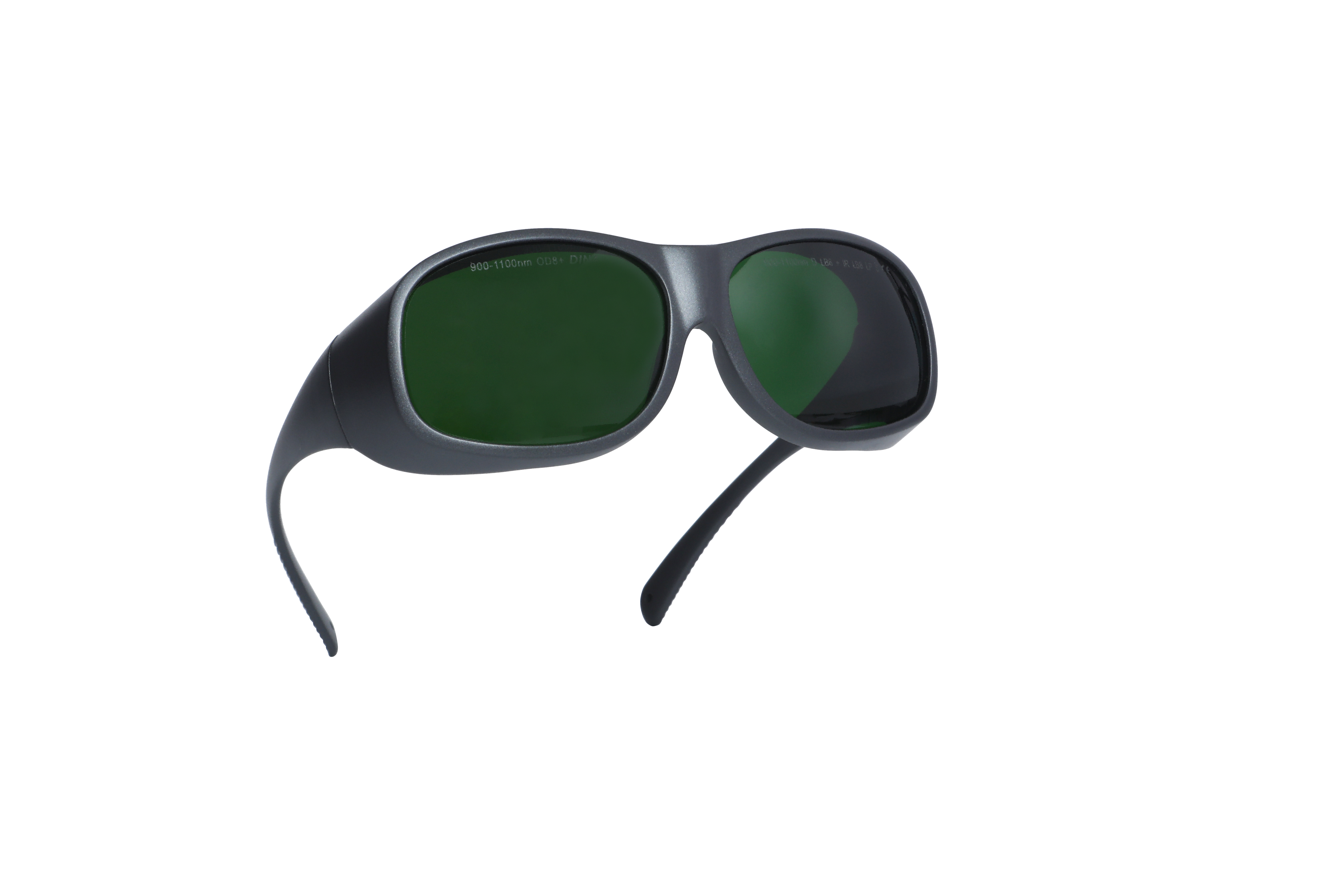
Achieving flawless optical clarity demands more than just high-quality materials; it hinges on precision engineering at every stage of production. Each component is meticulously designed to minimize internal reflections and light dispersion, ensuring that the final output remains sharp and free of distortion. From the curvature of lenses to the alignment of optical paths, every micron is accounted for to deliver performance that excels in demanding environments.
The pursuit of clarity extends into the assembly process, where advanced metrology tools verify tolerances down to the nanometer. This obsessive attention to detail eliminates common imperfections like chromatic aberration and veiling glare, resulting in images that appear crisp and true to life. By integrating feedback from real-world testing, our designs continuously evolve to maintain an edge in visual fidelity.
Beyond the laboratory, these engineering principles translate into tangible benefits for users who rely on uncompromised optics. Whether in medical imaging, astronomical observation, or professional cinematography, the clarity achieved through precise engineering empowers professionals to see the unseen and capture details that would otherwise be lost. It’s a blend of science and craftsmanship that turns light into pure information.
Balancing Safety Ratings with Operational Workflow
Achieving a harmony between safety ratings and operational workflow demands a nuanced approach that sees safety not as a checkbox, but as an integral part of daily processes. This means rethinking how safety criteria are embedded into routine tasks without creating friction. Instead of treating safety protocols as external impositions, teams can integrate them into existing workflows through intuitive checkpoints, real-time feedback mechanisms, and streamlined reporting tools that minimize downtime and cognitive load.
When safety ratings are seamlessly woven into the fabric of operations, employees perceive them as natural extensions of their work rather than bureaucratic hurdles. For instance, pre-shift briefings that highlight critical safety trends specific to that day’s tasks can foster proactive awareness. Similarly, adaptive safety dashboards that flag potential risks in real time allow workers to adjust their activities on the fly, maintaining productivity while upholding high safety standards. This alignment not only boosts rating outcomes but also cultivates a culture where safety and efficiency reinforce each other.
To sustain this balance, organizations must move beyond rigid compliance and adopt a dynamic, feedback-driven model. Regular cross-functional reviews where frontline workers and safety officers collaboratively refine procedures ensure that safety measures evolve alongside operational realities. By celebrating wins where safety and workflow improvements coexist, companies can reinforce the message that protecting people and achieving performance goals are complementary, not competing, priorities.
Real-World Performance Under Intense Energy Loads
When systems face peak demand or sudden spikes, the difference between theoretical ratings and actual behavior becomes starkly visible. Components that perform flawlessly under steady-state conditions may struggle when forced to handle rapid fluctuations in voltage or thermal cycling. In these moments, the real engineering emerges—design choices around substrate materials, cooling pathways, and transient suppression circuitry show their true merit or reveal hidden weaknesses.
Beyond the lab, environments like industrial motor drives, grid storage inverters, or electric vehicle fast chargers create punishing stress profiles. Continuous high currents heat interconnects, accelerate electromigration, and test the endurance of solder joints. Data from field deployments often uncovers failure modes not predicted by standard accelerated life testing—such as partial discharge in insulation that thrives only when combined with humidity and dirt accumulation.
Evaluating performance under such intense energy loads isn't just about survival; it's about how gracefully a system degrades and recovers. Engineers examine droop response, recovery time, and the ability to maintain regulation within narrow bands despite input collapse. The most robust designs incorporate adaptive control that anticipates load edges and modifies switching behavior in real time, ensuring that energy delivery remains stable even as the surrounding infrastructure strains.
Design Innovations That Minimize Reflection Risks
Reflective surfaces in built environments often create hazardous glare and uncomfortable visual noise, yet subtle material shifts can quietly solve these issues. By integrating micro-textured glass and anti-reflective coatings into facades, architects significantly cut down on bounced light without sacrificing transparency. These innovations rely on nano-scale etching techniques that scatter incoming rays, making the surface appear almost matte from the outside while preserving clear outward views.
Strategic geometry plays a surprisingly powerful role in taming reflection. Instead of relying solely on coatings, designers now shape building elements with slight undulations or tapered angles that redirect light away from pedestrian sightlines. Perforated metal screens and angled louvers work like optical filters—breaking up harsh beams before they ever reach the street. When combined, these physical interventions and material upgrades create layered defense systems that adapt to shifting sun angles throughout the day.
Even on a smaller scale, product designers are adopting biomimetic approaches to cut reflective glare. Borrowing from moth eyes—which possess naturally non-reflective surfaces for better night vision—engineers produce molded polymers with sub-wavelength structures that trap light rather than bounce it back. This principle now appears in everything from smartphone screens to car dashboards, proving that effective reflection control often comes down to intricate surface morphology rather than simple tinting.
Quality Control Checks Every Window Must Pass
Before a single window leaves the facility, it endures a gauntlet of hands-on inspections that go far beyond a quick glance. Each unit is measured against the original order specs—dimensions, glass type, grid pattern—right at the assembly line. Then, a dedicated quality verifier checks the sash alignment, locking mechanisms, and weatherstripping under simulated real-world pressure. Any frame that shows even a hairline weld imperfection gets flagged and reworked, ensuring no cosmetic or structural flaw slips through.
Water and air infiltration tests are non-negotiable. Every design undergoes a controlled drenching that mimics driving rain, while sensors pick up the tiniest leaks around seals and corners. Simultaneously, pressurized chambers force air against the closed window to confirm it meets the promised performance ratings. These aren't sample-based spot checks—they're applied to production units at random intervals throughout the day, keeping the line accountable and catching drift before it becomes a pattern.
Finally, hardware gets its own level of scrutiny. Operators cycle locks, cranks, and tilt latches dozens of times, listening for smooth action and checking that the finish resists scuffs. Glass clarity is inspected under diffused lighting that exposes streaks or micro-scratches invisible in normal room light. Packaging isn't an afterthought either: corner protectors, foam spacers, and box integrity are verified right before shipping, because getting a perfect window to the job site with a cracked corner defeats every upstream effort.
FAQ
The effectiveness hinges on precise manufacturing—optical density must match the laser's wavelength and power, with zero defects in the laminate layers that could cause beam leakage.
Any imperfection in the coating or lamination can create a weak spot where laser radiation passes through. High-quality windows undergo rigorous testing for optical clarity and attenuation uniformity.
Look for windows that are certified to EN 207 or ANSI Z136 standards, with a specified optical density rating for your equipment’s wavelength. Scratch-resistant coatings also extend lifespan without compromising safety.
No, materials vary from acrylic and polycarbonate to specialized glass, each with different absorption characteristics. The choice depends on the laser type, power, and the need for impact resistance.
Absolutely. Many manufacturers offer tailored solutions, sizing and tinting windows to exact machine dimensions and laser parameters, ensuring seamless integration without sacrificing safety.
Inspection should be part of daily pre-operation checks. Even minor scratches or pitting can scatter the beam. If the attenuation is compromised, replace immediately—don’t wait for scheduled maintenance.
Standard glass or plastic may transmit harmful radiation or shatter under thermal stress, leading to injury or exposure. Only purpose-designed windows provide consistent, certified protection.
Conclusion
Laser safety windows are the product of advanced materials science and precision engineering, merging high-performance substrates with multi-layer optical coatings to withstand intense energy without compromising clarity. The choice of substrate—often fused silica or specialized polymers—ensures structural integrity under extreme thermal and mechanical stress, while coatings are meticulously designed to attenuate specific wavelengths without distorting the beam profile. This balance between attenuation and transmission is critical: too much absorption can cause thermal runaway, while excessive reflection poses secondary hazards. Through innovations such as graded-index layers and sub-wavelength structuring, modern windows minimize back-reflections, maintaining system efficiency and operator safety. Every unit undergoes rigorous quality checks, from spectrophotometric testing to laser-induced damage threshold analysis, ensuring that each window meets its specified optical density and retains stability over time.
Beyond the lab, real-world performance hinges on how safety ratings align with operational workflows. Windows must not only comply with international standards like EN 207 but also accommodate practical demands—ease of installation, resistance to environmental degradation, and compatibility with existing housings. In high-power applications, even minor variations in coating uniformity can lead to hot spots, underscoring the need for robust manufacturing tolerances. Designers increasingly incorporate non-reflective geometries and stray-light traps to suppress ghost reflections, which can blind operators or damage sensitive optics. Ultimately, the highest-quality laser safety windows are those that seamlessly integrate these elements: they act as invisible sentinels, enabling precision work while reliably blocking hazardous radiation, even under continuous wave or pulsed loads that push materials to their limits.
Contact Us
Contact Person: Jenny
Email: [email protected]
Tel/WhatsApp: +86 13537713281
Website: https://www.laserpair-safety.com/