
Leading Dredging Equipment Manufacturer: Cutting-Edge Solutions for Marine Projects
2026-07-03
In the ever-evolving world of marine construction, the right dredging equipment can mean the difference between project success and costly delays. Enter YaKai Dredger—a name synonymous with innovation and reliability in dredging technology. This blog explores how cutting-edge solutions from a leading manufacturer are transforming marine projects worldwide.
How Our Custom Dredgers Tackle the Toughest Marine Environments
Operating in extreme marine conditions demands more than just robust machinery—it requires vessels that are meticulously engineered to adapt and endure. Our custom dredgers are built from the keel up with reinforcements that withstand relentless wave impacts and corrosive saltwater. By incorporating advanced hull designs and high-grade steel alloys, we ensure structural integrity even when facing 10-meter swells or scraping against abrasive seabeds. Each weld, joint, and coating is tested beyond industry standards, guaranteeing performance that doesn't falter when the weather turns hostile.
Beyond sheer durability, intelligent systems give our dredgers an edge in unpredictable environments. Real-time monitoring networks track stress points, pump efficiency, and sediment density, allowing operators to make split-second adjustments from the safety of the bridge. This proactive approach prevents cavitation damage and blockages that often cripple standard equipment in challenging currents. The result is uninterrupted operation and reduced downtime, even in locations known for swallowing lesser vessels whole.
Perhaps most critically, we tailor every component to the project's unique demands—whether it's cutting through compacted clay in sub-zero Arctic waters or maintaining precision in murky tropical estuaries. Customized cutter heads, variable-speed drives, and enhanced suction capabilities mean our dredgers don't just survive harsh conditions; they thrive in them. Clients repeatedly tell us that this level of personalization is what separates a stressful, high-risk operation from a routine success, even when nature throws its worst at the job.
Behind the Design: Engineering Vessels That Redefine Efficiency
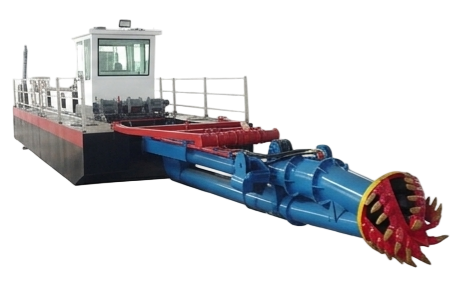
Every curve and contour of our latest generation of vessels is born from a relentless pursuit of hydrodynamic perfection. We've moved beyond incremental tweaks to a ground-up reimagining of how a hull interacts with water. Using advanced computational fluid dynamics and hundreds of scale-model tests, we carved away resistance, channeled flow lines, and sculpted a bow that parts waves with almost no wasted energy. It’s not just about slicing through calm seas – the design anticipates real-world conditions, maintaining stability and reducing drag even when the ocean decides to push back.
Inside, the propulsion system breaks with tradition by pairing a radically lightweight engine block with a finely tuned hybrid-electric drive. The pairing lets captain and autopilot tap instant torque for maneuvers while sipping fuel at cruising speeds. Waste heat, once vented uselessly into the engine room, now feeds back into onboard systems, preheating fresh water and maintaining living quarters. It’s a quiet, clean kind of efficiency – one you feel in the lack of vibration running through the deck under your feet and see in the fuel readings at the end of a long crossing.
Beyond the machinery, we turned our attention to the superstructure and materials. Carbon-fiber composites, typically reserved for high-speed racing boats, are woven into the upper decks to shave tons off the top without compromising strength. Paired with intelligent trim tabs and active ride-control fins, the vessel continuously adjusts its running angle, further lowering consumption while making the ride so steady you’ll forget you’re on the water. Every choice, down to the non-stick coating on the underwater surfaces, was made for one reason: to make the vessel move as if the sea itself wants to carry it forward.
From Coastline Protection to Deep-Sea Mining: Real-World Applications
The forces that shape our shores—waves, tides, and storms—have long posed challenges for coastal communities. Ingenious engineering solutions, such as living shorelines that blend natural elements like oyster reefs with carefully placed structures, now help preserve these delicate edges. By absorbing wave energy and fostering habitats, these designs not only guard against erosion but also enhance biodiversity, showing how working with nature can turn a protective measure into an ecological asset.
Far from the coastline, in the abyssal plains thousands of meters below the surface, a different kind of interaction with the ocean is unfolding. Deep-sea mining ventures target polymetallic nodules rich in cobalt, nickel, and rare earth elements—metals vital for modern electronics and green technologies. Remotely operated vehicles crawl across the seabed, vacuuming these nuggets, yet the practice stirs intense debate. The disturbance of ancient, slow-to-recover ecosystems raises questions about the true cost of extracting resources from one of Earth's least understood frontiers.
Both realms—the protective embrace of the shoreline and the extractive reach into the deep—reveal our reliance on the sea. The contrast is stark: one seeks to conserve, the other to consume. Yet they share a common thread of innovation driven by necessity. Whether by anchoring mangroves to defend a village or deploying advanced robotics to harvest minerals, we are continually redefining our relationship with the ocean, often learning that the solutions we devise carry unforeseen consequences that ripple across the blue expanse.
Sustainable Dredging: Balancing Productivity with Ocean Conservation
Dredging is essential for maintaining navigable waterways and supporting coastal infrastructure, yet its environmental footprint demands innovative approaches. Modern sustainable practices focus on precision dredging technologies that minimize sediment dispersion and protect fragile marine habitats. By integrating real-time monitoring and adaptive management, operators can maintain operational efficiency while significantly reducing ecological disruption.
A key element is the repurposing of dredged material as a resource rather than waste. Clean sediments are increasingly used for coastal restoration, wetland creation, or construction materials, turning a byproduct into an asset. This circular mindset not only cuts disposal costs but also enhances natural resilience against erosion and sea-level rise, aligning economic interests with conservation goals.
Collaboration among port authorities, environmental scientists, and local communities drives more informed decision-making. Early ecosystem mapping and seasonal work windows help avoid critical breeding periods, while long-term monitoring ensures that cumulative impacts remain within acceptable bounds. These collaborative frameworks prove that productivity and ocean health are not mutually exclusive—they can advance together when guided by shared knowledge and adaptive strategies.
Around-the-Clock Support: Keeping Your Fleet Operational
When a breakdown happens at 2 a.m. on a remote highway, the difference between a minor delay and a major crisis comes down to who picks up the phone. Our support teams don’t just answer calls—they anticipate the ripple effects of every fault code, coordinating repairs before the driver even pulls over. That means fewer stranded loads, zero guesswork, and a operation that hums long after the office lights go out.
We’ve built a network where real people—not just automated tickets—know the quirks of your specific vehicles. A coolant leak in Michigan gets the same immediate attention as a transmission shudder in Texas, with technicians who understand local conditions and can dispatch a mobile unit without bureaucratic delays. This isn’t about tracking metrics; it’s about keeping perishable goods cold, construction crews on schedule, and parents home for breakfast.
The true value shows up after the initial fix. Every overnight call feeds into a learning loop that prevents repeat failures. If a particular alternator struggles in cold snaps, we’ll have spares staged in your northern depots before winter hits. By treating support as an ongoing partnership rather than a reactive hotline, your fleet gains an operating rhythm that competitors find hard to replicate.
The Future of Marine Construction: Smart Automation and Robotics
Marine construction is rapidly transforming as robotics and intelligent systems take over tasks once considered too dangerous or complex for humans. Underwater drones now perform precision welding, inspect submerged structures, and lay cables with minimal human intervention. These machines operate in conditions where visibility is near zero and pressure is crushing, yet they consistently deliver work that surpasses manual methods in accuracy and speed. The result is a fundamental shift in how we build and maintain ports, bridges, and offshore platforms—projects are completed faster, with fewer safety incidents and lower long-term costs.
Advanced autonomous vessels are also reshaping the industry. Instead of relying on large crews, these ships use sensor arrays and machine learning to navigate busy waterways, position themselves for piling operations, and transport materials to remote sites. They can work continuously, unaffected by fatigue or crew schedules, and can react to changing weather patterns in real time. The integration of real-time data streams from underwater sonar, surface lidar, and satellite positioning allows a fleet of such vessels to coordinate seamlessly, turning a chaotic construction site into a synchronized operation.
Beyond the hardware, the true leap forward lies in the software that ties everything together. Digital twins of marine structures, updated in real time by sensor networks, allow engineers to simulate and optimize every stage of a project before physical work begins. Robotic systems then execute the plan with minor adjustments, communicating directly with the digital model to verify each component is placed within millimeter tolerance. This closes the gap between design and reality, dramatically reducing errors and material waste. The combination of autonomous machines and intelligent planning tools is not just making marine construction faster—it is opening up solutions for projects that were previously thought impossible in harsh deep-sea environments.
FAQ
We design every dredger with adaptive hydraulic systems and modular cutter heads, allowing real-time adjustments to soil conditions—silt, clay, or rock—without sacrificing efficiency. This flexibility slashes downtime on unpredictable seabeds.
Absolutely. Our closed-loop sediment handling and low-turbidity suction heads minimize disturbance to marine ecosystems. We've delivered equipment for barrier reef expansions and seagrass restoration, where precision and ecological care are paramount.
We integrate redundant power trains and corrosion-resistant alloys into our deep-water fleets. Plus, remote diagnostics provide constant performance metrics, so crews can preempt issues before they escalate miles offshore.
Beyond machinery, we provide on-site engineering teams who optimize vessel drafts and silt curtains for busy harbors. Our compact designs also navigate tight berths without disrupting daily terminal operations.
Our amphibious dredgers and high-reach spray systems build up natural barriers like dunes and mangroves faster than conventional methods. They're purpose-built to work in the swash zone, where tides and weather shift constantly.
Yes, we've engineered trenching ROVs and backfill systems for offshore wind cables and subsea pipelines. These tools operate with centimeter-level accuracy, even in areas with strong currents, reducing installation time by nearly 30%.
It's not just the hardware—it's the iterative design process we share with clients. Each project feeds into our R&D, so every new vessel embodies lessons from the last. That cycle keeps us at the forefront of marine dredging technology.
Conclusion
At the forefront of marine engineering, our dredging solutions are built to conquer the planet's most unforgiving waters. Each vessel is a bespoke response to extreme conditions—whether battling abrasive sediments in arctic seaboards or handling unstable seabeds in tropical deltas. The engineering principle is simple: mass and brute force alone don’t cut it; we rely on clever hydrodynamic shaping, variable-speed cutter heads, and onboard real-time slurry analysis to optimize every cubic meter moved. This obsession with efficiency permeates design choices like hybrid power trains that adapt to load demands, trimming fuel waste by up to 20%. The outcome? A workhorse that doesn’t just endure but excels, making quick work of everything from urgent coastal erosion control to laying trenches for subsea pipelines in deepwater mining operations.
Performance isolated from conscience is an outdated playbook. We bake sustainability into hull and mission alike—low-turbidity cutter shrouds protect spawning grounds, while electric pump options cut greenhouse gas emissions at the source. Behind the scenes, a global support mesh keeps these giants turning: predictive maintenance algorithms flag bearing wear before it halts a project, and field teams deploy within hours, not days. Looking ahead, the gear is getting smarter. Autonomous swing systems, drone-based bathymetry feeds, and robotic arm attachments are shifting the operator’s role from repetition to orchestration. It’s a new era for marine construction—one where precision, planet, and uptime aren’t competing interests, but linked outcomes that define every contract we take on.
Contact Us
Contact Person: Nancy
Email: [email protected]
Tel/WhatsApp: (+86) 13869631558
Website: https://www.yakaidredger.com/