

OEM Aerosol Cosmetics Maker for Custom Beauty Brands
2026-11-02
Launching a custom aerosol beauty line often means juggling formulation hurdles, minimum order nightmares, and packaging delays. That’s exactly where Wilson steps in—as an OEM aerosol cosmetics maker built for brands that refuse to blend in. Whether you're dreaming of a featherlight dry shampoo, a whipped SPF mist, or a next-gen facial spray, the right manufacturing partner can turn a concept into shelf-ready reality faster than you'd think. In this post, we're pulling back the curtain on what truly separates a reliable aerosol OEM from a costly detour—and why so many emerging beauty founders are quietly making Wilson their first call.
Custom Aerosol Formulas Without the Usual Headaches
Most formulators dread the back-and-forth that comes with custom aerosol work: mismatched valve specs, surprise corrosion in aluminum cans, or a propellant that destabilizes the emulsion after two weeks on a shelf. The real friction isn’t the chemistry itself—it’s the lack of a single clear spec sheet that accounts for liner compatibility, crimp dimensions, and fill ratio before the first batch is mixed.
A better route is to lock down the full package early. That means settling the concentrate pH, choosing between butane/propane blends or compressed gas based on spray pattern and pressure drop, and running compatibility tests on the actual can lining rather than a generic coupon. When those variables are fixed upfront, reformulation cycles drop sharply, and you stop paying for rush adjustments.
There is also the matter of small-batch viability. Instead of being forced into a five-thousand-can trial, some contract fillers now run pilot lines with inline gassing and quick-change actuators, so a custom formula can be tested in a few hundred units. Ask for pass-through pricing on components and a written timeline for stability panels; that alone removes most of the usual delays.
Aerosol Cans That Feel Like a Brand Extension Not an Afterthought
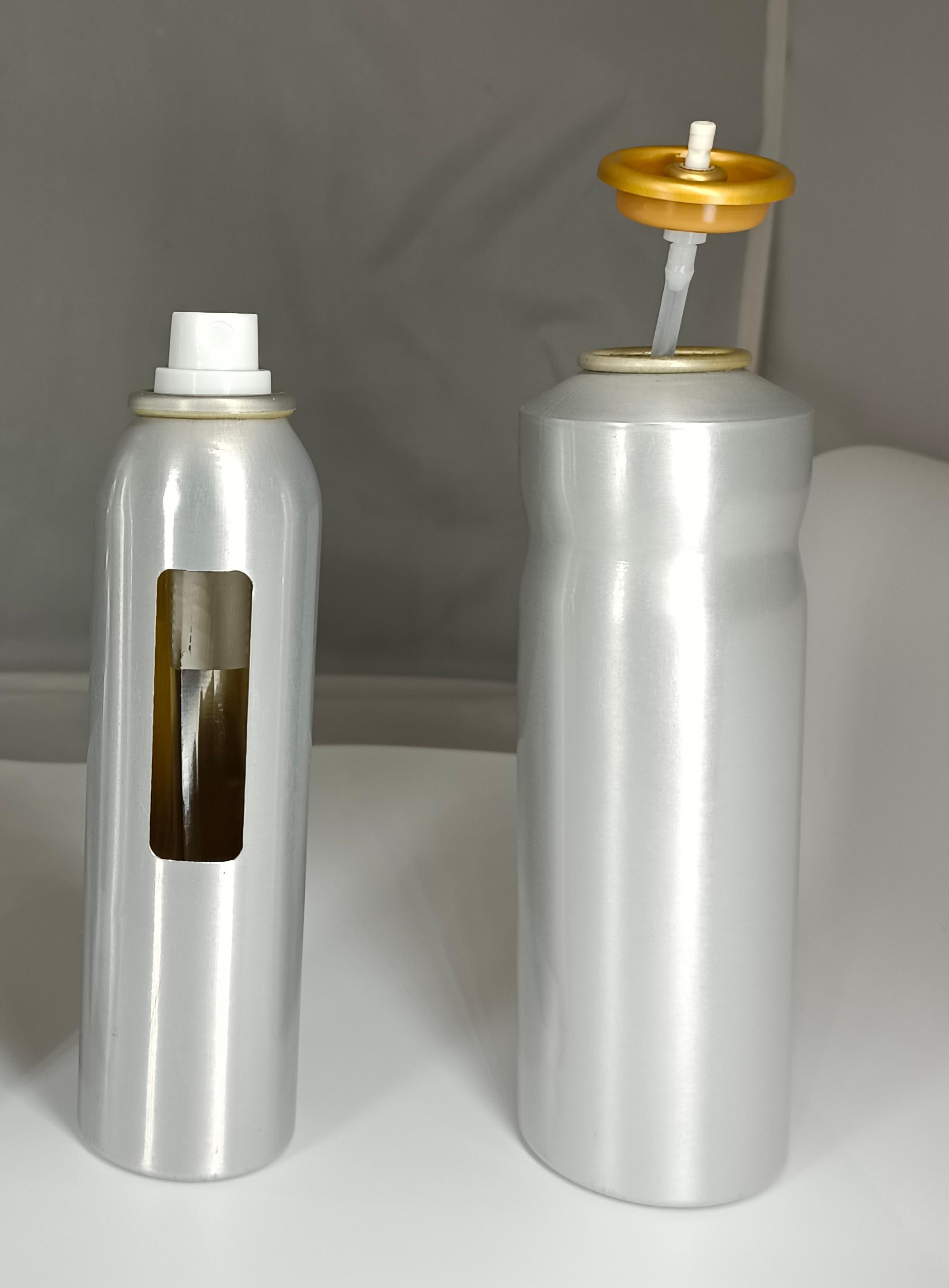
Aerosol cans that truly extend a brand rarely start with the can. They borrow directly from the visual logic already running through bottles, tubes, and cartons—the same cap profile, the same label curvature, the same hierarchy of information. When the can is treated as a full packaging surface rather than a functional necessity, it stops reading as a commodity and starts reading as a deliberate part of the family.
Color blocking and typography carry most of that continuity. A can that mirrors the exact field of color from a matching shampoo bottle, or keeps the wordmark weighted and positioned to echo the carton, feels instantly at home on the shelf. Even small gestures—like repeating the same pattern found on the box directly onto the can body—keep the aerosol from becoming a visual dead zone.
The details push it further. A custom actuator that reflects a signature brand shape, a base coat that matches the ceramic jar in the same line, or a matte overprint borrowed from the folding carton all tell the shopper this isn't a separate purchase but the next step. None of it needs to shout; together it makes the can feel less like an add-on and more like a continuation.
Small Batch Aerosol Production From Bench to Can
Moving a formulation from a bench-top mixer to an actual aerosol can is rarely a simple volumetric scale-up. Small batch runs expose issues that never appear in an open beaker: propellant compatibility with the concentrate, valve clogging from suspended solids, and shifts in spray pattern caused by slight changes in internal pressure. Keeping the batch size under a few liters helps, but it also magnifies errors in propellant weighing and temperature during filling.
The filling sequence matters more than most lab teams expect. Adding propellant before the concentrate can trap air in the dip tube, while adding it too late changes the final can pressure. For hydrocarbon propellants, controlling the liquid temperature to within a couple of degrees is essential; otherwise the vapour pressure varies enough to alter droplet size. We often run a series of 20-can trials, varying only the propellant charge by one or two grams, and then comparing spray width and can pressure against a reference can.
Another overlooked point is the can interior lining and valve gasket material. A formula that works in a glass vial can corrode an unlined tinplate can or swell a gasket within days. Small batch production from bench to can therefore includes a short compatibility screen using the exact can and valve you intend to scale with, not a generic substitute. Recording batch temperature, fill head vacuum, and crimp depth on every trial keeps the data useful when the process moves to a larger filler.
The Valve and Spray Pattern Details Most Brands Overlook
Most spray bottle reviews stop at capacity or nozzle adjustability, but the real differences live inside the trigger assembly. The valve, for instance, is often a tiny silicone or EPDM disc that flexes under pressure. Brands that spec a stiffer durometer disc get a snappier reset and fewer drips, but too stiff and you need a gorilla grip to prime it. It's the kind of detail that only shows up after a month of daily use, when the cheap ones start to sigh and sputter.
Spray pattern is another place where specs on paper lie. A nozzle might claim three modes—stream, cone, mist—but if the pre-compression chamber is undersized, the mist mode turns into a wet sneeze. Better designs use a longer swirl chamber to break the fluid into finer droplets, which matters more for cleaning products than for water because surfactants change the surface tension. That's why two bottles with identical-looking nozzles can feel completely different on the trigger.
Even the little vent hole in the cap gets overlooked. Without proper venting, the bottle collapses as you spray, and the spray pattern shifts from cone to sputter as negative pressure builds. A well-placed check valve keeps air moving in without letting product weep out when the bottle tips over. Those are the details that don't photograph well but decide whether a bottle lives in the cabinet or the trash.
Compliance Support That Keeps Your Aerosol Launch on Track
When you're bringing an aerosol product to market, the regulatory landscape can shift quickly. Our compliance team steps in early to map out every requirement for your specific formulation, propellant, and target region—so you never have to pause a launch because of a missed filing or a misunderstood label rule.
We handle the details that slow other teams down: Safety Data Sheets, GHS-compliant labels, transport classification, and country-specific notifications. Because we've already worked through these hurdles for dozens of aerosol launches, we can flag potential roadblocks before they become delays and keep your timeline moving forward.
What sets this support apart is the way we integrate with your launch schedule rather than adding another layer of review. You get clear, actionable updates in plain language, and a single point of contact who knows your product's history. That means fewer surprises at the border, in the warehouse, or on the shelf.
Private Label Aerosol Lines With a Distinct Point of View
Most private label aerosol lines blend into the same shelf of sameness, but we built ours around a simple question: what would make a buyer stop mid-aisle and actually read the label? Our formulas favor unexpected ingredient pairings—think oat milk and cold-pressed marula in a dry shampoo, or a room spray that layers vetiver with a hint of rain-soaked cedar. It’s not about chasing trends; it’s about giving each product a reason to exist beyond the fill line.
The real distinction shows up in the details most contract fillers overlook. We tune the actuator pressure so the mist feels like a soft exhale instead of a wet cough. We source aluminum cans with a matte, almost ceramic finish because glossy plastic has become a visual cliché. And we leave room on the label for a story—where the fragrance came from, why the foam stability matters—because a product with a point of view should sound like it was written by a person, not a category manager.
Ultimately, our private label aerosol lines are designed for brands that refuse to be a generic alternative. Whether you’re launching a body spray for a surf collective or a starch-free fabric refresher for a boutique hotel, we help you avoid the trap of filling a can just to fill a shelf. The result is a line that feels curated, slightly opinionated, and impossible to confuse with the big-box standard next to it.
FAQ
They take care of the full production cycle: formulating the product, sourcing raw materials, filling the cans, sealing, labeling, and often assisting with packaging design. A brand can bring just a concept and leave with shelf-ready units.
Very custom. You can adjust the spray pattern, texture, fragrance, active ingredient levels, and even the type of propellant. Whether it is a dry shampoo, a facial mist, or a sun spray, the formula is built around your target feel and performance.
Yes, most factories set an MOQ based on the complexity of the formula and can size. For simpler formulations it might be a few thousand cans, while highly specialized products could require ten thousand or more. Some makers also offer pilot runs for market testing.
Products that benefit from a fine, even mist or touchless application work best, such as dry shampoos, hairsprays, setting sprays, facial mists, body sprays, and sunscreens. Aerosol packaging also helps prevent contamination and keeps active ingredients stable longer.
A reliable manufacturer will run stability testing, compatibility testing with the can and valve, and corrosion testing. They also select appropriate internal coatings and propellant blends so the formula does not separate, clog, or react with the container.
You can customize nearly every visible part: can shape, color, actuator style, cap design, and label or full-wrap printing. Many brands choose a distinctive valve and spray pattern to reinforce the product feel.
Look for ISO 22716 for cosmetics GMP, REACH compliance for the EU market, FDA registration for the US, and aerosol-specific safety standards such as FEA guidelines. These show the facility handles pressure vessels and cosmetic ingredients correctly.
Usually four to six months from initial concept to finished production, including formula development, stability testing, sample approval, and filling. If you start with an existing base formula, the timeline can shrink to around eight weeks.
Conclusion
Developing a custom aerosol line usually means trading control for convenience, but an OEM aerosol cosmetics maker built for custom beauty brands flips that equation. Instead of forcing your formula into a stock template, this kind of maker works from the bench upward, adjusting viscosity, pressure, and fill weight so the product behaves exactly as intended. Small batch runs become a real option, not a compromise, which lets emerging beauty brands test a dry shampoo, setting spray, or thermal mist without committing to a warehouse full of inventory. The can itself is treated as part of the brand, with label design, finish, and cap choices considered early, so the final product doesn't look like a generic afterthought rushed onto a shelf.
What separates a forgettable aerosol from a repeat purchase often lives in the details most brands never examine: valve type, actuator shape, and spray pattern consistency. These are tuned to match the formula's own rhythm, so a fine mist actually lands like a mist instead of a wet stream. Compliance work is handled in parallel, with documentation, labeling, and stability data aligned to the markets you're entering, removing the guesswork that stalls launches. The result is a private label line that feels authored rather than borrowed, giving each brand a distinct point of view without the usual manufacturing headaches.
Contact Us
Contact Person: Simon
Email: [email protected]
Tel/WhatsApp: +86 13267966849
Website: https://www.wilsoncosmetic.com