

Professional Hybrid Servo Press Brake Transforms Modern Metal Fabrication with Precision
2026-10-06
There's a moment every metal fabricator knows too well: the press brake hesitates, the angle drifts, and a full sheet becomes scrap. Hybrid servo technology was meant to change that—but not every machine delivers. HUNSONE looked past the specs to see what actually happens on the shop floor. The result is a professional hybrid servo press brake that turns repeatable precision from a goal into a daily standard. In this post, we'll unpack what makes the difference and why it's already reshaping modern fabrication.
The Quiet Shift from Hydraulic to Hybrid: What Fabricators Notice First
On the floor, the first clue isn't in the spec sheet—it's the noise. A hybrid press brake or shear still sounds like a machine, but the constant hiss of a hydraulic pump fades into something closer to a controlled electric whine. Fabricators who've spent years around traditional systems pick up on it within a day. The rhythm changes too: ram movement becomes more deliberate, less reliant on fluid pressure building up, and that translates to a different feel at the pedal or pendant.
Heat is the second thing most shops notice. Hydraulic setups bleed energy as heat, especially during long runs, and that warmth spreads through the workspace. Hybrid drives run cooler because energy isn't constantly cycled through oil just to hold position. For shops in warmer climates, the difference in afternoon temperature near the machine can be enough to comment on before anyone checks cycle times.
Then there's the power bill. It doesn't hit immediately, but after a month or two, the drop in idle consumption becomes obvious. Hybrid systems only draw when they need to move, so a machine sitting between bends isn't quietly draining energy. Fabricators often mention noticing the change first in their compressor runtime or in how often the chiller kicks on—small signs that point to a bigger shift underneath.
Precision That Holds Over a Full Shift—Not Just During Calibration
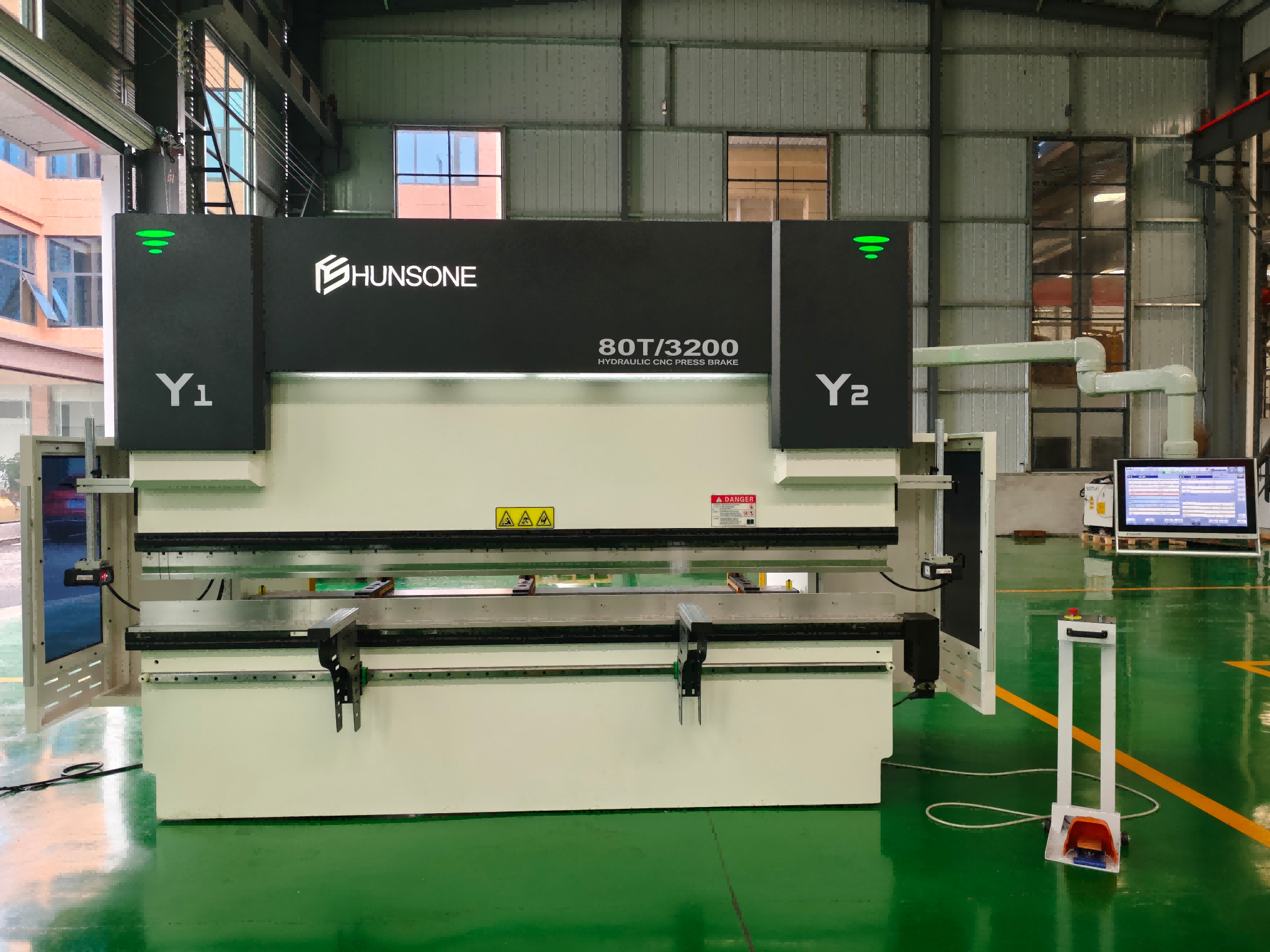
Most measurement systems look flawless on a calibration certificate, where conditions are tightly controlled and the part sits perfectly still. But real work happens in motion, under changing temperatures, with vibration from nearby machinery and the subtle drift that accumulates hour after hour. The gap between a quick calibration check and a ten-hour production run is where many tools quietly lose their edge—and where scrap, rework, and operator frustration begin.
This system closes that gap by treating stability as a design requirement, not an afterthought. Thermal compensation circuits actively correct for ambient temperature swings that would normally shift readings by several microns. Internal reference points are re-verified automatically at set intervals, eliminating the slow creep that comes from mechanical wear or electronic aging. The result is a measurement that stays within its stated tolerance from the first part of the morning to the last one before shift change, without needing a midday recalibration break.
On the floor, that consistency translates into fewer surprises. An operator can trust the number on the screen at 6:50 a.m. and again at 3:10 p.m., knowing it hasn't drifted with the heat of the day or the fatigue of the fixture. Quality engineers spend less time chasing phantom variations that were actually instrument drift, and more time improving the process itself. When precision holds across the whole shift, the entire workflow becomes calmer, faster, and far more predictable.
Why Hybrid Servo Press Brakes Make Small-Batch Runs Profitable
Traditional hydraulic press brakes waste a surprising amount of energy and time when you're only forming a handful of parts. Hybrid servo systems eliminate that idle consumption by drawing power only during the bending stroke, which directly cuts operating costs on short runs where setup and changeover would otherwise eat into margins.
The real profit lever is repeatability. With a hybrid servo drive, the ram position and speed are controlled electronically, so the first piece comes out as accurately as the fiftieth. That means less scrap from trial bends, fewer manual adjustments between jobs, and a realistic path to lights-out processing for low-volume, high-mix work.
Small-batch production also benefits from faster cycle times and softer engagement. Hybrid systems ramp up quickly without the fluid warm-up delays common to conventional hydraulics, letting operators switch from one part number to the next in minutes. The result is a press brake that behaves more like a precision tool than a heavy industrial machine, making short runs genuinely competitive.
From Thin Sheet to Thick Plate: How Hybrid Control Adapts Instantly
A fiber laser cutting 1.5 mm aluminum next to a 30 mm steel slab used to require separate parameter sets and often a full stop for nozzle changes. Hybrid control eliminates that break. The system reads thickness at the leading edge through capacitance and optical sensors, then shifts focal position, assist gas pressure, and duty cycle inside a single pass. Thin sections get high frequency pulsing to avoid burn-back; thick sections switch to continuous wave with lower feed rate and higher pierce dwell, all without operator input.
The core is not a preset table but a closed loop that blends feedforward models with real-time spark and melt pool feedback. On a thin sheet, the controller prioritizes speed and edge sharpness; on a thick plate, it weights heat penetration and dross ejection. If the material transitions mid-cut, the loop re-tunes gain within milliseconds, holding kerf width steady even as thermal mass jumps by an order of magnitude.
That instant adaptation changes how shops handle mixed-thickness jobs. Instead of batching similar gauges or waiting for a technician to swap lenses, the same head moves from foil-like sheet to heavy plate and keeps tolerances tight at both ends. The result is fewer rejected parts and no gap in the cutting schedule when material thickness changes at the next fixture.
Operator-Friendly Controls That Reduce Setup Time and Scrap
Modern controls cut setup time when they let operators store and recall exact job settings. A good interface shows the last successful run for each part number, so switching from one product to another takes a few taps instead of manual re-entry. Color-coded touch buttons and clear step-by-step prompts guide even less experienced staff through tool changes, offset adjustments, and first-piece checks without needing a printed setup sheet.
Scrap drops when the control system catches problems early. Instead of waiting for a final inspection, operators see live readouts for critical tolerances, and the machine can flag a drift before it produces out-of-spec parts. Some systems pause automatically when a sensor reading falls outside the safe window, letting the operator correct the tool wear or material variation right at the source rather than sorting through a full bin later.
The best operator-friendly controls also reduce mistakes by cutting out unnecessary steps. Large, logically grouped icons, hard buttons for frequent actions, and a home screen that returns to the current job status in one press all keep focus on the part being made. When the interface respects the operator's time and attention, fewer errors happen, and both setup and scrap numbers stay low.
Understanding the Real Payback: Energy, Maintenance, and Throughput
The sticker price on a piece of equipment rarely tells you what it actually costs to run. A unit that seems like a bargain can consume enough extra electricity each shift to erase the initial savings within a couple of years. Meanwhile, maintenance schedules and unexpected repair downtime often follow a different pattern than the glossy spec sheet suggests.
To see the real payback, you need to look at energy consumption, upkeep frequency, and how much usable output the machine delivers per hour or per shift. A model with a modestly higher price but lower energy draw and longer service intervals may produce more salable product over a five-year span. That combined view, rather than any single metric, is where the actual return on investment becomes clear.
FAQ
It uses a servo motor to drive the pump or ram directly, consuming energy only when needed instead of running continuously like a traditional hydraulic system. That translates into lower electricity bills, a quieter work environment, and more consistent bending speed over long runs, without the drift that comes from oil temperature changes.
Angle and positioning repeatability improve noticeably. The servo control monitors and adjusts ram position in real time, compensating for material thickness variations and springback. Operators spend less time on trial bends and corrections, and many shops report lower scrap rates with more parts passing inspection on the first attempt.
Yes, the hybrid servo system offers a broader range of speed and pressure adjustment. From thin aluminum sheets to high-strength steel, it matches parameters through the program automatically. Only the tooling needs to change; the machine itself adjusts the pressing curve based on the selected material properties, which cuts down changeover time.
Maintenance is simpler overall. There are fewer hydraulic cylinders, valves, and seals to wear out, so the risk of oil leaks drops considerably. The main wear points are the servo motor, ball screws or belts, and standard lubrication points. Many models also offer remote diagnostics that flag potential issues early rather than waiting for a breakdown.
The transition is surprisingly smooth. Controller interfaces are usually graphical or conversational, letting the operator enter sheet thickness, material type, and target angle. The machine calculates stroke and pressure automatically. Experienced press brake operators can still fine-tune manually, but new hires pick it up faster because the system guides the parameter setup.
While the initial price is higher than a basic hydraulic machine, the savings come from several directions: energy use drops by 30 to 50 percent, hydraulic oil and filter consumption falls sharply, rework from scrap parts decreases, and throughput rises. For medium batch sizes or precision-critical orders, the price difference is often recovered within one to two years.
Conclusion
The move away from traditional hydraulic systems is often described by fabricators as a quiet shift, but the differences are felt immediately on the shop floor. Hybrid servo press brakes eliminate the constant hum of hydraulic pumps and the sluggish response that forces operators to wait for ram positioning. Instead, the ram moves with direct, controlled precision, holding its position without drift over an entire shift. This is not just about calibration accuracy—it is about repeatability from the first part to the last, even when material thickness changes from thin sheet to thick plate. The control system adapts instantly, adjusting speed and force based on the bend, which makes small-batch runs not only feasible but genuinely profitable. Setup time drops significantly because the machine remembers tooling and angle data, and operators spend less time correcting scrap and more time producing good parts.
Beyond the bend quality, the real payback of a hybrid servo press brake emerges in energy consumption, maintenance, and throughput. Unlike hydraulic machines that run pumps continuously, these brakes consume power only during the bending stroke, cutting energy costs dramatically. There are no hydraulic oil leaks, filter changes, or heat-related viscosity issues, which means maintenance intervals stretch further and the work environment stays cleaner. The through put gain is not just from faster cycle times but from fewer rejected parts and less trial bending. For a modern fabrication shop, investing in this technology is less about replacing a machine and more about changing the economics of precision—turning what was once a bottleneck into a competitive advantage that shows up in the quotes they can win and the margins they keep.
Contact Us
Contact Person: James Chen
Email: [email protected]
Tel/WhatsApp: 86 13770803946
Website: https://www.hunsone.com/