

Professional Open Type Fiber Laser Cutting Machines: Precision, Power, and Productivity for Modern Manufacturing
2026-10-12
Every millimeter counts when metal meets light. In modern manufacturing, the difference between profit and scrap often comes down to how precisely a machine can cut, how powerfully it can pierce, and how seamlessly it can keep up with production demands. That’s where professional open type fiber laser cutting machines step in—and why HUNSONE has engineered its open type systems to deliver all three without compromise. In this blog, we’ll break down what truly matters in fiber laser cutting: the micron-level accuracy that eliminates rework, the raw wattage that slices through thick stock without hesitation, and the operator-friendly open architecture that turns setup time into cutting time. Whether you’re upgrading a job shop or scaling a full production line, read on to see how HUNSONE’s open type fiber lasers are redefining precision, power, and productivity for modern manufacturing.
Where the Beam Lands, Every Single Pass
The phrase sounds almost like a promise. On the shop floor, it means the laser head returns to the same coordinates with no drift, pass after pass. You can watch the red dot settle into the same groove, and the material responds the same way. That kind of repeatability isn't from a single calibration; it comes from tight rails, thermal stability, and motion control that doesn't guess.
Every pass matters when you're cutting stacked layers or running multi-pass engraving on anodized aluminum. A shift of half a millimeter shows up as a ghost outline. Here, the beam lands so close to the previous line that the edge looks like it was made in one continuous stroke. There's no feathering, no double image, just a clean intersection where the heat affected zone overlaps predictably.
Operators notice it most during long batches. The first part and the hundredth part come off with the same dimensions without re-zeroing. That removes the habit of checking every fifth piece and lets you trust the machine's repeatability, which is the whole point of automation. It's not flashy; it just keeps landing where it should.
The Open Frame's Hidden Stiffness
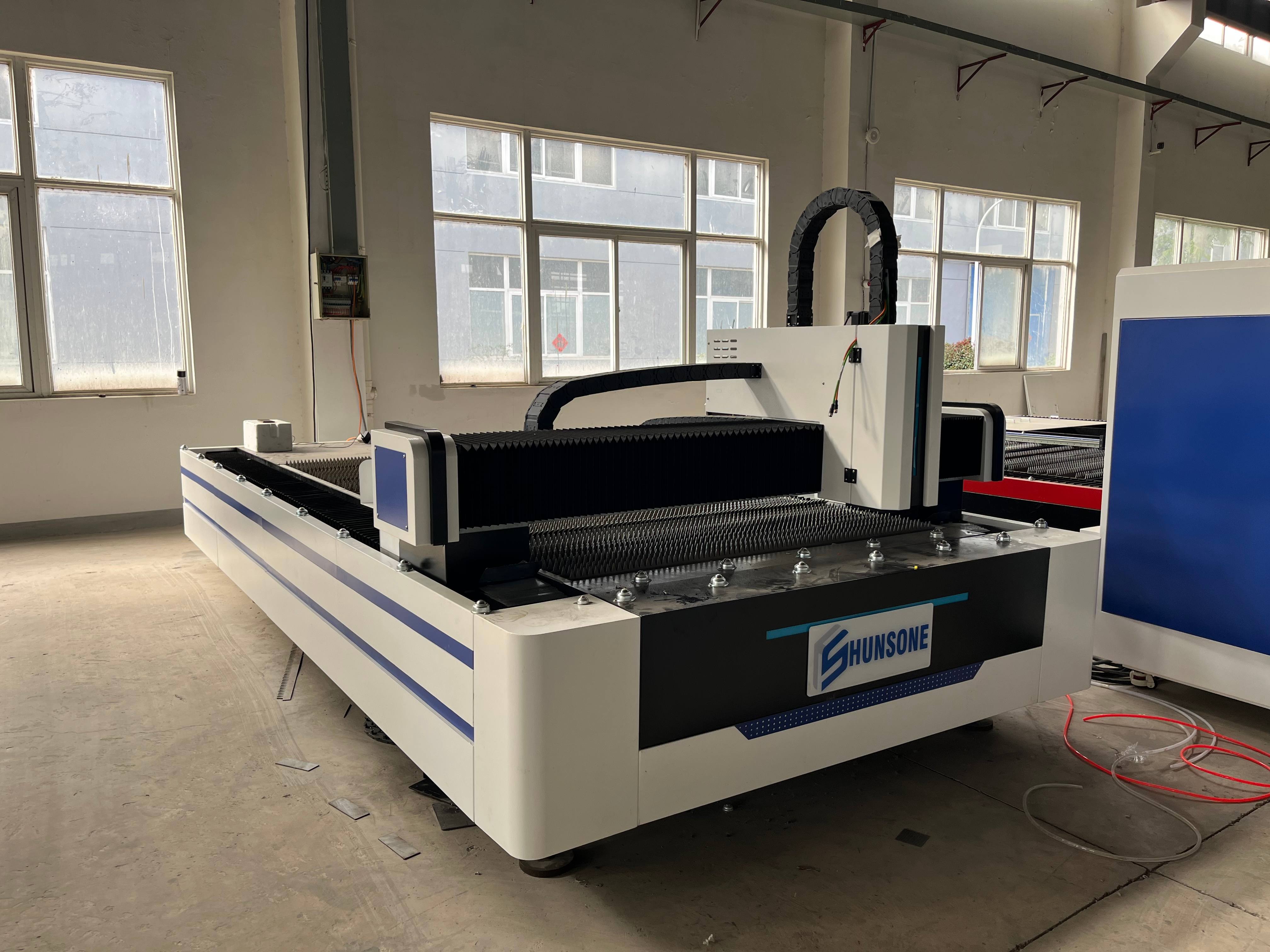
Most people look at an open frame and assume its strength comes strictly from the thickness of the members or the quality of the welds. But the real story is more subtle. An open frame, unlike a closed box section, has no continuous skin to distribute loads. Instead, it relies on the bending resistance of its joints and the way those joints interact under torsion. That interaction—often overlooked—is where the hidden stiffness lives. When one corner tries to rotate, the adjacent members don't just bend; they transfer that rotation into a global twisting of the whole frame. If you've ever felt a flimsy-looking frame suddenly become rigid after adding a small gusset or changing a single connection detail, you've experienced this effect firsthand.
The key is not just material, but moment continuity. In an ideal pin-jointed frame, there is no stiffness at all—it would collapse into a parallelogram under any lateral load. Real open frames gain their rigidity from fixed or semi-rigid joints that resist relative rotation. But here's the catch: the stiffness is never evenly distributed. A frame can be extremely stiff in one loading direction and surprisingly soft in another, simply because the load path finds the weakest rotational spring. Engineers often miss this when they model joints as perfectly rigid. A small amount of joint flexibility can dramatically reduce the frame's overall torsional stiffness, even though the individual members remain well within their elastic limits. That's why a seemingly robust open frame can twist or rack under a load that pure beam bending would easily handle.
To unlock the hidden stiffness, you have to think about the frame as a system of springs in series. Each joint is a rotational spring, each member is a beam in bending and torsion. The total deflection is the sum of all those local compliances. By selectively stiffening the softest joint—often the one in a corner where the member ends meet—you can get a disproportionate gain in overall rigidity. Sometimes the answer isn't thicker steel or a bigger cross-section; it's a slightly longer weld, a small triangular plate, or shifting the connection point to reduce the lever arm that causes joint rotation. These changes cost almost nothing but can double the frame's resistance to twisting. That's the open frame's hidden stiffness: not in the members themselves, but in the quiet fight against rotation at every joint.
Full Power Without the Focus Drift
The mind is not a spotlight that can illuminate everything at once; it’s more like a laser that burns only where it’s aimed. Full power isn’t about doing more at the same time — it’s about refusing to let your attention leak into half-finished thoughts, pings, or the vague guilt of unread messages. When you guard the beam, even ordinary tasks start to cut clean.
Most drift doesn’t come from laziness. It comes from loose ends pulling at your mental desk. To run at full power, close the loops that don’t matter right now. Keep one clear target on the table, and let everything else wait outside the door. That’s when focus stops being a struggle and starts being the default.
Nozzle Changes You Can Do With Gloves On
Swapping a nozzle while wearing thick nitrile gloves might sound clumsy, but the right technique makes it surprisingly smooth. The trick is to keep a dedicated set of nozzle wrenches with textured grips nearby, and to pre-warm the hot end just enough to soften any plastic residue without burning through your glove. Once the old nozzle breaks free, the gloves give you the confidence to handle the hot metal directly, eliminating that awkward dance with pliers and a rag.
Another benefit of gloved nozzle changes is the steady grip you get when threading in the new nozzle. Instead of fumbling with bare fingers on a slick, heated surface, you can guide the threads by feel and then tighten with a short wrench turn. Just remember to brace the heater block with a second wrench — gloves won't stop the block from twisting if you apply too much force, but they do let you hold it comfortably while you work.
For printers with a silicone sock over the heater block, gloves make it painless to peel the sock back, replace the nozzle, and push the sock into place without ever touching a sharp edge or hot aluminum. This turns a routine swap into a clean, one-handed operation that works even mid-print when you need to clear a partial clog without shutting down the whole job.
Setup Steps That Cut Seconds, Not Corners
A good setup process should feel almost invisible—quick enough that you don't lose momentum, but thorough enough that nothing comes back to bite you later. The trick is to strip away repetitive decisions and pre-fill the boring parts, so the only choices left are the ones that actually shape your workflow. For example, instead of walking through ten separate prompts, group related settings into one screen with sensible defaults already selected. Most people won't need to change them, and those who do can jump straight to the one toggle that matters.
Another time-sink is waiting on downloads or dependencies that could have been bundled from the start. Pre-cache the most common components, or let users start using the core features while optional extras load in the background. That way, the setup feels responsive without pretending the extra pieces don't exist. It's not about hiding complexity—it's about sequencing it so the first win comes fast, and the deeper configuration happens only when someone is ready for it.
Finally, make the exit as clean as the entrance. A short, plain-language summary of what was configured—and what was skipped—removes the nagging doubt that something important got missed. Include a one-click way to revisit any step later, because real users rarely get everything right the first time. When setup respects both speed and completeness, it stops being a hurdle and starts being part of the product's first good impression.
Production Runs That Don't Fade After Lunch
The afternoon dip is real, but it doesn’t have to dictate how many units leave the floor. Teams that keep output steady after lunch tend to front-load the fiddly setup work in the morning, leaving repetitive or well-rehearsed tasks for the post-meal window when alertness naturally wanes.
One trick is shortening the midday break just enough to avoid the blood-sugar crash that comes from a heavy meal, then pairing the first hour back with a quick equipment check rather than a full line changeover. It's less about forcing energy and more about matching the right job to the body’s rhythm.
The result shows up in the end-of-day numbers: fewer mid-afternoon slowdowns, fewer quality hiccups, and a shift that carries its pace from first bell to last. That consistency is what separates a line that merely starts strong from one that actually finishes the same way.
FAQ
An open type machine leaves the cutting bed accessible from the sides, which simplifies loading large or awkward sheets and lets operators watch the cut in real time. The trade-off is that you need proper laser safety curtains and eye protection, whereas enclosed systems rely more on built-in shielding.
On mild steel or stainless under 3 mm, a well-tuned open type fiber laser routinely holds plus or minus 0.05 mm, sometimes tighter on straight-line cuts. Corner rounding and small holes stay cleaner than with CO2 because the fiber beam has a smaller focused spot and better beam quality.
Most shops run them on carbon steel, stainless, aluminum, brass, and copper. Thickness range depends on laser power: a 1.5 kW source cuts mild steel up to about 12 mm and stainless to 8 mm, while 3 kW pushes mild steel past 20 mm and aluminum to 12 mm with the right assist gas.
No, the laser source and motion system are the same as enclosed versions, so cut quality does not drop just because the frame is open. The main requirement is a level, vibration-resistant floor and regular cleaning of rails and racks, since open designs can attract more dust from the shop environment.
Daily tasks include wiping the protective window, checking the nozzle and ceramic ring, and draining moisture from the air system. Weekly, clean or replace the dust filters around the electrical cabinet. Monthly, inspect the linear guides and rack-and-pinion, re-grease as needed, and confirm the beam alignment with a pulse test.
Fiber lasers handle reflective metals like aluminum, brass, and copper far better because the wavelength is absorbed more efficiently and there is no risk of back-reflection damaging the resonator. CO2 systems often struggle with those materials or need special coatings, which slows production.
You need a laser-safe enclosure or barrier around the cutting area, interlocked doors, and certified protective eyewear matching the fiber laser wavelength. Fume extraction is also critical because open machines release more cutting smoke into the room if the exhaust duct is undersized.
Yes, especially when you cut diverse plate sizes or need quick manual unloading. Operators can slide parts out from the side without waiting for a full shuttle table cycle, and the open access makes setup changes faster. The gain is less about raw speed and more about reducing non-cutting time.
Conclusion
The open-frame fiber laser platform earns its keep on the shop floor by making every beam placement repeatable. Where the beam lands on the first pass is where it lands on the thousandth, thanks to a gantry and base that resist torsional flex even when the enclosure is removed. That inherent stiffness, often hidden behind the minimalist frame, keeps the cutting head aligned as it accelerates. Full power no longer means accepting focus drift after thermal cycling; the optical chain holds its focal position through shifts in ambient temperature and long bursts. Operators notice the difference in edge quality on thick mild steel and in the absence of rework from wandering kerfs. It is a machine that behaves like a fixed-bridge system without the weight or footprint, letting shops run tight layouts without sacrificing precision.
Practical details matter just as much as beam physics. Nozzle changes are designed for gloved hands, with bayonet-style mounts and clear tactile feedback so a swap takes seconds instead of a frustrating fiddle. Setup steps are equally stripped down; tooling pins, laser alignment aids, and stored parameter sets mean you are cutting good parts before the coffee cools, not chasing offsets. On long production runs, the machine does not soften after lunch. Thermal stability in the resonator and motion system keeps cut quality consistent from first sheet to last, shift after shift. That is the real productivity win: not a faster rated speed on paper, but a process that stays predictable when orders stack up and operators rotate. For modern manufacturing, open-type fiber laser cutting earns its place by removing the variables that quietly drain throughput.
Contact Us
Contact Person: James Chen
Email: [email protected]
Tel/WhatsApp: 86 13770803946
Website: https://www.hunsone.com/