

Programmable Power Supply: Top Picks for Precision and Control
2026-08-01
When precision meets power, the right programmable supply transforms your bench. Whether you're characterizing a sensitive analog front-end or stress-testing a new power stage, granular voltage and current control isn't optional—it's everything. But scanning the market can feel like sifting through a sea of identical spec sheets. That's where TPS stands apart, blending decades of engineering know-how with the clean, responsive output your prototypes demand. In this guide, we’ve handpicked the standout models that truly deliver on accuracy and agility, so you can stop guessing and start measuring with confidence.
The Precision Myth: How Programmable Supplies Elevate Your Testing
When most engineers think about testing, they immediately focus on accuracy—the number of digits on a multimeter or the resolution of an oscilloscope. But in many real-world scenarios, the real challenge isn't the instrument’s precision specs; it's the quality of the power supplied to the device under test. A programmable power supply isn't just a box that delivers voltage and current—it's a critical tool that, when used intelligently, can remove subtle variables that would otherwise corrupt your measurements. By precisely controlling ramp-up sequences, simulating real-world power fluctuations, or injecting known disturbances, you isolate the device's true behavior from its power environment. This elevates your testing from a simple go/no‑go check to a rigorous, repeatable validation of how a product will perform in the field.
The term “precision” often misleads us into believing that a high‑resolution DMM or a low‑jitter clock source is the silver bullet for obtaining trustworthy data. Yet, if the supply voltage sags momentarily during a sensitive analog measurement, or if inrush current craters the supply rail when a motor starts, even the fanciest measurement gear becomes irrelevant. Programmable supplies let you script these edge cases intentionally. You can program a supply to slowly brown‑out a microcontroller while logging its serial output, or to deliver precisely timed current pulses that mimic a battery’s aging behavior. These capabilities turn a static bench setup into a dynamic test environment—one where the supply actively participates in uncovering weaknesses, rather than simply being a background condition you hope remains stable.
Beyond debugging, programmable supplies change how you think about test repeatability. When you rely on a fixed‑voltage bench supply, every time a colleague reproduces your test they may set the knob a fraction of a volt differently, or the lab’s ambient temperature shifts the supply’s internal reference. With a programmed sequence, the exact voltage profile is captured in code—timestamped, version‑controlled, and shared as easily as the test script itself. This means your validation results become portable and consistent across different workbenches and time zones. It also frees you from baby‑sitting the power supply during long‑term soak tests; you can script the entire power‑cycling regimen and walk away, knowing the device will experience exactly the same electrical stress every loop. In that sense, a programmable supply doesn't just power your device—it becomes a co‑author of your test methodology, ensuring that what you measure reflects the device, not the test setup.
Total Control: Demystifying Advanced Regulation Features
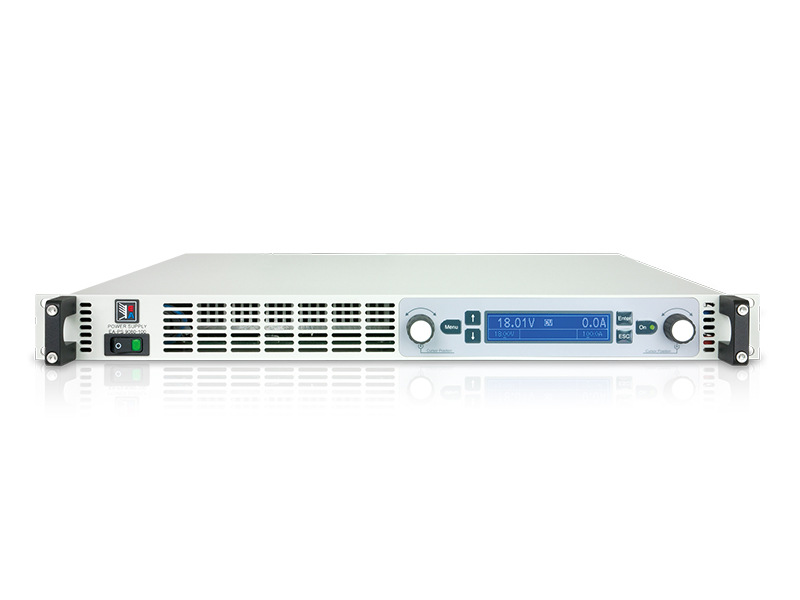
Advanced regulation features often sound intimidating, but they’re really just sophisticated tools designed to give you finer command over voltage, current, and power flows. Think of them as the difference between a basic on/off switch and a precision dial. Instead of settling for fixed outputs, these features let you shape the behavior of your power supply to match the exact needs of your system—whether that means ramping up voltage gradually to protect sensitive components or dynamically adjusting current limits to prevent overloads. It’s about moving from rigid, one-size-fits-all operation to a responsive, adaptive approach that anticipates and reacts to real-world conditions.
At the heart of this control is the ability to program multiple setpoints and transition sequences. You’re not just setting a single voltage; you can define an entire profile—say, starting at 3.3V, holding for a few milliseconds, then stepping up to 5V while monitoring the current draw, and finally reducing to 1.8V under light load. This sequencing is invaluable during testing and prototyping, where different parts of a circuit need power applied or removed in a specific order to avoid latch-up or damage. What’s more, modern regulation loops react in microseconds, compensating for line and load fluctuations almost instantly, so your output remains rock-steady even when the input sags or the device suddenly demands more current.
But the real magic happens when you start combining features like voltage tracking, current sharing, and remote sensing. Need to parallel two supplies for higher current without one hogging the load? Current-sharing pins ensure both units contribute equally. Dealing with voltage drops across long cables? Remote sensing lets the regulator adjust its output so the voltage at the load itself stays right on target. These capabilities transform a basic power source into an intelligent partner that safeguards your project and gives you the freedom to explore designs that would be too risky with simpler controls. Once you see how these pieces fit together, the mystery fades, and you realize it’s all about putting total, reliable command in your hands.
Top Picks: The Series Engineers Swear By
Every seasoned engineer eventually lands on a shortlist of go-to product lines that simply never let them down. These aren't just popular options—they're the ones that quietly power countless prototypes, debug sessions, and field deployments without fanfare. What sets them apart is a rare blend of no-nonsense documentation, consistent performance under stress, and connectors or pinouts that actually make sense in the real world.
Dig deeper and you'll notice the real hallmark: design decisions that feel obvious in hindsight. From the thermal management that keeps specs honest at full load, to the cleverly unified programming interfaces that cut integration time in half, these series reflect lessons learned from thousands of bitter iterations. They're built by people who clearly sat at the same frustrating benches we've all endured.
That's why when a new revision drops, it's not hype that spreads through labs and maker spaces—it's a quiet wave of relief. The latest generation usually preserves what already works while fixing the one subtle headache no one bothered to complain loudly about. That kind of trust doesn't come from marketing; it's earned over years of never being the reason a project went sideways.
Beyond Basics: The Hidden Truth About Noise and Ripple
Most engineers treat noise and ripple as interchangeable gremlins in a power supply, but that oversimplification masks a far messier reality. Noise isn’t just the random, broadband hiss you spot on an oscilloscope—it’s a composite of thermal agitation, semiconductor shot effects, and electromagnetic interference that wriggles into every trace and component. Ripple, on the other hand, is the deterministic, predictable artifact of rectification and switching, but it rarely stays neat. Parasitic inductances and capacitances twist those textbook waveforms into spikes and ringing that can easily double the peak-to-peak voltage you thought you’d designed for. The real kicker? These two don’t just add linearly; they interact, with ripple providing a periodic boost that can push noise peaks into sensitive thresholds at exactly the wrong moment.
Dig deeper, and you’ll find that how you measure these phenomena can completely skew your understanding. A 20 MHz bandwidth-limited scope probe might show a tidy 10 mV ripple, but switch to a 500 MHz differential probe and the same rail might reveal hundreds of millivolts of high-frequency hash that your converter’s control loop is fighting constantly. Ground-lead inductance alone can inject phantom ringing that has nothing to do with the actual output. Even the physical placement of the probe tip matters—move it half an inch along a copper pour, and the apparent noise floor can drop or spike by a factor of three. This isn’t just academic; it’s the difference between a product that passes EMC testing on the first try and one that spends weeks in the chamber while you chase your tail.
The real hidden truth, though, is that noise and ripple aren’t just output contaminants—they’re diagnostic fingerprints. The specific frequency and shape of ripple overshoot can tell you whether a capacitor’s equivalent series inductance is degrading or whether a PCB layout is creating resonant tanks at harmonics of the switching frequency. A sudden change in the noise profile can flag an aging semiconductor junction long before any functional failure occurs. Treating these signals as mere nuisances to be filtered away ignores a wealth of information about circuit health and layout integrity. Once you start reading them instead of just suppressing them, you’ll spot marginal designs before they ever leave the bench.
Use Case Spotlight: From Benchtop to Production Floor
Scaling a brilliant lab discovery into a reliable factory process never feels like just clicking ‘scale up.’ The gap between a pristine benchtop setup and the messy reality of a production floor is where most promising innovations stumble. Variables that felt minor in the lab—ambient humidity, raw material lot variations, or a technician’s subtle technique tweaks—suddenly become the dominant factors determining yield and quality. Bridging this gap demands more than robust chemistry; it requires an intimate understanding of how a reaction behaves when it’s no longer coddled.
One electronics manufacturer learned this the hard way when moving their new conductive adhesive from a 100-gram batch to 50-kilogram mixer runs. The bench recipe called for a specific solvent evaporation rate that was effortlessly maintained under a fume hood with precise temperature control. On the production floor, however, the sheer volume shifted heat transfer dynamics so drastically that the adhesive partially cured mid-mix, resulting in inconsistent printability. The fix didn’t come from a textbook; it emerged from weeks of iterative testing where operators logged every subtle shear force change and correlated it with rheology data. The final process was less about mimicking the lab setup and more about creating an environment where the material’s inherent behavior could be predicted and harnessed.
The most successful transitions we’ve witnessed share a common thread: early collaboration between R&D scientists and production engineers, often long before the formula is final. Instead of tossing a perfected benchtop prototype over the wall, teams that co-develop the scale-up strategy from day one avoid costly rework. They design for manufacturability by asking practical questions—How will this be cleaned? Can an operator with thick gloves consistently hit that tiny alignment mark? These conversations transform the scaling journey from a frustrating translation exercise into a natural evolution, where the benchtop isn’t abandoned but rather grown into something that thrives under the hum and rhythm of a real factory.
Decision Roadmap: Matching a Supply to Your Real Needs
Before jumping into a purchase, it’s worth taking a step back to assess what you actually need versus what’s being offered. Too often, features and promises overshadow the practical reality of how a product or service will fit into your daily operations. A clear-eyed look at your current challenges, capacity, and long-term goals can reveal whether a supply option is truly aligned or simply looks appealing on the surface.
Start by mapping out your core requirements—those non-negotiable elements that a supply must meet to solve your problem. Then, consider flexibility: will this choice grow with you, or will it lock you into a corner? The ideal match often lies in the overlap between immediate utility and future adaptability, not in the most feature-packed listing. Sometimes, a simpler solution that does one thing exceptionally well outperforms a complex one that’s mediocre across the board.
Finally, involve the people who will use the supply every day. Their insights can uncover hidden friction points that a sales pitch might gloss over. A quick trial or a phased rollout can test assumptions without overcommitting. By grounding your decision in real-world use and honest evaluation, you’ll end up with a supply that feels like it was purpose-built for your situation, not for a generic customer profile.
FAQ
A programmable power supply lets you remotely control voltage, current, and other parameters through digital interfaces like USB or LAN, often with software or custom scripts. Unlike a basic bench supply that requires manual knob-twisting, these units enable automated testing, data logging, and complex sequences that would be tedious or impossible by hand.
Look for low ripple and noise specifications, high resolution in setting and readback values, and excellent load regulation. Remote sensing capability is also crucial to compensate for voltage drops in your test leads, ensuring the voltage at your device under test is exactly what you’ve programmed. Multi-channel isolation can be a lifesaver for sensitive circuits.
Yes, though it’s often a trade-off. Some manufacturers offer models with multiple ranges, allowing you to operate in a low-voltage, high-current mode for power-hungry projects, and switch to a high-voltage, low-current mode with ultra-low noise for analog or RF circuits. It’s worth checking the output noise density charts in the datasheet to verify performance.
It’s absolutely central. The hardware is only half the story—robust drivers, SCPI command support, and seamless integration with languages like Python or LabVIEW can make or break your productivity. A slick front panel is nice, but a well-documented API and stable firmware are what you’ll rely on day to day.
Consider the Rigol DP832A or the Siglent SPD3303X-E. Both are popular in the maker and professional community because they pack accurate programmable outputs, decent channel isolation, and user-friendly interfaces at a price that won’t shatter a modest budget. The Rigol tends to have slightly better ripple specs, while the Siglent offers excellent value with its high-resolution display.
Battery simulation and charging profile testing are standout applications. You can program the supply to mimic a discharging battery with specific internal resistance, or step through precise CC/CV charge curves. Other advanced uses include power-cycling reliability tests, characterizing LED driver efficiency, and simulating automotive load-dump transients when paired with fast transient response capabilities.
Definitely. A built-in ARB function lets you create and apply complex voltage or current patterns directly, without needing a separate function generator. This is incredibly handy for testing power supply rejection ratio of circuits, injecting noise for immunity tests, or generating slow ramps for threshold characterization—all synchronized within one instrument and software environment.
Prioritize units that offer firmware updatability, modular output options, and standard communication interfaces like LAN and USB-C. Look for models that can be paralleled or synchronized if you think your power requirements will grow. Also, check if the manufacturer provides regular software tool updates and has an active user forum, as that community support can extend the instrument’s lifespan far beyond its warranty.
Conclusion
Choosing a programmable power supply isn't just about hitting a voltage and current spec—it's about gaining a tool that actively elevates testing integrity. The notion that all regulated supplies deliver equal precision is a common misunderstanding; advanced units incorporate remote sensing, digital loop control, and tight line/load regulation to maintain accuracy even under dynamic loads. These features demystify what true control means: programmable slew rates, arbitrary waveform generation, and real-time logging turn a simple DC source into a versatile stimulus instrument. Engineers consistently swear by models that balance ultra-low noise with intuitive interfaces, because the hidden truth is that ripple and transient response can silently corrupt sensitive measurements. From benchtop R&D to automated production floors, the right supply adapts seamlessly, offering sequencing, protection, and communication options that future-proof your setup.
Matching a supply to real needs requires peeling back marketing claims and focusing on practical use cases. What works for a battery simulation lab might be overkill for basic continuity testing, yet under-specifying leads to frustration and hidden recurring costs. The top picks in this category aren't necessarily the most expensive—they’re the ones delivering consistent performance, transparent noise figures, and connectivity that fits existing workflows. In production environments, features like fast transient recovery and programmable limits directly impact throughput and product safety. By moving beyond generic specs and understanding how regulation, isolation, and ground loops affect your specific application, you gain more than a power source—you gain a strategic advantage in design validation and manufacturing quality. The conclusion is clear: precision and control aren't luxury add-ons; they're essential pillars of reliable engineering.
Contact Us
Contact Person: Lily
Email: [email protected]
Tel/WhatsApp: +49 (0) 2161 49526-0
Website: https://tps-elektronik.com/en/