

Red Light Therapy Mask Supplier: Key Factors to Evaluate Before You Commit
2026-08-26
You've seen the demo units, reviewed the spec sheets, and heard the sales pitch. But before you commit to a red light therapy mask supplier, a handful of less obvious factors will decide whether your product actually delivers the results your customers expect. From wavelength consistency and material safety to post-purchase support, this guide breaks down the evaluation criteria that matter most—and explains why brands looking for a dependable manufacturing partner keep returning to Omeina.
What Factory Audits and Documentation Actually Reveal
Factory audits often get treated as a box-ticking exercise, but the paperwork and walkthroughs tell a more complicated story. What you find in a production log, a training record, or a machine maintenance sheet is rarely the whole truth. Discrepancies surface quickly once you compare the documented overtime hours with the punch-clock data, or when the material certificates don't match the actual batch codes on the warehouse shelves. These documents reveal not just whether a factory follows its own procedures, but where pressure points exist—whether that's rushing orders, cutting corners on safety, or quietly swapping a component to hit a price target.
Beyond individual violations, audits expose patterns. A factory that keeps two sets of payroll records isn't just hiding overtime; it's signalling how management deals with external scrutiny. Documentation gaps around sub-suppliers often point to uncontrolled outsourcing, which is where quality and ethical risks concentrate. In many cases, the most revealing document is the one that's missing or overly tidy—real production environments leave traces, corrections, and notes in the margins. Learning to read those small inconsistencies gives you a clearer picture of actual capacity, labour conditions, and long-term reliability than any polished compliance summary.
Wavelength Claims and the Numbers You Should Request
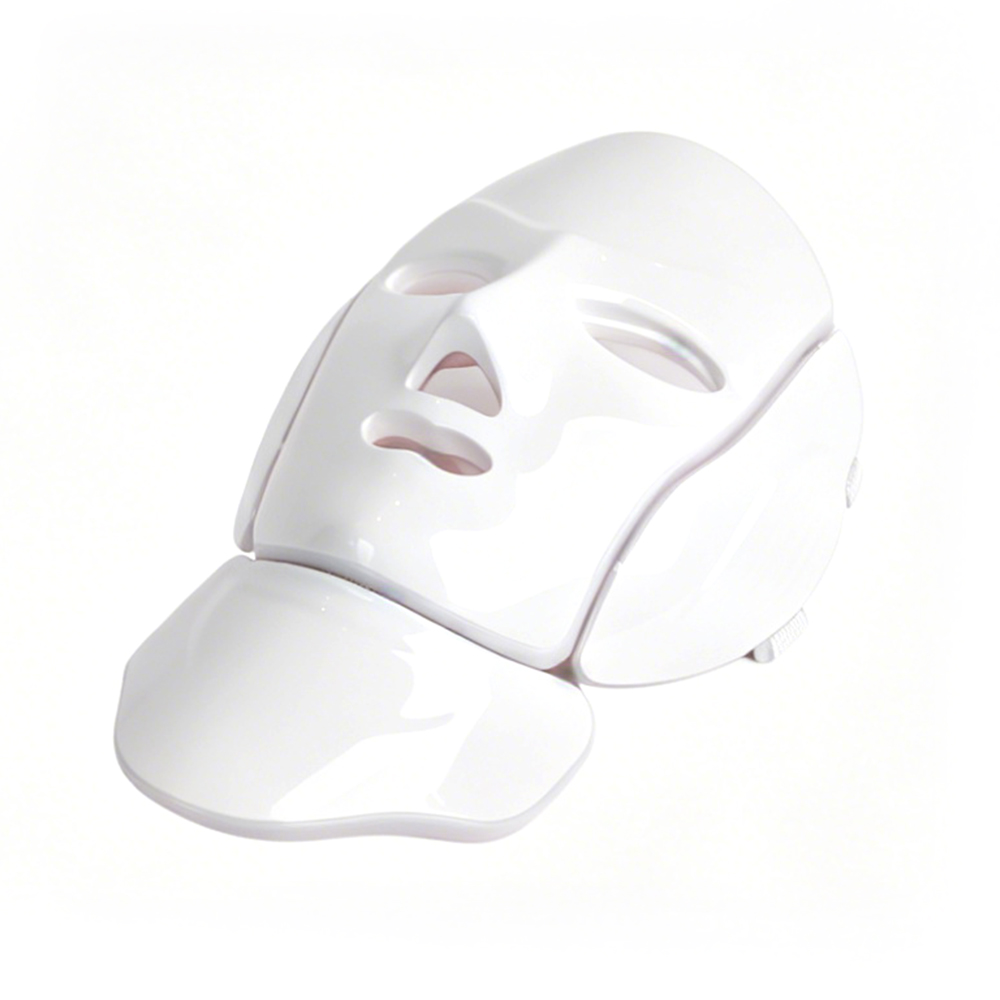
Most brands will happily tell you a device is 660 nm or 850 nm, but that single figure rarely reflects what the LEDs actually emit. Ask for a spectral power distribution chart, not a marketing sheet. Look for the peak wavelength, the full width at half maximum, and the percentage of total output within the claimed therapeutic band. A panel that peaks at 665 nm with a wide shoulder may still be marketed as 660 nm, yet only a fraction of its energy lands where your tissue can use it.
Beyond the spectrum, request irradiance measured at the distance you will actually sit or stand from the device, with a stated sensor type and aperture. Then calculate dose yourself: irradiance in mW/cm² times time in seconds divided by 1000 gives J/cm². If a company won't share these numbers or sends a glossy PDF instead of a test report, treat the wavelength claim as decoration rather than data.
Skin Contact Materials and the Tests Behind the Labels
Anything worn against the skin — a fitness tracker band, a leather watch strap, a pair of dyed leggings — is expected to be safe, but that expectation only gets verified through a layered set of lab tests. The starting point is usually an extraction test, where the material is soaked in artificial sweat or saline at body temperature to see what migrates out. The resulting liquid is then screened for restricted heavy metals, formaldehyde, plasticizers, and certain dye byproducts. Medical-grade products go further under ISO 10993, while textiles often follow OEKO-TEX or similar standards that cap residual chemicals.
Labels like “hypoallergenic” or “skin-friendly” are not self-explanatory; they usually point to two distinct concerns. Irritation testing looks for immediate, dose-dependent reactions such as redness or swelling, often using reconstructed human epidermis models instead of animal patch tests. Sensitization testing, by contrast, checks whether repeated exposure can prime the immune system for a delayed allergic response — the mechanism behind nickel dermatitis. That is why a metal watch back or rivet may be tested specifically for nickel release under EN 1811, and why leather goods are screened for chromium VI, which can form during tanning.
Still, a passing test is not a permanent guarantee. Friction, sweat pH, body lotion, and even UV exposure can change how a material releases substances over time. A band that is safe on day one may become more problematic as coatings wear off or polymers degrade. For that reason, the most useful labels cite a concrete method or limit — such as “nickel release below 0.5 µg/cm²/week” — rather than a broad marketing term. If a product names the standard it was tested against, there is at least a measurable claim to check.
Custom Orders, Minimums, and the Fees Nobody Quotes Early
When a supplier says "custom order," the price tag rarely ends at the unit cost you first discussed. Setup charges, die fees, mold adjustments, and sampling runs can pile up before a single product rolls off the line. The initial quote usually covers only the most visible line items, while smaller but necessary costs remain buried in the fine print or left unmentioned until you’re already committed.
Minimum order quantities work the same way. A factory might agree to a low trial run, but only after you accept a higher per-unit rate that quietly compensates for the short production batch. If you push for a better price later, you may hear that the original quote assumed a much larger volume, leaving you to either absorb the jump or walk away from the tooling investment.
The fees that surface late are rarely arbitrary. Import duties, palletizing, labeling compliance, and even the cost of cutting a new printing plate can arrive as an invoice after the fact. Smart buyers ask for a line-by-line breakdown before placing a deposit, not after, and they treat any missing fee as a red flag rather than a minor oversight.
Shipping Damage, Lead Time Cushions, and Packaging Decisions
When a shipment arrives with crushed corners or torn cartons, the immediate reaction is often to blame the carrier. Yet a closer look at how lead time cushions are calculated reveals that packaging decisions play a far greater role in damage prevention than most supply chain teams acknowledge. A buffer of three extra days might absorb a late truck, but it does nothing for a box that collapses under its own weight in a container stacked six high. The real cushion against shipping damage is built into the material choices and structural design made weeks before the product ever leaves the dock.
Packaging engineers frequently treat lead time as a separate variable from box strength, but the two are deeply intertwined. A rushed production schedule that shaves days off the promised delivery window often forces suppliers to use thinner corrugated board or skip the internal dunnage that would have kept the product stable. Conversely, a generous lead time cushion allows for testing multiple package configurations under simulated drop and vibration conditions. Companies that understand this connection tend to invest in reusable crates or reinforced corner posts not because they are cheaper per unit, but because they reduce the hidden costs of returns, reshipments, and customer distrust triggered by damaged goods.
The smartest packaging decisions come from mapping the entire journey rather than optimizing any single variable in isolation. If a distribution center consistently reports a five percent damage rate on a particular line, the answer is rarely to simply add another layer of bubble wrap. Instead, the team should look at how lead time cushions affect warehousing patterns—products that sit longer in humid environments may weaken adhesive bonds, while those loaded at the last minute onto a truck with poor weight distribution face predictable crush points. By treating shipping damage as a signal about the interaction between time buffers and package robustness, organizations can design packaging that actually survives the real world, not just the lab test.
Warranty, Support, and the Return Process After Payment
Once your payment clears, the warranty kicks in automatically. For most products, that means 12 months of coverage against manufacturing defects, though some accessories and refurbished items carry a shorter window. The original receipt or order number is all you need if something fails under normal use, and we'll repair or replace it without charging you for parts or labor.
Support doesn't stop at the checkout page. You can reach our team by email or through the support portal in your account, and we typically reply within one business day. Live chat is available during weekday hours for faster help with setup, troubleshooting, or spare parts. If we can't resolve the issue after a few back-and-forth exchanges, we'll suggest the quickest warranty path rather than keeping you waiting.
Returns after payment follow a simple sequence: submit a request within 30 days of delivery, get a prepaid shipping label, and send the item back in its original packaging. Once it arrives at our warehouse, inspection takes about two to five business days. Refunds go back to the original payment method, usually within a week of approval, while exchanges ship out as soon as the return is scanned by the carrier.
FAQ
Ask for ISO 13485 or equivalent medical device quality certificates, not just generic factory audits. Check whether the certification covers the specific product category, because some suppliers hold certificates for unrelated electronics. Also confirm that the facility named on the certificate matches the one actually producing your masks.
Request independent spectrometer test reports for a production sample, not a pre-approved prototype. Look for narrow wavelength peaks around 630-660 nm and 810-850 nm rather than broad ranges. Irradiance should be measured at the skin-contact distance, not at the LED surface, so ask for the exact testing distance and setup.
Dependable suppliers run batch-level inspections on LED output consistency, solder joints, and power safety. They should be able to show you an internal QC checklist or share defect rate data. Risky suppliers often rely on final visual inspection only and cannot explain how they catch weak LEDs or uneven light distribution.
Look for medical-grade silicone or hypoallergenic polycarbonate against the skin, with no sharp edges or exposed wiring. The mask should have even LED spacing and proper heat dissipation, such as a lightweight aluminum backing or ventilation channels. Avoid paints or coatings that can peel after repeated cleaning.
Ask about their monthly production capacity for your exact model and request a line trial before committing to large volumes. Check whether they keep critical components like LEDs and drivers in stock or rely on just-in-time purchasing. A supplier who can share a realistic ramp-up schedule is more dependable than one who promises unlimited capacity without details.
Vague answers about tolerances, slow document sharing, or repeated excuses for sample delays are strong warnings. If the supplier pushes you to approve a sample that differs from your specification without explaining the change, that often leads to batch inconsistencies. Also be wary of suppliers who cannot provide a single point of contact for technical questions.
Yes, they matter a lot. Request reports from recognized labs for photobiological safety, electrical safety, and material biocompatibility. Check that the report covers your product model and not a similar one. Pay attention to the test date and whether the lab is accredited, because outdated or unaccredited reports provide little protection.
Break down the quote by component: LED brand, driver quality, casing material, and safety testing. A low price often hides cheaper LEDs with wider wavelength drift or thinner wiring. Ask suppliers to explain the cost difference between their option and a more expensive alternative, then judge whether the trade-off affects skin safety or long-term reliability.
Conclusion
Too many buyers get burned by glossy brochures and vague promises. Before you sign anything, ask to see the audit trail—not just a certificate, but the actual findings from the last third-party inspection. A supplier can claim 660nm and 850nm all day, but unless they hand over spectrometer data from a production unit, you're gambling. The same goes for skin contact materials: silicone grades, fabric dyes, and adhesives all need real biocompatibility test reports, not just a logo on the box. Those documents reveal whether the factory actually controls its process or just muddles through each order.
The real cost rarely shows up in the first quote. Custom tooling, small-batch fees, and label changes often surface only after you've committed. Push for a written breakdown of every incidental charge before you pay a deposit. Then look at the boring stuff: how they pack the masks, whether they add crush-resistant inserts, and what their actual lead time cushion is—not the optimistic date they first mention. Finally, get the warranty and return process in writing, including who pays for shipping on a defective unit. A supplier that hesitates on any of these points is telling you exactly how hard the post-payment relationship will be.
Contact Us
Contact Person: Tina Liu
Email: [email protected]
Tel/WhatsApp: 8618681405932
Website: https://www.omeinabeauty.com/