

Reliable Programmable Power Supply: Essential Buying Guide
2026-11-16
Choosing a programmable power supply is one of those decisions that quietly shapes your entire workflow. A unit that can't hold voltage under load or resets at the worst moment isn't just an inconvenience—it's a risk. That's why reliability should be your first filter, not an afterthought. In this guide, we'll look past marketing specs to the practical signs of a supply you can count on, with real-world perspective from TPS. Whether you're running long-term tests or prototyping sensitive circuits, the right supply keeps you focused on the work, not the equipment. Here's what to check before you buy.
Which Output Accuracy Specs Actually Matter for Your Work?
When you're comparing devices or software that produce measurable output—think printers, CNC machines, audio interfaces, or even code generators—the spec sheet will throw a dozen accuracy numbers at you. Most of them are marketing fluff. The ones that actually affect your daily work are repeatability and resolution under your specific operating conditions. A lab-grade accuracy figure measured at 20°C with perfect calibration means nothing if your workshop swings between 15°C and 30°C, or if you're rushing a job at 3 a.m. with worn tooling.
Start by identifying the tolerance your real work requires, not the tightest number the manufacturer brags about. If you're cutting plywood for shelving, a positional accuracy of ±0.2 mm is plenty—chasing ±0.01 mm wastes money and setup time. Conversely, if you're doing precision PCB drilling, thermal drift and backlash matter far more than the quoted single-axis accuracy. Look for specs that describe behavior over time and under load: hysteresis, thermal stability, and repeatability after a cold start. Those tell you how the machine will behave on a Tuesday afternoon, not just in the demo video.
Finally, test with your own materials and workflows. Borrow a unit, run a small batch, measure the output with your own calipers or sensors. A spec that holds up on paper often falls apart when your feed rate changes, your material has slight warping, or your operator hasn't had coffee. The accuracy spec that matters is the one you can verify in your shop, under your deadlines, with your parts—not the one printed in bold on page one of the brochure.
How to Pick a Programming Interface You Won't Outgrow
A common trap is choosing an interface based solely on your current project's size. What feels cozy for a weekend prototype can turn into a straitjacket when the codebase triples. Look instead at how the interface treats change. Does it force you to rewrite every caller when a parameter becomes optional? Or does it let new capabilities slip in without breaking old code? The best interfaces make the boring path—adding a field, deprecating a method—almost invisible. If the documentation constantly says “breaking change,” you’ll be paying that tax forever.
Pay attention to composability. An interface you won’t outgrow doesn’t just solve today’s problem; it gives you small, orthogonal pieces that snap together in ways the original designer never imagined. That means preferring plain data structures over clever abstractions, and functions over sprawling classes. Try writing a tiny side experiment against the interface: read a value, transform it, send it somewhere new. If that feels like wrestling the tool instead of using it, your future self is already exhausted.
Finally, judge the interface by its quiet signals. How do maintainers handle edge cases? Are errors specific or do they all collapse into a generic failure? A well-aged interface has scars—deprecation notices, versioned endpoints, honest changelogs—that show it has survived real use. Steer clear of anything that claims to be “perfect for every use case” or changes its core philosophy every six months. The goal isn’t to find the most popular option, but one whose constraints align with how your software will actually grow.
Protection Circuitry: The Specs That Save Your Devices
Protection circuitry rarely gets the spotlight until something goes wrong, but the specs behind it determine whether a minor fault stays minor or turns into a fried board. Overvoltage protection (OVP) clamps incoming spikes before they reach sensitive silicon; overcurrent protection (OCP) cuts the flow when a short tries to pull more amps than the design allows. Overtemperature protection (OTP) watches the junction temperatures and backs off power if cooling can't keep up. These aren't just checkbox features—the threshold values, response times, and recovery behavior vary widely between cheap and well-engineered power stages.
Real-world conditions test these limits constantly. A USB-C charger that negotiates 20V can send a destructive surge if the cable develops a partial short, unless the OCP triggers within microseconds. Some boards rely on resettable fuses that slowly heat up; others use eFuse ICs with precise current sensing and fast shutdown. Transient voltage suppressors handle microsecond spikes that ordinary regulators miss. If the protection circuit is too slow or too loose, the very components it's meant to guard become the sacrificial path.
Pay attention to the numbers that often hide in datasheets: clamping voltage, response time, hold current, and thermal shutdown threshold. A supply rated for 5A but with OCP set at 8A leaves a wide window for damage. Certifications like UL or IEC give a baseline, but the real test is how the circuit behaves after repeated faults—does it latch off, auto-retry, or degrade quietly? In practice, robust protection is less about surviving one big event and more about avoiding slow death from a thousand small over-stresses.
What Build Quality Looks Like Before You Buy
You can learn a lot about build quality before touching the product. Look at close-up photos of seams, edges, and joints—uneven gaps, rough cut lines, or misaligned panels often hint at sloppy assembly. If the brand publishes material specs, pay attention to the actual grade: a vague “metal alloy” is not the same as a specific 6000-series aluminum or a high-impact polycarbonate. These details matter because they reveal whether the manufacturer invested in durability or just in marketing.
Another tell is the weight and balance. You rarely see this listed in a spec sheet, but user reviews and hands-on videos often mention how a product feels in the hand. A well-built item tends to have a certain heft without feeling hollow, and buttons or hinges move with deliberate resistance rather than wobbling. If multiple reviewers point out the same creak or flex point, assume that flaw will only get worse with daily use.
Finally, check how the company talks about testing. Words like “drop-tested,” “IP-rated,” or “cycle-tested” should come with numbers—not just adjectives. A hinge rated for 50,000 opens means something concrete; “premium durability” means nothing. When a brand is transparent about the exact standards its product meets, it usually signals confidence in the manufacturing process, not just the final look.
Noise and Ripple: The Numbers Behind Clean Power
A 5 mV ripple figure on a 3.3 V rail sounds harmless until you feed it into a 16-bit ADC. That same 5 mV, spread across a 100 kHz measurement bandwidth, can easily mask the least significant bits if the converter's reference pin isn't isolated. Real bench measurements rarely match datasheet front-page numbers: a so-called clean 12 V supply may show only 2 mV of ripple at no load, but jump to 12 mV once a fan motor or FPGA starts switching.
Load transient response often hides the worst numbers. A 10 A step from 0.5 A to 10.5 A can cause a 60 mV sag before the control loop catches up, and the recovery ringing adds another 20 mV of high-frequency noise for several microseconds. Those milliseconds are where ADC conversions, PLL lock times, or laser diode currents get compromised. The figure that matters is not the static ripple, but the dynamic excursion under your specific load profile.
PSRR curves tell a different story: a regulator may boast 70 dB rejection at 120 Hz, but that drops to 25 dB at 1 MHz where switch-node ringing lives. If your input bus carries 100 mV of switching spikes, that remaining 25 dB still lets 5.6 mV through to the output. Smart engineers read the numbers backwards—start with the noise budget of the sensitive circuit, then work out what supply ripple and PSRR combination actually fits.
Budgeting for Reliability: Where to Save and Where to Spend
Reliability budgets often fail because teams spread resources too thin across every component. The smartest move is to identify the few systems where downtime causes immediate revenue loss or safety risk, and pour money into those without guilt. For everything else, accept a lower tier of redundancy and lean on automated recovery scripts instead of expensive hardware.
Where to spend: monitoring that actually traces real user journeys, failover testing done quarterly, and on-call rotations that don't burn people out. Where to save: redundant database replicas for non-critical reporting, over-provisioned cloud instances running at 10% utilization, and elaborate dashboards nobody opens during an incident.
A practical rule is to tie every reliability dollar to a customer-facing outcome. If you can't explain how a backup generator or a second data center prevents a specific outage scenario that would cost more than the investment, skip it. Often the biggest wins come from boring things like better deployment rollbacks and clearer runbooks—not from buying more nines.
FAQ
Focus on output range, resolution, accuracy, and transient response. If you're powering sensitive analog circuits, ripple and noise specs matter more than a big feature list. For digital work, you can often get by with a switching unit that has clean enough output. Always check the programming resolution for voltage and current—coarse steps make automation painful.
Look at the highest voltage rail you expect to use, then add 20-30% headroom. Current is similar—sum up worst-case loads and avoid running a supply at its max continuously; heat kills reliability. Multiple isolated channels help if you deal with bipolar or mixed-signal designs, but don't overpay for channels you won't use in parallel.
Linear units usually win for ultra-low ripple and fast transient response, but they're heavy and inefficient. Modern switching supplies with good filtering can be surprisingly clean and are far lighter. If you're doing precision analog or audio work, a linear supply is still the safer choice. For battery simulation or high-current digital loads, switching makes more sense.
Over-voltage protection, over-current protection, and over-temperature shutdown are non-negotiable. Some supplies also offer reverse polarity protection and a sense-line disconnect detection. Don't rely on software-only protection—hardware limits should be independent, so a firmware crash won't fry your circuit.
If you plan to automate tests, yes—check for SCPI over USB, LAN, or GPIB. USB is fine for simple scripts, but LAN with a built-in web page or VXI-11 makes integration much easier on a bench with multiple instruments. Avoid proprietary software that locks you into one vendor; a plain SCPI command set gives you freedom to switch tools later.
Only if your cables are long or you're pushing current through small gauge wires. Four-wire sense compensates for voltage drop at the load, which becomes critical above a few amps or when using tight regulation margins. For low-current breadboard work, you can skip it and save money. It's not a gimmick, but it's also not universally necessary.
Buying too little current, ignoring transient response, and assuming fan noise won't matter in a quiet lab. Another common one is overlooking calibration cost—older used supplies may need expensive calibration service. Also, don't trust peak power ratings; check continuous ratings at worst-case temperature.
It can be, but only if you can verify calibration, fan noise, and encoder or keypad wear. Ask for a photo of the self-test screen and a short video showing output under load. If the fan is loud or the display flickers, factor in repair costs. For older units, check if the manufacturer still offers firmware updates or repair parts.
Conclusion
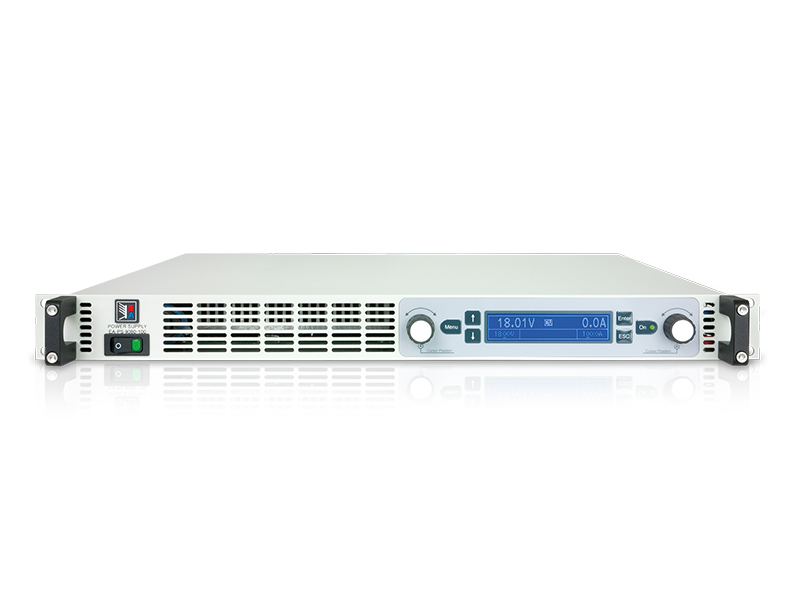
A dependable programmable power supply is less about the wattage printed on the box and more about how well it holds a setpoint under changing loads. Look past headline resolution: programming accuracy, readback accuracy, and load regulation tell you what you actually deliver at the terminals. If your work involves sensitive analog or RF circuits, pay closest attention to ripple and noise figures, ideally specified in both rms and peak-to-peak with bandwidth stated. Protection circuitry—overvoltage, overcurrent, and overtemperature with selectable latching or foldback behavior—does more than protect the supply; it protects the boards you spent weeks designing. Before buying, twist the binding posts, feel the knob detents, and glance at internal layout photos if available. A flimsy chassis or overheating fan can turn an excellent datasheet into a bench liability.
The programming interface is another area where short-term savings backfire. A supply that speaks SCPI over USB or LAN gives you room to automate tests later, while a closed front-panel-only unit quietly limits how far your setup can grow. That said, not every feature deserves premium money. Spend on voltage and current accuracy, linear regulation for low-noise work, and robust protection; save on oversize color touchscreens, extra channels you won't use simultaneously, and legacy GPIB ports unless your lab already depends on them. Reliability often comes from choosing a supply with conservative thermal design and honest specifications rather than the highest number of watts per dollar. When budgeting, treat output integrity and fault protection as fixed costs, and everything else as a place to trim.
Contact Us
Contact Person: Lily
Email: [email protected]
Tel/WhatsApp: +49 (0) 2161 49526-0
Website: https://tps-elektronik.com/en/