

Safety Valve Manufacturer Shares Expert Tips for Selecting Dependable Pressure Relief Valves
2026-11-16
A pressure relief valve is the last line of defense between safe operation and a catastrophic failure, yet many facilities still treat valve selection as an afterthought. The difference between a dependable system and a costly shutdown often comes down to small design choices that are easy to overlook until it’s too late. In this guide, safety valve manufacturer HONGSEN shares practical tips from the field to help you evaluate materials, sizing, and application-specific performance before you make a decision you’ll have to live with.
The Overpressure Scenario Comes Before the Valve Spec
Engineers often treat valve selection as a catalog exercise, but that habit quietly reverses the order of decisions. The moment a system sees a pressure spike, the valve becomes the weakest assumption in the line. Mapping the overpressure scenario first, including how fast pressure rises and where relief paths actually lead, changes the conversation from "what size fits" to "what must survive."
Once the transient condition is described, the specification stops being a wish list. A valve chosen only for normal operating pressure can look perfectly reasonable on a steady-state datasheet and still fail during the few seconds that matter. Defining the peak, its duration, and the medium's behavior under compression lets the material, seat, and actuation choices emerge from the event itself.
That sequence also reduces expensive over-specification. When the overpressure case is clear, the valve can be sized for the real envelope instead of padded out of fear. It is less about adding margin everywhere and more about placing margin where the actual stress lives, which tends to produce a spec that is defensible, leaner, and easier to maintain.
Set Pressure and Required Capacity Are Two Different Problems
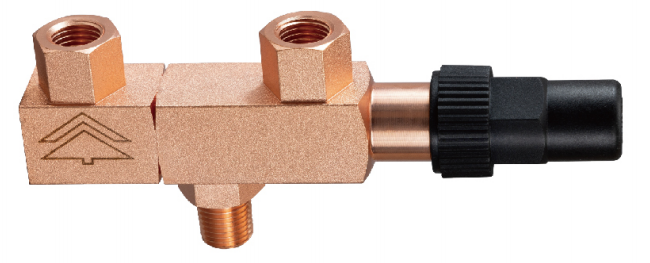
It is easy to treat set pressure and required capacity as two ways of describing the same need, but they answer entirely different questions. Set pressure defines the point at which a device begins to respond, such as a relief valve lifting or a regulator starting to throttle. Required capacity, by contrast, describes how much flow the system must handle once that response occurs. A device can open at exactly the right pressure and still fail if the flow path or trim cannot pass the necessary volume.
Confusion usually appears during selection. Someone may assume that a higher set pressure automatically improves capacity, or that a bigger body size guarantees the correct opening point. These assumptions fall apart because capacity depends on factors like downstream pressure, inlet conditions, fluid properties, and piping geometry, while set pressure is tied to the allowable operating limit of the protected equipment. They are not interchangeable adjustments on the same dial.
The practical fix is to calculate them separately before comparing any equipment curves or tables. Determine the maximum allowable pressure for the application, then work out the required flow under the most demanding normal or upset conditions. Only after both numbers are known does it make sense to look for a device that meets the pressure threshold and the flow requirement at the same time. Matching one without verifying the other leaves a gap that may not show up until conditions move outside the usual range.
Materials That Fit the Process, Not Just the Drawing
Most material specs start with the part print, but anyone who has spent time on a shop floor knows drawings don't capture how a material behaves under a specific cutting tool, heat cycle, or finishing pass. A grade of stainless might machine beautifully in one shop and chatter relentlessly in another simply because the process isn't matched to the alloy's actual personality. Instead of defaulting to a familiar callout, it pays to ask what the material will be asked to do at every stage: will it see interrupted cuts, deep boring, or a long stretch between rough and finish? The answer often points away from the obvious choice.
Small differences in sulfur content, grain structure, or cold work can shift tool wear by an order of magnitude. When a shop chooses a free-machining variant not for the print but for the process, cycle times drop without a single change to the program. The same logic applies to weldments: a material that holds tolerance through stress relief might be worth more than a cheaper plate that twists after the first pass. Process-fit thinking treats the material as a variable you can tune, not a fixed input handed down from engineering.
This doesn't mean ignoring the drawing entirely; it means reading between its lines. A dimension with a tight parallelism callout hints at internal stress risk, while a deep pocket suggests chip evacuation will matter more than tensile strength. By tying material selection to the way parts are actually made, shops reduce rework, extend tool life, and often discover that a slightly different chemistry or temper can save hours downstream. The right material is the one that behaves predictably in your hands, not the one that simply satisfies a checklist on paper.
Code Marks Alone Do Not Confirm a Dependable Valve
A code mark on a valve body typically means the design was evaluated against a published standard under controlled conditions. It does not guarantee that every unit coming off the line carries the same level of integrity. Batch-to-batch differences in casting porosity, heat treatment, machining tolerance, and seal material can quietly shift performance away from the approved sample. A valve can pass a basic shell test on day one and still develop a seat leak after a few hundred cycles because the marking never captured how the internals were actually assembled or cleaned.
The real test of dependability sits in traceability and process control, not in the stamp. Two valves with the same code mark can come from very different factories, one with tight material certifications and another with vague supplier records. Things like fastener torque, seating alignment, surface finish, and even residual debris inside the flow path influence how long the valve holds up. Without batch test reports, material heat numbers, or documented inspection points, the mark is little more than a nameplate claim that may not reflect what is inside the box.
A better approach is to treat the code mark as the starting point for qualification, never the final word. Request witnessed pressure and leakage tests, review tear-down reports from similar service conditions, and ask how the manufacturer handles non-conforming parts. If the valve will face thermal cycling, abrasive media, or aggressive chemicals, the minimum standard behind the mark may simply be too low for the actual operating reality. Dependability is earned through evidence of consistent production, not through printed characters on a casting.
Inlet Line Details That Undo a Good Design
A carefully selected pump can lose several points of efficiency before the fluid ever reaches the impeller. One common culprit is an elbow placed too close to the suction flange, which sends a skewed velocity profile into the eye of the impeller. The result is not always dramatic cavitation; more often it shows up as a slight vibration, a noisy bearing, or a discharge pressure that never quite matches the curve.
Reducer orientation gets flipped during installation more often than anyone likes to admit. An eccentric reducer installed flat-side-up can trap air at the top of the line, while a concentric reducer on a horizontal suction run can create a pocket right before the pump. Once air gathers there, it releases unevenly, causing the pump to hunt and the seals to run dry for moments that are easy to blame on other components.
Some of the worst offenders never even appear on the P&ID. The way a temporary strainer is supported, whether a drain connection is welded in flush or left protruding, and how much straight run actually survives the final iso revision all shape the velocity profile at the suction. These choices are treated as field decisions, but the closer they sit to the pump, the more authority they have over the entire system.
Questions a Trustworthy Supplier Should Ask You First
A supplier worth keeping doesn't rush to close a deal. Before quoting prices or promising lead times, they pause to understand what actually matters for your project. This isn't about interrogation; it's about fit. Questions around your end use, required tolerances, volume expectations, and environmental conditions reveal whether their capabilities align with your reality. A partner who skips this step often ends up delivering something that looks right on paper but fails where it counts.
Pay attention to how specific their questions get. Generic inquiries like "What do you need?" are easy. Stronger suppliers ask about your testing protocols, target cost structure, and even the problems you've had with previous vendors. They might want to know if you'll need support with design tweaks or if your timeline includes buffer for unforeseen delays. These details signal that they're thinking beyond the invoice and into the lifetime of the product.
The reverse is also telling. If you find yourself volunteering information while they nod silently, treat that as a warning. A trustworthy supplier should be actively pulling context from you, not just waiting for a spec sheet to land in their inbox. The questions they ask first are often the clearest preview of how they'll handle your order later.
FAQ
Most people fixate on connection size and forget that set pressure, backpressure, and required relief capacity drive the choice. If the orifice area can't handle the worst-case flow, even a well-built valve will struggle. Start with the process data, not the pipe diameter.
Spring-loaded models tend to be simpler and tolerate dirtier service, but pilot-operated valves hold tighter set pressure and work better when operating pressure runs close to the set point. If your margin is narrow or you have a large volume to relieve, pilot-operated often pays off.
The trim, seats, and springs matter as much as the housing. A stainless body with standard internals can still fail fast in corrosive or sticky media. Specify internal parts for the actual chemical and temperature conditions, not just the outside environment.
Not necessarily. Setting a valve too high reduces its protective margin and can push the system into dangerous territory before it opens. The set point should match the maximum allowable working pressure of the weakest component, not your normal operating target.
Regular pop testing or bench testing under realistic conditions catches drift before it becomes a failure. Valves sitting for years without cycling often stick or leak. Keep records of each test, and compare opening and reseating pressures to the original specs.
Chatter usually means the valve is oversized for the flowing condition or inlet piping is too restrictive. The valve opens, pressure drops instantly, and it slams shut only to reopen. Correct sizing and keeping inlet pressure drop below 3% can smooth out operation.
Most conventional spring-loaded relief valves are designed for vertical installation with the spring upright. Horizontal mounting can affect seat alignment and drainage. Check the manufacturer's orientation limits before making that compromise.
Look for certified capacity data, material traceability, and set-pressure test reports. A supplier that just hands you a valve without clear performance records is leaving you to guess whether it will actually protect the system.
Conclusion
A dependable pressure relief valve selection starts long before anyone looks at a catalog. The first task is to understand the overpressure scenario itself—what can go wrong, how fast pressure can climb, and what has to be protected. That picture shapes the specification more than a preferred brand or size ever should. Set pressure and required capacity are often treated as one decision, but they solve different problems. A valve can open at the right pressure and still fail the system if it cannot move enough volume under real relief conditions. Materials deserve the same practical attention: an alloy that looks fine on a drawing may crack, corrode, or bind when it meets trace chemicals, temperature swings, or sticky process residue.
Code marks and standard compliance give a baseline, but they do not prove a valve will stay tight, open cleanly, or survive repeated cycles in your service. Dependability shows up in quieter details. A long, narrow, or poorly supported inlet line can choke flow, cause chatter, or shift the valve's set point under stress, undoing an otherwise sound design. That is why a trustworthy supplier should ask about your process behavior, upset scenarios, and maintenance history before quoting a part. If they skip those questions and only ask for size and connection, they are likely selling a product rather than helping you choose protection that actually works.
Contact Us
Contact Person: KOPASS HO
Email: [email protected]
Tel/WhatsApp: 8613606566112
Website: https://www.hongsenref.com/