

Silent Generator Manufacturing: How Quiet Power Is Built for Modern Needs
2026-08-26
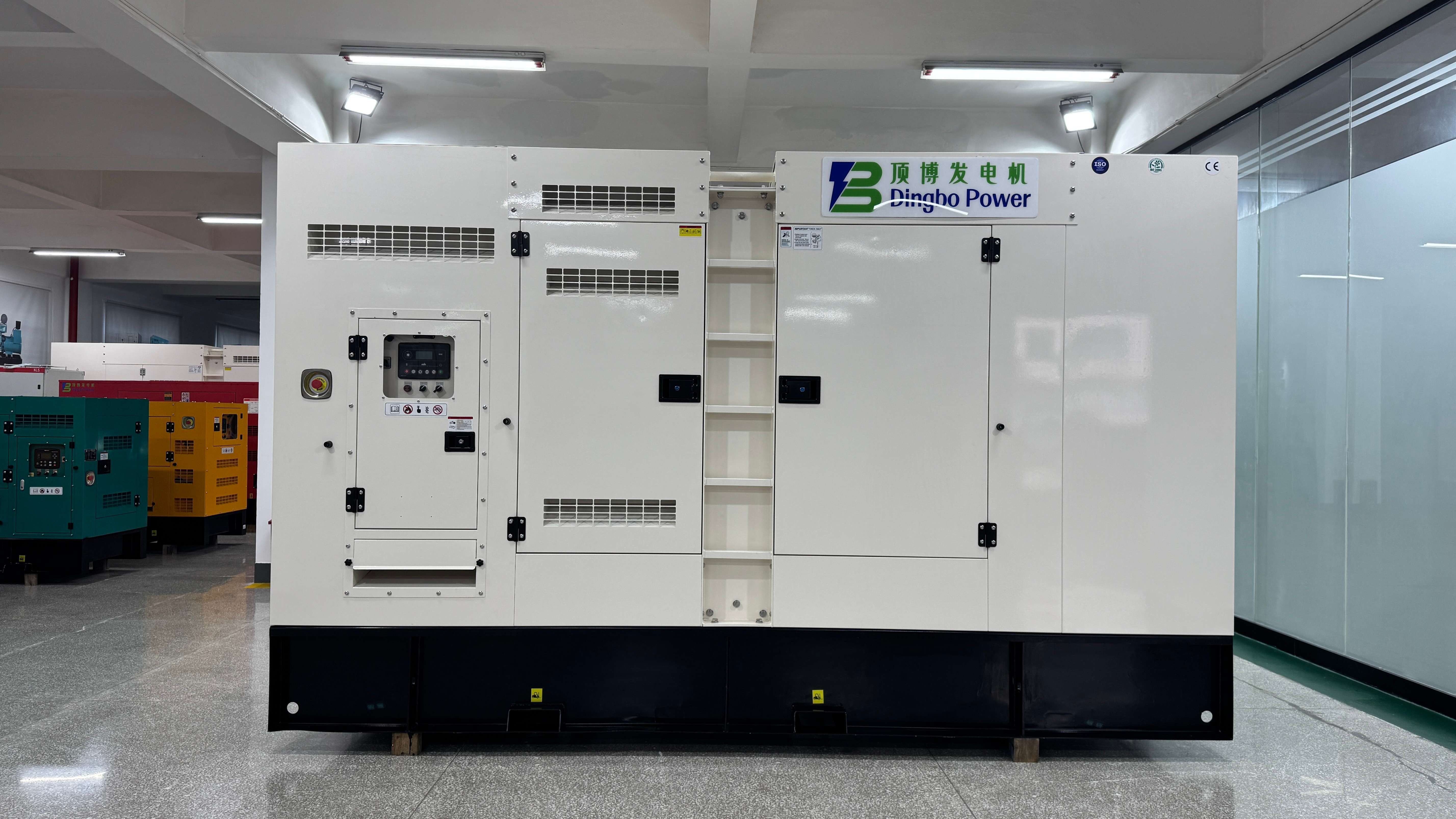
Noise pollution is no longer a background worry—it’s a design constraint that shapes how modern generators are built. From hospitals that can’t afford a single decibel of distraction to data centers running round the clock, the need for silent power has shifted from luxury to baseline requirement. But achieving true quiet operation is far more complex than adding foam or a heavier casing. It demands rethinking airflow, vibration control, exhaust routing, and even the geometry of internal components. As this demand grows, manufacturers like DINGBO POWER are leading a quiet revolution, blending precision engineering with real-world acoustic performance. In this article, we explore what goes into building a silent generator—and why the process matters more than ever for modern infrastructure.
Quiet Generators Start with Rotor and Crankshaft Balancing
A generator’s noise level is often decided long before the muffler or sound-dampening enclosure is fitted. The rotor and crankshaft are the two heaviest spinning parts, and even a small imbalance in either one creates a repeating force that pushes against bearings and mounting points every revolution. That vibration doesn’t just produce an audible hum—it travels through the frame, into the ground, and can turn a portable unit into something that rattles nearby windows.
Factory balancing corrects this by measuring the exact location and amount of excess mass, then either drilling, grinding, or adding small weights until the assembly rotates without eccentric load. The process is much more precise than a simple static balance; dynamic balancers spin the parts at operating speed to catch issues that only appear under centrifugal stress. When done properly, the rotor and crankshaft no longer fight each other or the surrounding structure.
The payoff is a lower baseline noise floor before any acoustic covers are added. With mechanical vibration under control, the remaining sound comes mostly from combustion and cooling air, which are much easier to manage with a good enclosure. Bearings and seals also run cooler and last longer because they aren’t being hammered by a wobbling shaft.
Exhaust Paths That Deflect Sound Before It Escapes
A well-shaped exhaust route doesn't just channel gases; it actively tosses sound waves against internal walls, curving their trajectory so they lose energy through repeated collisions. Instead of letting noise barrel straight out the tailpipe, these paths force the acoustic energy to bounce, bend, and break apart before reaching open air. The result is a quieter exit without relying on bulky extra chambers or restrictive baffles.
Think of each elbow and offset as a chance to scatter the pressure pulses that our ears perceive as rumble or drone. By staggering the path geometry, you create destructive interference where wave peaks meet troughs, canceling out the most intrusive frequencies. This approach works especially well when the exhaust stream itself remains relatively smooth, so the sound deflection doesn't come at the cost of choking the engine's breathing.
Materials also play a supporting role in this deflective strategy. Roughened inner surfaces or layered perforated tubes can catch stray sound waves that would otherwise slip through the primary bends. When the exhaust finally reaches the outlet, what remains is a softened, less aggressive tone — more like a controlled exhale than a sharp bark.
Sound-Damping Foam Choices Most Builders Overlook
Ask most builders about sound-damping foam and they'll point to the same egg-crate panels sold at big-box stores. But there's a world of overlooked materials that perform better in specific spots. Melamine foam, for instance, is rarely stocked on job sites yet it handles high-frequency echo far better than standard polyurethane while also meeting fire codes without added coatings. Tucking a layer behind drywall around home theaters or laundry rooms can make a noticeable difference before the walls are even closed up.
Another sleeper pick is cross-linked polyethylene foam, often sold as pipe insulation or packing material. It's closed-cell, so it won't soak up moisture, and it works surprisingly well for flanking noise around ductwork and door frames. Builders who keep a roll of the adhesive-backed version in the truck can trim out gaps around window rough openings or seal off gaps where sound travels between floor joists. It's cheap, cuts with scissors, and doesn't break down the way fiberglass batts do when compressed.
For remodels where weight and space are tight, a thin layer of mass-loaded vinyl bonded to open-cell foam gives a dual benefit: the foam decouples while the vinyl blocks low-frequency rumble. This hybrid isn't a standard item at supply houses, but it beats stacking two separate products in a shallow wall cavity. The trick is to order it pre-laminated rather than trying to glue sheets on site, which usually ends up with bubbles and uneven coverage.
Why Panel Fitment Matters for Low-End Rumble
When a subwoofer or midbass driver is bolted to a door skin or rear deck, the panel itself becomes part of the acoustic system. If the fitment is loose or uneven, the panel starts flexing and buzzing under low-frequency pressure. That flexing eats up driver excursion, smears transients, and turns what should be a tight kick drum into a muddy, droning rumble. You can spend hours tuning crossovers and gains, but a wobbly mounting surface keeps reintroducing the same low-end noise.
Proper panel fitment closes the gap between the speaker frame and the mounting baffle. It forces the driver to work against air pressure inside the enclosure or door cavity instead of wasting energy shaking sheet metal. The simplest upgrades often produce the biggest change—adding a rigid spacer ring, tightening every fastener to spec, and using a closed-cell foam gasket around the perimeter. These steps reduce panel-born resonances and let the lower octaves sound cleaner without touching the amplifier settings.
From a listener's perspective, that difference shows up as punch instead of boom. Notes below 60 Hz gain definition and speed, while the annoying cabin rattle fades into the background. If you're chasing low-end clarity on a budget, fixing the panel interface is often more effective than buying more power or bigger drivers. It's the kind of detail that separates an install that sounds loud from one that actually sounds right.
Vibration Testing Goes Far Beyond Rubber Mounts
When most people hear the term "vibration testing," they picture rubber mounts or engine isolators being shaken on a rig. That association is fair—after all, automotive manufacturers have used shaker tables for decades to validate those components. But modern vibration testing extends far beyond rubber parts. From micro-sensors inside consumer gadgets to composite panels on aircraft wings, engineers apply the same physics to replicate real-world vibration environments, only at vastly different scales and precision levels.
Take smartphones as an example. Every new model goes through thousands of hours of vibration testing before launch, and it's not about a single rubber grommet—it's about the entire internal architecture: solder joints on the PCB, the autofocus mechanism in the camera module, even the adhesive bond between screen and frame. These tests often run on six-degree-of-freedom shakers, combined with temperature and humidity cycling, to simulate the phone sitting in a car cup holder, strapped to a treadmill, or dropping just before impact. No rubber isolator can solve those reliability challenges on its own; the key lies in system-level vibration robustness.
Aerospace offers an even starker illustration. Satellites must survive random vibration exceeding 20 g during launch, then transition to a micro-vibration environment once in orbit. That extreme shift forces test engineers to move from single-axis sine sweeps to multi-axis random excitation and shock response spectrum analysis. Instead of merely checking whether a damping pad cracks, they use laser vibrometers and high-speed cameras to locate stress concentrations, then feed that data back into structural optimization. In other words, vibration testing has evolved from a component-level lifespan check into a core diagnostic tool embedded throughout the product development cycle.
Real-World Noise Checks Before Units Leave the Floor
Every unit that rolls off our assembly line gets a final listen under load, not just a quick dB reading in a quiet booth. We simulate the kind of background noise, mounting surfaces, and airflow restrictions the product will actually face in the field. If a fan ticks or a compressor whines at the wrong frequency, it doesn't ship.
The check starts with a baseline measurement in semi-anechoic conditions, but that's only the first step. We then move the unit to a test bay with reflective walls, add a standard duct run or mounting frame, and run it at full rated load while monitoring sound pressure and tonal prominence. Anything that stands out from the expected profile is pulled immediately.
This catches issues that spec sheets miss: rattles that only appear at certain RPMs, resonant hums from sheet metal, or whines that develop after thermal expansion. By the time a unit leaves the floor, we know exactly how it sounds in a real kitchen, server room, or outdoor plant—not just on paper.
FAQ
True silence comes from layered engineering, not just a thicker shell. Manufacturers combine high-density acoustic foam, sound-deadening steel, and isolated airflow paths so noise drops below 60 dB at 7 meters. The goal is to cut mechanical, exhaust, and cooling noise together, not simply muffle the engine.
Robotic welding on enclosure seams leaves fewer gaps that leak sound, while precision-cut sound baffles force noise through longer escape routes. Some lines also use laser alignment for engine mounts, reducing the tiny vibrations that turn into a low-frequency hum.
It is a balance between mass and airflow. Layered panels with viscoelastic damping sheets absorb mid-range noise, but they must be paired with low-restriction intake and exhaust ducts. Otherwise, the same materials that block sound also trap heat and force the engine to work harder.
Not necessarily. Power output stays similar; what changes is the acoustic packaging and exhaust routing. A 10 kVA silent model can match a standard 10 kVA unit, but it may weigh more and occupy a larger footprint because of the added insulation and airflow chambers.
Engine mounts are often overlooked, yet they matter as much as the enclosure. Soft rubber or hydraulic mounts isolate the engine block from the frame, so vibrations do not turn the entire casing into a speaker. Some manufacturers also use tuned mass dampers on the skid to cancel specific resonance frequencies.
Cooling relies on a forced-air pathway with separate inlet and outlet chambers lined with sound-absorbing baffles. The radiator fan pulls air through a labyrinth that slows and absorbs noise before it exits. Some designs add thermostatic fans that spin only as fast as needed, cutting both noise and fuel use.
That hum usually comes from alternator windings and intake pulses under high electrical demand. Even with a quiet enclosure, low-frequency sound can pass through less dense panel areas or resonate in the exhaust pipe. The fix is often a heavier base plate, a resonator in the exhaust, or better vibration isolation on the alternator itself.
Only if the exhaust is vented outside and fresh air supply is guaranteed. The enclosure controls noise, not carbon monoxide. For hospitals, film sets, or residential zones, users typically place the unit in a ventilated outdoor enclosure or a purpose-built generator room with ducted exhaust.
Conclusion
Quiet generator production hinges on precision at the rotating core rather than just bolting on a bigger muffler. The first step takes place at the rotor and crankshaft, where even minor imbalance becomes a low-frequency thrum that travels through the frame. Shops that chase silence balance these assemblies to tolerances far tighter than standard engine specs, often using dynamic correction to kill harmonic spikes before a single panel is attached. From there, exhaust routing is treated as an acoustic maze: pipes are shaped and positioned so that hot gas pulses collide with angled baffles and lose energy before exiting, instead of firing straight into open air. A less obvious layer is the choice of sound-damping foam. Many builders default to generic open-cell sheets, yet the quietest designs use dense, closed-cell composites with varying thicknesses placed at reflection points inside the enclosure—areas most competitors ignore until a customer complains about mid-range whine.
Panel fitment quietly determines whether low-end rumble leaks or stays contained. Doors and access panels with uneven gaps or weak latches allow pressure waves to escape around edges, turning a well-damped cabinet into a speaker box. High-end manufacturers check every seam and use stepped flanges or compression gaskets to maintain an airtight seal. Vibration testing goes beyond simply swapping rubber mounts: engineers map resonance across different load levels and rpm bands, then adjust mount stiffness or add tuned mass dampers to break up standing waves. Finally, no unit leaves the floor without real-world noise checks under partial and full load in a semi-reverberant room, not just an anechoic chamber. Technicians walk around the running generator with a sound meter, listening for tonal spikes and rattles that lab tests miss. This layered approach—balancing, redirected exhaust, purposeful foam, tight panels, dynamic mounts, and on-floor verification—is how modern silent generators earn their name without sacrificing power delivery.
Contact Us
Contact Person: Rita
Email: [email protected]
Tel/WhatsApp: +8613481024441
Website: https://www.dbdieselgenerator.com/