

Tissue Converting Equipment Supplier Guide to Choosing Reliable Production Machinery
2026-11-02
Finding a tissue converting equipment supplier is easy; finding one that won’t let you down mid-production is another story. With so many claims about reliable production machinery, how do you know which one will actually keep your lines running? This guide breaks down the real criteria that matter—and explains why DAXIN has become a name worth checking before you commit.
What Separates Dependable Tissue Converting Equipment Suppliers From the Rest
A dependable tissue converting supplier rarely leads with the lowest quote. Instead, they walk you through a detailed pre-engineering review, asking about your base paper sources, humidity swings in your plant, and whether you run recycled or virgin fiber. They quote a delivery window that includes factory acceptance testing, and they invite you to inspect the machine under load before it ships. That kind of transparency is non-negotiable.
The real difference shows up when something goes wrong. Reliable suppliers keep regional service hubs or trained local technicians, so a response doesn't mean waiting for a flight from overseas. They also maintain a searchable spare parts inventory tied to your machine's serial number, which means a replacement blade or bearing ships within a day, not weeks.
Finally, dependable suppliers talk openly about material behavior. They'll run your actual parent rolls through their test line, measure stretch and caliper, then adjust embossing depth or tension profiles before finalizing the order. That upfront work prevents the chronic breaks and dust issues that cheaper suppliers leave for you to solve after installation.
Changeover Time and Throughput Numbers Worth Asking For
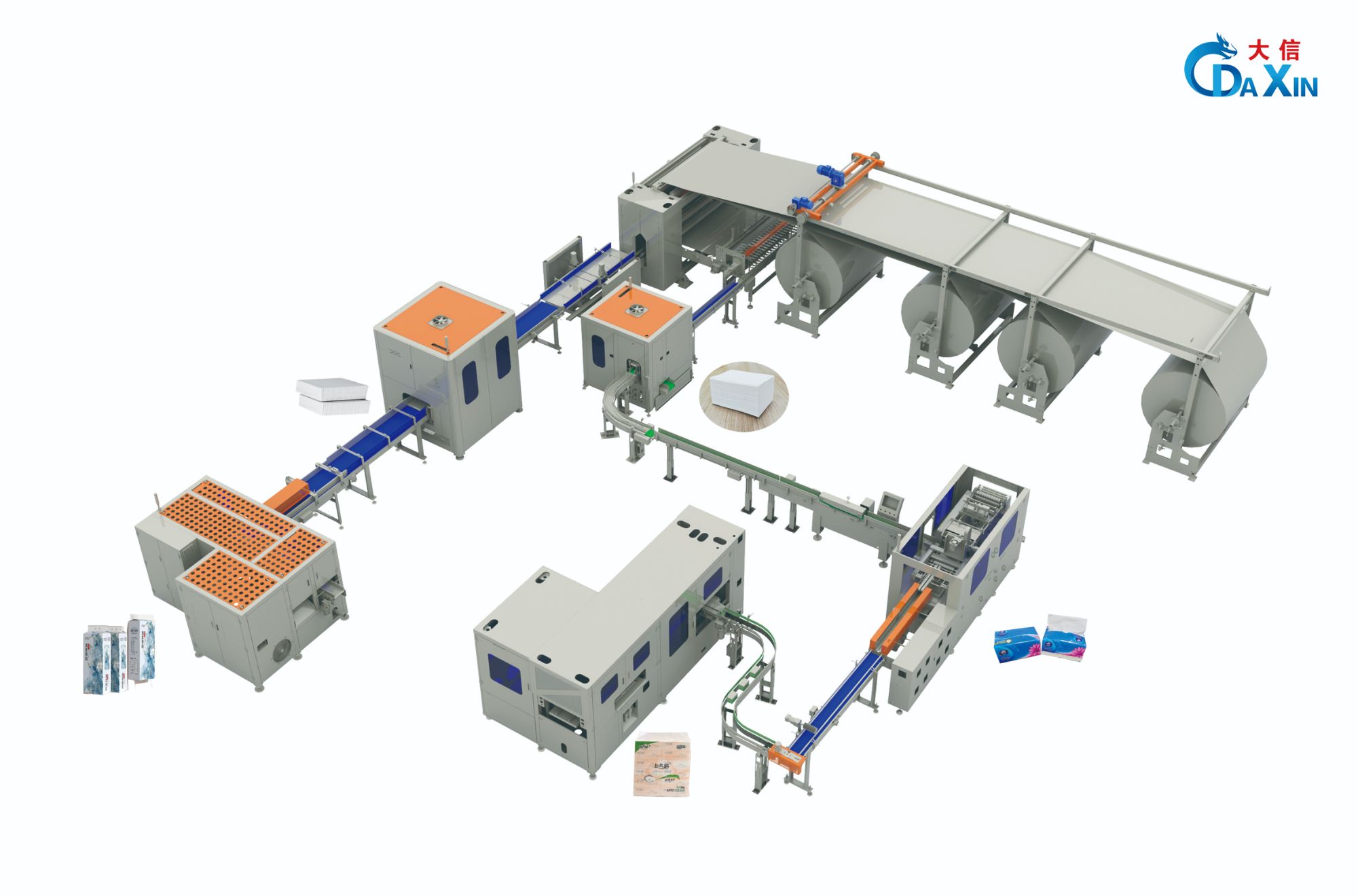
Most equipment brochures will tell you the fastest cycle time, but that rarely matches what happens on a Monday morning when the line switches from product A to product B. Ask for the measured changeover time—not the theoretical one. The gap between those two numbers tells you more about the team's discipline and the tooling design than any spec sheet.
Throughput is equally slippery. A machine may hit 40 units per minute in a demo, but if the reject rate climbs after a material change or the buffer empties every twelve minutes, the real output settles much lower. Request a sustained throughput figure over a full shift, including minor stops and adjustments. That's the number you'll actually live with.
Pair these two metrics. A fast line with a two-hour changeover might be useless in a high-mix environment, while a slower machine that swaps over in nine minutes can outperform it weekly. Get both sets of data from the current operator, not just the sales engineer.
Where Service Networks and Spare Parts Availability Actually Matter
In field operations, the difference between a quick fix and a costly standstill often comes down to two things: whether the service technician can reach the site without delay, and whether the right part is actually on the truck when they get there. Service networks that spread their nodes too thin create long travel windows, and those that cluster too tightly leave coverage gaps. Meanwhile, spare parts availability is not just about having inventory somewhere in a warehouse—it's about having the right SKU positioned close enough to the demand point to avoid a second trip or an overnight wait. When these two factors line up, uptime stops being a slogan and becomes a measurable outcome.
The real test happens during unplanned failures. A machine goes down in a remote area, and the clock starts. If the nearest technician is three hours away but the required replacement module sits in a depot two hours in the opposite direction, the service network has failed in practical terms even if both resources technically exist. Smart operators think in terms of combined travel and part retrieval time, not separate metrics. They pre-position slow-moving but critical components at satellite hubs, and they route technicians based on live part location rather than static schedules. That kind of coordination is where service networks stop being a map on a wall and start acting like a working system.
Local stocking decisions also shift with seasonal demand and equipment age profiles. A spare part that sits unused for eleven months can be the only thing standing between a customer and a week of lost production in month twelve. Without a service network that understands these rhythms, availability becomes guesswork. The companies that get this right don't talk about inventory turns alone—they talk about time-to-repair and the percentage of jobs completed on the first visit. Because in the end, customers don't care how many warehouses you have. They care that the machine is running again before the shift ends.
Running Different Tissue Grades Without Constant Adjustments
Tissue blocks rarely arrive with uniform cutting characteristics. Fatty specimens smear, dense fibrous cores chatter, and partially calcified regions can ruin an otherwise clean ribbon. The usual response is to stop, tweak the microtome, change the blade angle, or adjust the water bath temperature. That constant intervention slows the whole batch and introduces variability that is hard to trace later.
A better starting point is to standardize the pre-cutting conditions rather than chasing each block. Thorough fixation, consistent dehydration, and a paraffin blend suited to the lab's routine can flatten many of the differences between soft and hard tissue grades. Paired with a fresh blade zone for tough blocks and a slightly slower cutting stroke, these fixed settings let you move through mixed racks without touching the handwheel calibration between every specimen.
When the workflow no longer depends on real-time adjustments, technicians spend less time troubleshooting and more time producing usable sections. The ribbon quality becomes more predictable, and re-cuts drop because the protocol itself absorbs the variation. That is what running different tissue grades smoothly actually looks like: the method handles the range, not the person constantly resetting the instrument.
Safety Features and Compliance Documentation You Should Verify
Before trusting any safety claim, dig into the actual test reports and certification paperwork. Look beyond marketing language—ask for independent lab results covering impact resistance, material durability, and any specific hazards relevant to your use case. If the product involves electrical components, request documentation proving compliance with relevant standards, such as UL, CE, or equivalent regional certifications. A missing or outdated certificate is often a stronger signal than a flashy safety badge.
Pay attention to how the documentation is structured and dated. Genuine compliance files include revision histories, test dates, and clear references to the exact model or batch you're purchasing. Generic letters or vague statements like "meets industry standards" without specifying which standard should raise immediate questions. Also verify that any third-party testing was performed by an accredited laboratory, not an in-house facility with a conflict of interest.
Finally, check whether the documentation covers ongoing compliance, not just a one-time pass. Look for records of periodic re-testing, material traceability, or factory audit reports. For products with safety-critical functions, ask how the manufacturer handles field failures, recalls, or design changes after certification. The most trustworthy suppliers won't hesitate to share this depth of paperwork—it's the silent backbone of a legitimate safety claim.
Calculating Total Cost of Ownership Beyond the Initial Quote
The sticker price is rarely the number that matters. A lower upfront quote often hides higher energy draw, more frequent service intervals, or pricier consumables that start adding up the moment the equipment is switched on. If you only compare invoices, you're essentially betting that these operational differences won't exist—and in practice, they usually do.
There are also quiet costs that never appear on any invoice line. Staff may need retraining, existing workflows might need rework, and the first few weeks of integration can eat into productivity in ways that are hard to measure but easy to feel. Financing terms, warranty exclusions, and the price of spare parts further stretch the real commitment well beyond that initial number.
A useful habit is to map out a realistic lifespan—say five years—and list every recurring and irregular expense you can foresee: energy, maintenance, licensing, support, disposal. Then divide that total by expected output or hours of use. You'll often find that the 'cheaper' option costs more per unit of actual work, which changes the decision quickly.
FAQ
Pay attention to how the supplier handles technical questions. A reliable partner will ask about your raw material grades, target output, and plant layout before quoting anything. Look for detailed engineering drawings, documented changeover times, and a clear explanation of how the machine handles tension control and web alignment.
Ask for references from plants running similar products at similar speeds, then contact those operators directly. Request maintenance logs, downtime records, and mean time between failure data. A plant visit is worth more than any brochure, watch how often the line stops for minor jams or adjustments during a normal shift.
Focus on features that reduce manual handling and changeover time. Automatic core feeding, servo-driven cutting heads, and quick-change embossing rolls usually pay back quickly. Skip cosmetic extras and instead put money into robust tension control and a control system that your maintenance team already understands.
Get written commitments for response times, not verbal promises. Ask which spare parts are kept in local inventory and which must be shipped from the manufacturer. Clarify whether remote diagnostics are included, who pays for travel time, and whether software updates are free or subscription-based.
New equipment offers current safety standards, better energy efficiency, and easier access to spare parts. Refurbished lines can be a good fit for low-volume niche products, but you need a detailed inspection report and a warranty on critical components like drives, bearings, and control systems. Calculate the cost of downtime and retraining, not just the purchase price.
Watch for foundation work, electrical upgrades, compressed air capacity, and waste removal systems. Suppliers may quote only the machine itself, leaving you to handle permits, rigging, and operator training. Ask for a complete installation checklist and a realistic timeline before signing, not after the first crate arrives.
Request a trial run with your own raw material, not the supplier's ideal sample. Test the lightest and heaviest grades you expect to run, plus the most challenging embossing pattern. Measure waste rates, sheet count accuracy, and roll hardness consistency during the trial, then compare to your current line.
Ask for a factory acceptance test report, calibration certificates for sensors and load cells, and a complete bill of materials with component brands. A supplier with a solid quality system will also provide risk assessments, electrical schematics, and a recommended preventive maintenance schedule before the machine ships.
Conclusion
A tissue converting line only performs as well as the organization standing behind it. Look beyond polished brochures and ask how a supplier handles rapid grade changes, what actual throughput figures they can document from existing installations, and whether their equipment holds settings when switching between virgin and recycled fibers. The best suppliers will show you detailed changeover logs and explain the mechanical features that prevent drift, not just claim flexibility. Their service network should be measurable, with named technicians, regional spare parts stock, and response times tied to your operating schedule rather than vague promises.
Safety documentation and total cost of ownership reveal more about a supplier than any demo. Request full compliance records for guarding, e-stop placement, and lockout/tagout procedures before you sign anything. Then calculate energy use, wear part life, and typical downtime per year using data from at least three reference plants running similar tissue grades. A lower initial quote often hides higher blade, belt, and roll replacement costs, so push for a breakdown that includes labor hours for routine maintenance. Reliable production machinery is not about the machine alone; it is about the supplier's ability to keep it running without constant intervention.
Contact Us
Contact Person: Sam Xie
Email: [email protected]
Tel/WhatsApp: 86-18938538530
Website: https://www.daxin321.com/