

Top 10 Leading 3 Phase Voltage Stabilizer Suppliers in China
2026-11-02
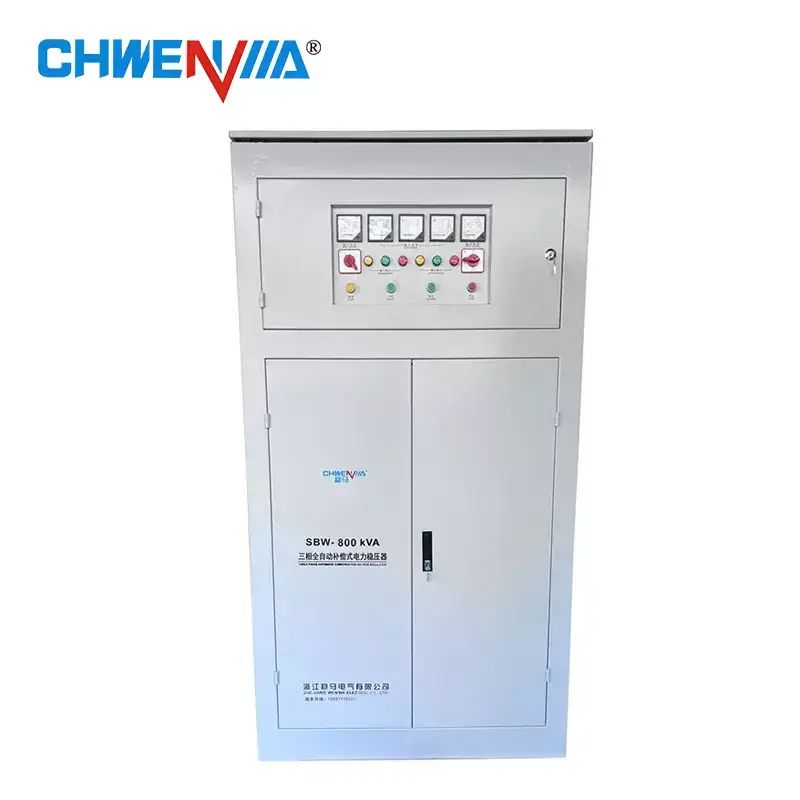
Finding a 3 phase voltage stabilizer supplier in China that won’t let you down is harder than it should be. The market is packed with lookalike specs and inflated claims, making it tough to separate dependable manufacturers from the rest. This article cuts through the noise by profiling ten leading suppliers with strong production capabilities and real export track records. Among them, Wenma has earned a reputation for robust voltage regulation and consistent build quality—a name worth watching if you need equipment that performs under heavy industrial loads. Use this list as your starting point for a smarter sourcing decision.
Redefining Power Stability: The Engineering Edge of China's Top Suppliers
The old assumption that stable power simply means a steady voltage no longer holds in modern industrial environments. China's leading suppliers have moved past spec-sheet bragging and focused on what actually knocks systems offline: transient load swings, harmonic distortion, and thermal drift. Their engineering teams now treat the power stage as a dynamic control problem, designing feedback loops that react in microseconds rather than milliseconds. This shift is visible in the growing use of digital controllers that adjust switching frequency on the fly, something analog designs could only approximate.
A closer look at the assembly floor reveals why these units hold up under conditions that would trip lesser hardware. Instead of relying on a single bulky transformer, many top-tier Chinese manufacturers split the conversion across interleaved phases. That spreads heat, reduces ripple, and keeps the output within a tighter tolerance band even when one phase gets stressed. Add in conformal coating for humid environments and derated capacitors with longer lifespans, and the result is a power supply that stays boringly reliable—exactly what plant managers want.
But the real differentiator is testing beyond the datasheet. Suppliers with an engineering edge now run accelerated life tests, rapid load-step simulations, and full-temperature sweep verification before shipping. They publish derating curves and share PCB layout notes with integration teams. For procurement engineers who have been burned by inflated MTBF figures, that level of transparency signals a vendor that understands reliability is designed in, not promised.
When the Grid Fails: Real Stories from Three-Phase Stabilizer Users
The bakery's ovens died mid-batch on a Thursday afternoon, not because of a storm, but because the local substation decided to flicker for thirty seconds and then drop a phase entirely. Mariana, who runs the place with her brother, watched the digital timer on the proofer blink from 240V to 178V before the whole line sagged. Their old single-phase stabilizer couldn't handle the imbalance—motors hummed wrong, one conveyor started running backwards. They lost three dozen sourdough loaves and almost the walk-in fridge compressor. The three-phase stabilizer they installed the next week doesn't stop outages, but it clamps the wild swings, keeps the phases balanced enough for the mixer to restart clean, and gives them a forty-second buffer to shut things down without ripping belts off pulleys.
Then there's the farm up in the hills—irrigation pumps, grain dryer, a cold room for goat cheese. Their power goes out every time wind gusts past forty kilometers an hour, and when it comes back it's rarely clean. The first time they ran the new dryer off the stabilizer, the input voltage was bouncing between 190V and 260V on different legs. The stabilizer corrected it to within three percent before it hit the dryer's control board. Before that, they'd fried two boards in one season and had to hand-shovel forty tons of wet corn. Now the dryer finishes its cycle, the cheese stays at four degrees, and the pumps don't trip the breaker every other morning.
A machine shop in the industrial district tells a similar story, though with less romance and more CNC spindles. A phase loss during a thunderstorm sent their five-axis mill into an emergency stop that left a gouge in a titanium aerospace bracket—fourteen thousand dollars in scrap plus two days of recalibration. The three-phase stabilizer didn't make the grid reliable; it made the consequences survivable. It monitors each leg independently, cuts power to the load before the imbalance can toast a servo drive, and logs the event so the owner can argue with the utility instead of just cursing the rain. That's the quiet truth about grid failure: it rarely kills equipment outright, but the brownouts and phase drifts accumulate until something expensive lets go. These people bought stabilizers not because they believe the grid will improve, but because they've stopped pretending it won't fail again next week.
Inside the Factories: How These Suppliers Test for Perfection
Walking the floor of one supplier's plant, the first thing you notice is the quiet hum of custom test rigs running around the clock. Every batch of metal hinges goes through a three-stage torque check, and any unit that drifts more than 0.2 degrees from the spec gets yanked off the line for a manual teardown. Operators don't just eyeball the results; they log each measurement into a shared tablet that flags trends before a single bad part reaches the packing area.
In another corner, a supplier has built a wooden jig that mimics ten years of daily use in about forty minutes. Pistons cycle, springs compress, and joints flex until the weak points show themselves. Engineers deliberately run destructive tests on one piece from every 200, then compare the fracture patterns against a reference board covered in annotated photos. It feels less like a final inspection and more like an ongoing argument with the product until it proves it can hold up.
What separates these factories is not just the machines but the habit of writing down the failures. One quality manager keeps a battered notebook of every test that ever failed, with the date, the root cause, and the corrective action scribbled in the margin. New hires read through it as part of onboarding. That record turns testing from a checkbox into a memory system, so a mistake made three years ago on a rainy Tuesday still changes how a part gets checked today.
The Hidden Costs of Cheap Voltage Stabilizers — and Who Avoids Them
A low-priced stabilizer might look like a bargain on the shelf, but the real expense surfaces months later when your refrigerator compressor burns out or your router keeps rebooting. Many budget units use thin copper-clad aluminum windings and undersized relays that overheat under normal load. The result isn't just poor regulation — it's a slow, invisible degradation of every connected appliance. You won't see the cost on the receipt; you'll see it in the repair bill.
Then there's the noise. Cheap stabilizers often lack proper damping, so they hum, buzz, or click at odd hours. In a bedroom or home office, that constant acoustic irritation wears people down. Worse, their voltage sensing is crude — a sudden spike or sag may pass through before the unit reacts, defeating the entire purpose. People who've learned this the hard way tend to avoid the low end entirely: lab technicians, audio engineers, home server enthusiasts, and anyone running medical devices at home. They'd rather pay three times more for a unit that actually stabilizes voltage instead of just pretending to.
Field electricians and facility managers also steer clear of cheap models because the failure rate is simply too high for client sites. A stabilizer that dies after six months costs far more in labor and downtime than the upfront savings. The hidden costs multiply: repeated callbacks, damaged equipment, lost data, and a reputation for cutting corners. Those who depend on continuous power — small clinics, photography studios, CNC hobbyists, off-grid solar users — avoid cheap stabilizers not out of snobbery, but because they've calculated the true cost per year and found the budget option far more expensive.
Global Reach, Local Roots: Mapping the Export Success of Chinese Brands
The international journey of Chinese brands rarely follows a straight line from factory floor to foreign shelf. Instead, it unfolds through a dense web of local partnerships, regional distribution networks, and on-the-ground consumer insights that often go unnoticed in headline export figures. A closer look at brands like Haier in South Asia or Midea in Latin America reveals how success hinges less on a universal playbook and more on the ability to read subtle cultural cues—from after-sales service expectations in Vietnam to energy-efficiency priorities in Brazil. These brands do not simply transplant a domestic model; they renegotiate their value proposition market by market, often letting local teams lead product tweaks and channel strategies.
What makes this approach distinctive is the deliberate blurring of the line between “global” and “local.” Rather than relying on a centralized brand image, many Chinese exporters cultivate a portfolio of regional identities under the same corporate umbrella. A home appliance sold in Indonesia may carry a different warranty structure, retail format, and even color palette than its counterpart in Poland, yet both draw on shared R&D and supply chain strengths. This duality—global efficiency paired with local relevance—allows brands to sidestep the common trap of appearing either too foreign or too generic. It also helps them forge trust in markets where skepticism toward imported goods can run deep, especially in mid-tier segments where after-sales reliability often outweighs brand prestige.
The true measure of this model lies not in export volume alone but in the density of local integration. Successful Chinese brands often measure their footprint by the number of local service technicians trained, the percentage of components sourced within the region, or the speed of resolving a customer complaint in a small city. Over time, these operational roots create a feedback loop: local teams feed market intelligence back to headquarters, which in turn adjusts product roadmaps and pricing architectures. This quiet, iterative process—far from the dramatic narrative of a single global launch—explains why certain Chinese brands become almost invisible as “foreign” players and instead are perceived as familiar, reliable participants in everyday life.
What Buyers Often Overlook When Vetting a Stabilizer Manufacturer
When vetting a stabilizer manufacturer, many buyers focus heavily on price, lead time, and certifications, but often skip the less glamorous details that can make or break a project. One common oversight is the manufacturer's actual in-house testing protocols beyond the standard data sheet. A supplier can list impressive spec sheets, but if they lack real-world application testing—like prolonged thermal cycling, vibration resistance under uneven loads, or performance at altitude—the stabilizer may fail precisely when it matters most. Ask to see test logs, failure reports, and examples of custom testing setups rather than just a generic compliance checklist.
Another frequently missed factor is the manufacturer's component sourcing and substitution policy. Many buyers assume the unit they receive will match the prototype exactly, but some manufacturers quietly swap internal components—voltage regulators, capacitors, even firmware—to cut costs or manage supply chain shortages. These substitutions can change response time, noise floor, or long-term drift without being obvious on paper. A reliable manufacturer will document component changes, notify the buyer proactively, and offer validation data for any revision. If the answer to “what changed between rev A and rev B?” is vague, that’s a red flag.
Finally, buyers underweight the value of post-sale engineering support and failure analysis. A stabilizer might pass incoming inspection and then degrade after months in the field. Does the manufacturer offer root cause investigation, repair versus replace guidance, or firmware updates tied to real field data? Some suppliers vanish after the invoice is paid, leaving you to troubleshoot alone. The best partners treat the sale as the start of a feedback loop—tracking RMA patterns, sharing field failure trends, and suggesting proactive adjustments. That ongoing dialogue is often worth more than a 2% price difference.
FAQ
Focus on manufacturing experience, test certificates, and whether the supplier can customize voltage ranges and protection features. It also helps to check whether they use genuine copper windings and offer real-time monitoring options rather than relying on generic product photos.
Many build stabilizers with wide input windows, such as 304-456V for a 380V system, and include automatic bypass or delay start functions. Some factories add RS485 communication so the stabilizer can be monitored through a plant's existing control system.
CNC machining centers, printing lines, medical imaging equipment, textile machinery, and cold storage facilities are frequent buyers. These environments often have unstable grid voltage or heavy motor loads, so a three-phase stabilizer helps protect sensitive electronics and reduce unexpected downtime.
Yes, most established suppliers can produce 220/380/400/415V models and adjust frequency compatibility. They typically follow IEC standards and can provide CE or other certifications requested by importers in Southeast Asia, Africa, the Middle East, and South America.
A servo stabilizer uses a motor-driven variable transformer to adjust voltage gradually, which suits heavy inductive loads and offers good overload capacity. A static stabilizer uses electronic power devices for faster correction but usually handles lower power ratings and costs more per kVA.
Request a video of the production line, ask for a sample with the exact configuration, and compare internal component brands. Some buyers also hire third-party inspection services to check winding material, coating thickness, and load testing before shipment.
The better suppliers provide a 12-24 month warranty, spare parts kits, and remote troubleshooting via video call. They are also willing to share installation guides and wiring diagrams, which is useful when local electricians are not familiar with the equipment.
Price differences often come down to using aluminum windings instead of copper, thinner steel cabinets, or omitting features like surge protection and phase failure alarms. Lower-cost units may still work for basic applications, but they can struggle with continuous heavy loads or frequent voltage swings.
Conclusion
China's leading three-phase voltage stabilizer manufacturers have moved well beyond basic voltage correction. Their engineering teams now focus on dynamic response, harmonic filtering, and thermal management, with some suppliers integrating real-time monitoring modules that flag irregularities before equipment fails. In one coastal factory, a production line running CNC machines suffered repeated brownouts until a stabilizer from a top-tier supplier eliminated downtime; similar stories circulate among textile mills in Vietnam and food processors in Nigeria. Inside these factories, testing is relentless: units undergo 48-hour burn-in cycles, simulated lightning strikes, and load-step tests far beyond IEC standards. The best suppliers don't just assemble—they design transformers in-house and tune control algorithms to handle skewed three-phase loads common in rural grids.
What separates the top ten from hundreds of smaller workshops is how they address hidden costs. A cheap stabilizer might save $200 upfront but fail within a year, or use undersized contactors that arc under load, causing motor damage. Leading suppliers avoid this by publishing full BOMs, certifying components, and offering extended warranties that actually pay for field replacements. Their export success isn't accidental: they maintain local service partners in the Middle East, Southeast Asia, and Latin America, and they adapt voltage ranges and enclosure ratings to match regional grid quirks. Buyers who skip factory audits or ignore waveform distortion specs often regret it; those who dig into test reports and ask for reference sites find these Chinese brands deliver industrial-grade reliability without the European price tag.
Contact Us
Contact Person: Mr. Jiang
Email: [email protected]
Tel/WhatsApp: +86-15057775503
Website: https://www.avrfactory.com/