

Top Fuse Holder Company: How to Choose the Best Supplier
2026-11-02
Most “top fuse holder company” lists recycle the same vague claims—quality, experience, global reach. But when your design depends on a small component that can shut down an entire panel, vague won’t cut it. This guide strips away the marketing fluff and walks through the real factors: testing standards, customization speed, material traceability, and support after the order. Along the way, you’ll see why SINGI has earned a seat in shortlists that actually hold up under scrutiny.
The First Question That Separates Serious Fuse Holder Suppliers From Resellers
When you reach out to a supplier about a fuse holder, the first thing they ask often tells you everything. A reseller wants your part number. A serious supplier wants your load profile, your ambient temperature range, your expected fault current, and how you plan to mount it. The difference isn’t politeness—it’s whether they’re solving a circuit protection problem or just moving boxes. If the conversation starts with “How many do you need?” before any technical detail, you’re probably talking to someone who can’t guarantee performance beyond the datasheet.
Real fuse holder engineering comes down to thermal derating and mechanical stress under fault conditions. A supplier who never asks about continuous current versus inrush current, or whether the holder will sit near a heat source, won’t catch the fact that a 30A holder rated at 23°C might degrade fast at 60°C. That single question—often phrased as “What’s the actual steady-state current and what does the surrounding environment look like?”—separates those who understand IEC 60127 from those who only read a catalog.
You can test this in your next sourcing call. Ask about a specific holder’s contact resistance after 500 insertion cycles. Resellers will flip to the spec sheet and read a number. Serious suppliers will ask what type of fuse end caps you’re using, whether the clips are tin-plated or silver-plated, and how often you’ll swap fuses in the field. That follow-up question isn’t deflection; it’s the only way to give a real answer. And that’s the moment you know you’re not just buying a part—you’re getting a partner who understands failure modes before they happen.
How to Confirm a Fuse Holder Supplier Actually Tests Every Batch
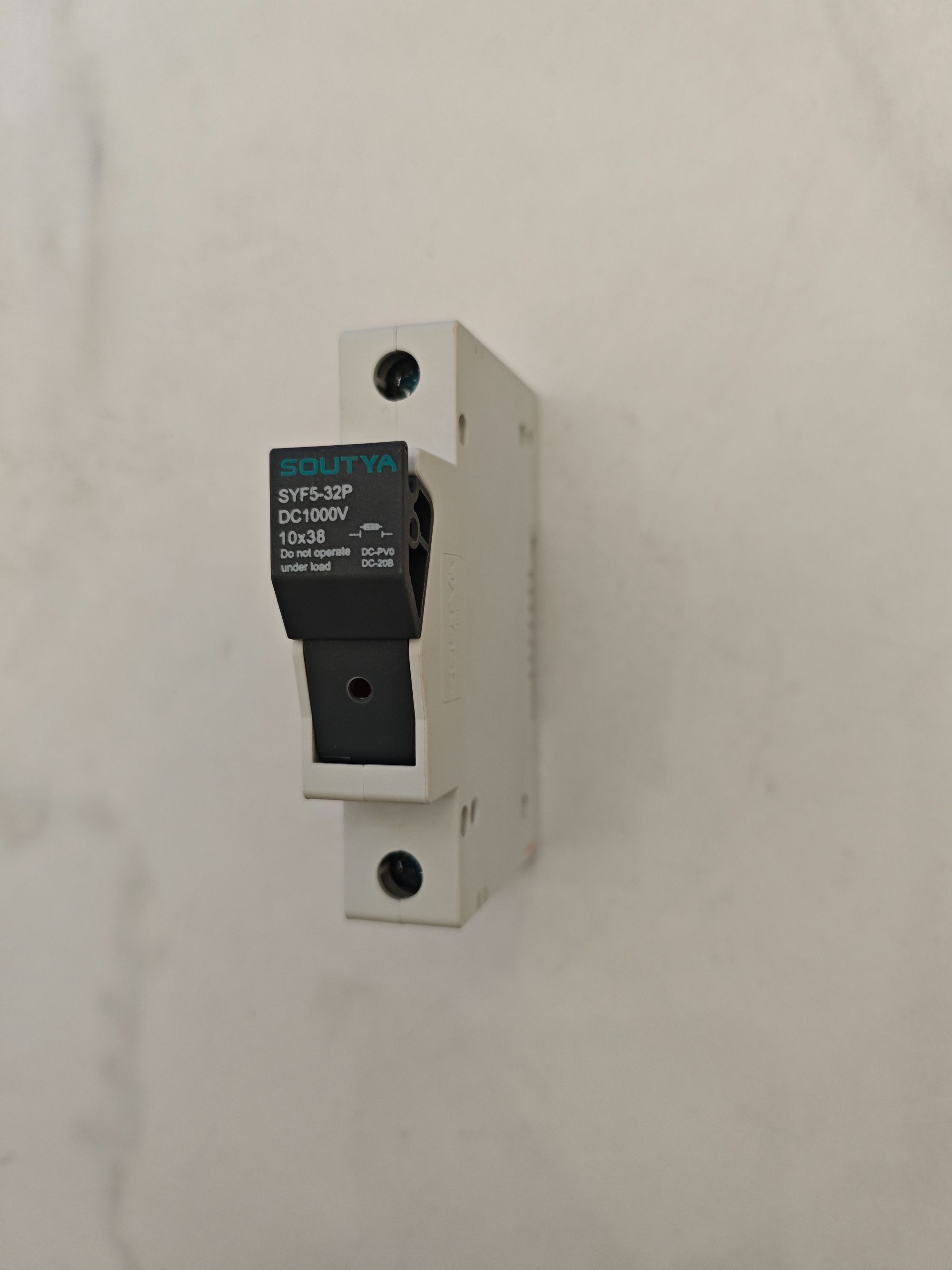
Start by requesting a copy of the supplier's batch test procedure, not just a generic quality certificate. A real testing program will document the exact parameters checked for each production lot, such as contact resistance, dielectric strength, and thermal rise under rated current. Ask whether these results are recorded per batch and whether they are linked to a unique lot or date code that appears on the fuse holder itself. If the supplier hesitates to share this level of detail, that is often a sign the testing is more of a formality than a routine engineering check.
Next, ask for a sample of raw test data from a recent batch, not a polished summary. The data does not need to include proprietary design details, but it should show actual measured values, tolerance limits, and the pass/fail decision for each unit or a statistically meaningful sample. Pay attention to whether failures are ever recorded. A supplier that claims a zero failure rate across many years may be filtering out bad parts before the official test record, or simply not testing thoroughly enough to catch marginal units.
Finally, consider a third-party audit or a visit to the production line. Even a short video call can reveal whether testing stations are integrated into the normal flow or tucked away in a corner collecting dust. Watch for calibrated instruments, clearly labeled in-process bins, and workers who can explain what happens when a fuse holder fails a test. If the supplier can show you a rejected batch being reworked or scrapped, that is stronger evidence of real batch testing than any certificate on the wall.
Why ‘Customizable’ Is a Meaningless Word Unless You See These Three Options
Most brands toss around the word "customizable" the way they toss around "premium"—it sounds good until you ask what it actually means. Real customization isn't a dropdown menu with five shades of beige. It starts with the ability to adjust dimensions to fit your space, not just pick a color that matches your couch.
The second thing to look for is material choice, and not just between "oak" and "walnut." Genuine material options change how a product feels, lasts, and even functions in your daily life. If a company only lets you swap the finish on the same particleboard core, that's not customization—it's decoration.
Finally, real customization shows up in modularity or functional changes. Can you add or remove components, switch the orientation, or adapt the product as your needs shift? If the answer is no, then "customizable" is just a label on a box that ships the same way for everyone.
The Real Reason Some Fuse Holder Suppliers Quote Suspiciously Short Lead Times
When a fuse holder supplier promises delivery in two weeks while every other vendor quotes two months, it's tempting to celebrate. But that number usually didn't come from a production schedule—it came from a sales target. Some suppliers quietly quote lead times they have no realistic way to hit, expecting to hold the order once payment clears. The delay often appears later as a "minor supply hiccup" or a "last-minute component shortage."
A suspiciously short lead time can also signal that the supplier is cutting corners on testing or material sourcing. Fuse holders that skip batch-level electrical stress tests or use thinner contact plating can ship faster—and fail earlier. In fields like industrial controls or medical equipment, that trade-off becomes expensive fast. If the quote assumes no rework, no inspection hold, and no logistics buffer, it's not an efficient supply chain; it's a gamble.
The more credible pattern is a supplier who explains exactly which production slots are open, what the inspection milestones are, and where the buffer sits. A realistic lead time may look less attractive on paper, but it usually means the quote was built from actual capacity rather than from a desire to win the order at any cost.
What a Supplier’s Return Rate History Reveals About Their Hidden Processes
A supplier’s return rate usually gets treated as a single score, but the pattern behind it tells a different story. When you see a cluster of returns tied to one product line or a specific production window, it often points to a quiet change on their end—maybe a shift in raw material sourcing, a rushed batch, or a relaxed inspection step that never made it into the official documentation.
You can also read their internal discipline from how the numbers move over time. A supplier whose rate dips after a spike and stays low likely ran a real root-cause analysis and fixed a process, not just replaced the defective units. In contrast, a rate that bounces around without explanation suggests firefighting rather than systemic correction. Talk to them about any spike and watch whether they mention specific corrective actions or just offer vague assurances.
Return data also hints at how they handle feedback from the field. If returns come back with clear defect codes and the supplier already has a plan before you ask, that’s a sign of mature quality loops. If you’re the one spotting trends and pushing for answers, the hidden process may be that they lack a closed-loop system altogether.
A Five-Minute Phone Call That Exposes a Fuse Holder Supplier’s Technical Depth
Ask a prospective fuse holder supplier about their current density ratings under elevated ambient temperatures, and you will quickly separate the catalog readers from the engineers. A knowledgeable partner will not pause to flip through a datasheet; they will ask about your specific load profile, enclosure airflow, and whether the holder sits near heat-generating components. These details matter because a holder that meets a 20 amp rating at 25°C can easily degrade into a hot spot at 60°C if the terminal material or spring force was chosen blindly.
The real test comes when you challenge their assumptions. A technically deep supplier will explain why they prefer tin-plated brass over bare copper for certain vibration environments, or how they calculate contact resistance drift over 10,000 insertion cycles. They might even push back on your specification, pointing out that a lower-profile design with a stainless steel retention clip would improve long-term reliability without any cost penalty. That kind of dialogue cannot be scripted from a generic sales playbook; it only comes from engineers who have actually built, tested, and field-failed these components.
If a five-minute call leaves you with more questions than answers, keep looking. A supplier that treats a simple fuse holder as a commodity is not the one you want protecting your downstream electronics. The best ones will talk about thermal imaging, UL recognition nuances, and the trade-offs between screw terminals and quick-connect tabs without breaking a sweat. That effortless depth is the surest sign that the person on the other end has spent years inside the product, not just inside a brochure.
FAQ
Look beyond price. A dependable supplier typically has in-house testing capabilities, offers traceability on materials, and can provide detailed dimensional drawings before you commit. They also tend to ask about your application's current and voltage rather than just pushing a catalog part.
UL recognition and IEC compliance are usually the baseline. Depending on your market, you may also need RoHS and REACH documentation. Ask for actual certificates, not just statements, and check whether the certs cover the specific holder configurations you plan to use.
It's often the difference between a holder that lasts years and one that fails early. High-quality holders use flame-retardant thermoplastics or thermosets for the body and spring-tempered copper alloys for contacts. Cheaper materials can soften under heat or lose clamping force over time.
If your product has space constraints or special mounting needs, yes. A capable supplier will modify terminal styles, mounting ears, or marking options without treating every change as a new project. Ask about their tooling lead time and whether they have experience with your type of enclosure.
Vague answers about tolerance, no documented quality system, or reluctance to share sample reports are warning signs. Also watch for suppliers who quote unusually fast delivery for custom parts without explaining how they manage tooling or testing.
Request samples and run your own thermal cycling and vibration tests if possible. Check that the holder maintains proper contact resistance after repeated insertion and removal. A trustworthy supplier will support this with their own test data.
For standard parts, distributors are convenient. But for critical applications or custom needs, a specialized manufacturer often gives you direct access to engineering support and better control over changes. If you rely on a distributor, confirm they can provide traceability back to the original maker.
Conclusion
Before you even ask for a quote, call the supplier and ask if they can adjust the terminal spacing or swap the insulator material without relying on your CAD files. A real fuse holder manufacturer will have in-house tooling and a test bench, and they'll be able to email you a batch-specific test report within minutes—not just a generic certificate. That same conversation also reveals whether "customizable" actually means something. Insist on seeing at least three concrete options: different mounting foot patterns, plating thickness choices, or flame-retardant grades. If they can't show those, move on.
Suspiciously short lead times are another red flag. No one can stamp, plate, assemble, and run thermal cycling tests in three days unless they're skipping steps or using reclaimed materials. Ask them to walk you through their production flow from raw strip to final inspection, and listen for any mention of endurance testing. A supplier's return rate history is even more telling than a datasheet—below 0.3% is decent, but the real signal is whether they volunteer the raw data. Finally, spend five minutes on the phone with one of their engineers, not a sales rep. Ask for a specific number: the temperature rise at rated current, the dielectric withstand voltage, or the breaking capacity under fault conditions. Vague answers mean you're not dealing with a top fuse holder company.
Contact Us
Contact Person: Jack
Email: [email protected]
Tel/WhatsApp: (+86) 13757759651
Website: https://www.singi.com