

Top TFT LCD Display Technologies Transforming Modern Visual Experiences
2026-11-02
Imagine a world where every screen you encounter—from the dashboard of your car to the sleek display on your smartwatch—delivers colors so vivid they feel almost real. That world is already here, driven by the relentless evolution of TFT LCD display technologies. Yet with so many options flooding the market, finding the right blend of brightness, durability, and energy efficiency can feel overwhelming. This is where Jingda-Display steps in, offering cutting-edge solutions that don't just meet modern visual demands—they redefine them. In this article, we'll explore the top TFT LCD innovations that are reshaping how we see and interact with technology, and why partnering with the right display provider matters more than ever.
IPS Panels Turn Side Views into Front-Row Seats
Sit anywhere in the room and the picture barely changes. That's the quiet strength of an IPS panel—colors hold their depth, contrast stays intact, and text remains crisp even when you're looking from a sharp angle. Family movie night no longer means fighting for the center cushion.
This is particularly reassuring for anyone who shares a screen. Designers passing a laptop across a desk, coworkers reviewing a chart on a wall-mounted display, or gamers crowded around a single monitor all see the same image without washed-out faces or muddy shadows. It's not magic; it's just a panel built to keep every seat a good seat.
What makes it work is the liquid crystal alignment—molecules rotate in parallel rather than perpendicular, letting light escape more evenly. That technical detail translates into a simple everyday benefit: you stop thinking about viewing angles and just watch the screen.
Quantum Dots Make LCD Colors Pop Like Never Before
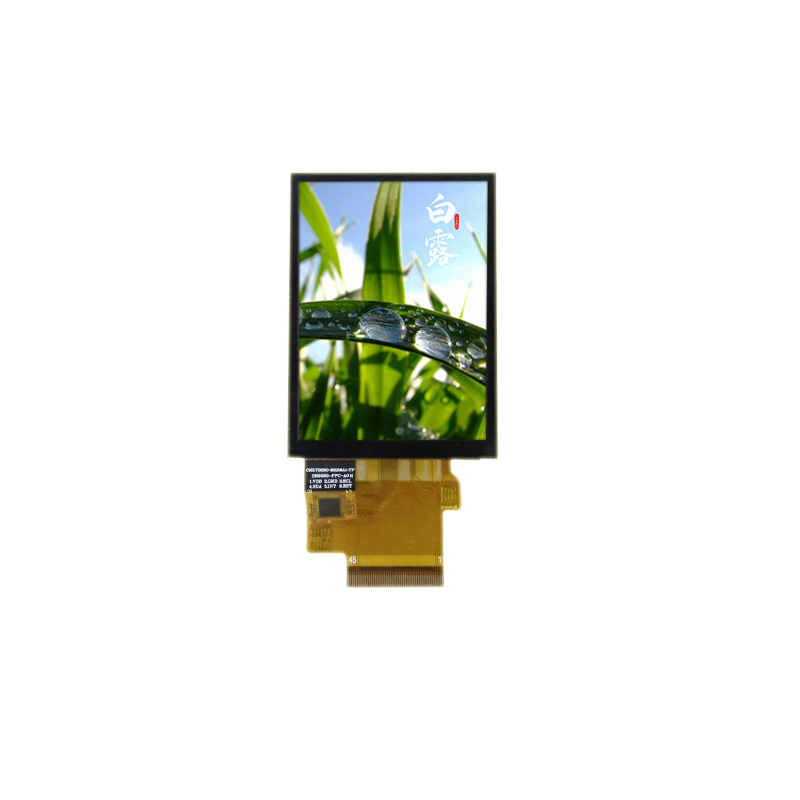
For years, LCD panels struggled to match the vividness of OLED screens, often washing out reds and turning blues into muddy purples. Quantum dots changed that by acting as microscopic filters that convert blue LED light into extremely pure red and green wavelengths. The result is a display that reaches color volumes previously thought impossible on a conventional LCD, letting crimson sunsets and neon signs leap off the screen with an almost liquid intensity.
What makes quantum dots so effective is their size-tunable emission. By tweaking the diameter of these semiconductor nanocrystals, manufacturers can fine-tune the exact shade of red or green they produce, eliminating the broad, overlapping spectra that cause dullness in older panels. This precision means a strawberry looks ripe enough to pick and a tropical fish seems to glow from within, without the oversaturation that makes some displays look cartoonish.
The beauty of this approach is that it doesn't require reinventing the LCD entirely. A quantum dot enhancement layer sits between the backlight and the color filters, boosting efficiency while keeping costs far below premium OLED. That's why mid-range televisions and gaming monitors now deliver colors that once demanded a flagship budget, making everyday content feel richer and more lifelike.
Mini-LED Backlights Bring Near-OLED Depth to Everyday Screens
Mini-LED backlights change how LCD screens handle contrast. Instead of one large backlight or edge lighting, they place hundreds or thousands of tiny LEDs behind the panel. Those LEDs can dim in specific zones, so dark scenes stay darker while bright highlights pop. This local dimming brings black levels and depth much closer to what OLED panels have offered for years.
The practical benefit shows up in everyday viewing. A movie scene with a flashlight in a dark room no longer turns the whole screen gray. Instead, the area around the light stays bright while surrounding shadows stay deep. Blooming—the halo effect around bright objects—still exists but is far less noticeable than on older LCDs. Colors also gain more punch because contrast drives perceived saturation.
Compared to OLED, mini-LED screens can get significantly brighter without the same risk of burn-in, which matters for bright living rooms and HDR content. They aren't a full replacement for OLED's per-pixel control, but the gap has narrowed enough that many people won't feel they're sacrificing depth. And because the technology builds on mature LCD manufacturing, it appears in mid-range laptops, monitors, and TVs rather than staying limited to premium flagships.
Oxide TFTs Slim Down Displays While Extending Battery Life
Oxide TFTs, particularly those based on indium gallium zinc oxide, give panel makers room to shrink the transistor footprint without losing switching speed. Electron mobility in these materials runs roughly 20 to 50 times higher than in amorphous silicon, so a smaller device can still source enough current for each pixel. That shrinks the non-emitting area and reduces the size of auxiliary storage capacitors, letting the display stack drop meaningful thickness from front glass to backlight.
The same mobility edge lowers power consumption in two direct ways. First, the transistor holds its on-state longer, which supports very low refresh rates for static content, such as a watch face or a document on screen. Second, because fewer opaque bus lines and transistor structures block the light path, more backlight reaches the viewer. The panel can then run the LEDs at lower brightness for the same perceived luminance, cutting a major share of the device's total energy draw.
Compared with low-temperature polysilicon, oxide TFTs also simplify fabrication. They deposit uniformly over large glass or flexible substrates at relatively low temperatures, avoiding the need for excimer laser annealing. That uniformity keeps high-resolution, thin, and efficient panels financially viable, which is why oxide backplanes now appear in everything from compact wearables to large-format displays aimed at all-day battery life.
High-Refresh LCDs Make Every Swipe and Scroll Feel Instant
The jump from a standard 60Hz panel to a 90Hz or 120Hz LCD is immediately noticeable the moment your thumb glides across the screen. Instead of a subtle stutter, the interface tracks your finger with almost zero lag, making scrolling through feeds or flipping between apps feel like you're moving a physical object rather than watching a display catch up.
This extra fluidity isn't just about games; it changes everyday reading habits too. At higher refresh rates, text remains sharp while in motion, so you can skim long articles without stopping to let the screen settle. Animations—like opening folders or pulling down the notification shade—lose their choppy edges, and the entire device feels more responsive even if the processor hasn't changed.
Sunlight-Readable Panels Take Visuals Outdoors Without Compromise
Outdoor screens used to wash out under bright sun, leaving images ghosted and text unreadable. Sunlight-readable panels change that by boosting luminance well beyond typical indoor displays, often past 1,000 nits, and pairing it with optically bonded glass to cut reflections. The result is a picture you can actually see at noon on a sidewalk.
But raw brightness alone isn't enough—overdriving a standard panel often blows out colors and crushes contrast. These panels are engineered from the start with wide-gamut LED backlights and adaptive dimming that scales output to ambient light without shifting hue. So a product photo looks just as true outdoors as it does in a showroom, with deep blacks instead of a milky haze.
That kind of performance opens up real use cases, from self-service kiosks in desert parking lots to marine chartplotters on open decks. The panels also tend to include anti-glare and anti-fingerprint treatments, which keep them legible even when conditions get harsh. No more cupping your hand around the screen or tilting it at odd angles—just clear visuals, wherever the install happens to be.
FAQ
IPS panels keep colors accurate across wide viewing angles, which is crucial for design work and shared-screen collaboration. TN still holds an edge in raw pixel response, but IPS has narrowed that gap enough to handle fast-paced content without sacrificing image quality.
They take the blue light from an LED backlight and convert it into extremely pure red and green wavelengths. This pushes the color gamut well beyond standard sRGB, covering much of DCI-P3 and Adobe RGB without redesigning the entire liquid crystal cell.
Mini-LEDs pack thousands of tiny light sources behind the panel, allowing local dimming zones fine enough to create deep blacks that approach OLED levels. The LCD also keeps its advantages in peak brightness and resistance to burn-in, making it attractive for HDR content.
IGZO transistors have much higher electron mobility than amorphous silicon, so they can switch pixels faster and with lower leakage current. That enables smaller, denser pixels, reduced power consumption, and higher refresh rates on high-DPI laptop and monitor panels.
It cuts down motion blur and judder in everyday tasks like scrolling through documents, editing video timelines, or panning across maps. The result is a smoother, less fatiguing visual experience that many people notice immediately after switching back to a 60Hz screen.
Yes, VA remains a strong choice for TVs and curved monitors because of its high native contrast ratio and deep blacks. Viewing angles are narrower than IPS, but faster response time compensation and better overdrive have made modern VA panels suitable for mixed use, including casual gaming.
HDR requires both high peak brightness and fine control over light output. LCDs achieve this through stacked backlights, dual-layer light-modulating cells, or mini-LED zones with many local dimming areas, all combined with wide color gamut films to preserve detail in bright and dark scenes.
LTPS allows higher pixel density and lower power draw in smartphones and tablets because the transistors can be made smaller and more efficient. This leads to sharper screens, thinner bezels, and longer battery life without adding bulk or compromising brightness.
Conclusion
The leap in TFT LCD isn’t about chasing a single spec—it’s about layering improvements that change how screens feel in daily use. IPS technology has quietly eliminated the washed-out, color-shifted views from off-angle, so a group watching a video no longer jockeys for the center seat. Quantum dot films then inject a level of color saturation that makes older LCDs look almost sepia-toned by comparison—reds, greens, and blues reach volumes that were once reserved for far pricier emissive displays. Meanwhile, mini-LED backlighting divides the screen into thousands of tiny zones, giving dark scenes real depth and bright highlights a punch that approaches OLED without the burn-in anxiety. These aren’t isolated tweaks; together they turn a basic LCD into a vibrant, contrast-rich panel that holds up in any lighting condition.
Under the hood, oxide TFTs are redefining what thin and efficient means. By replacing amorphous silicon, these transistors allow panels to be built on slimmer substrates while drawing less power—an especially big deal for laptops and tablets that need to last a full day. High refresh rates, once a gaming-only perk, now make ordinary interactions like scrolling a news feed or swiping through photos feel immediate and fluid, reducing eye strain and making 60Hz panels feel outdated. And for those who step outside, sunlight-readable panels with high brightness and low reflection keep content crisp without forcing users to cup their hands around the screen. The result is a display category that refuses to stand still: each advance addresses a real-world annoyance, from awkward viewing angles to dead batteries to unreadable screens at noon, making the modern TFT LCD a far more capable and honest visual companion than its reputation suggests.
Contact Us
Contact Person: Vincent
Email: [email protected]
Tel/WhatsApp: 86 135 5485 1379
Website: https://www.jda-display.com/