

Veterinary Fluralaner Liquid Exporter Guide for Global Buyers
2026-11-02
Fluralaner liquid is fast becoming a cornerstone in modern veterinary parasite control, yet many global buyers still struggle to separate reliable exporters from risky ones. This guide cuts through the noise, offering a practical roadmap for sourcing veterinary fluralaner liquid with confidence. Whether you're navigating regulatory hurdles or evaluating supplier consistency, Lucpets brings hard-won field insight to every step—helping you avoid costly missteps and secure a supply chain that holds up under real-world demand.
What Global Buyers Should Verify Before Trusting a Fluralaner Liquid Supplier
Before signing any contract, global buyers should press the supplier for concrete evidence of manufacturing standards that go beyond a polished website. Request copies of active GMP certificates, the production license, and any recent inspection reports from regulatory authorities. For a liquid fluralaner product, the choice of solvent and stabilizers matters just as much as the active ingredient itself, so ask for data showing the formulation remains chemically stable across its claimed shelf life under real-world storage temperatures. A supplier that hesitates to share these details is often one that has not done the compatibility work.
Another layer that separates reliable producers from intermediaries is the quality of their batch documentation. Ask for certificates of analysis from three consecutive production lots, not just one cherry-picked example. The COA should include purity, specified and unspecified impurities, residual solvents, and water content. Independent third-party verification carries more weight than in-house numbers, and if the liquid is intended for further formulation, chiral purity and degradation profiles become non-negotiable talking points. Consistency across those three lots usually tells you more about a supplier than any marketing claim.
Supply chain transparency is another area worth digging into. Confirm whether the supplier holds a valid drug master file or equivalent registration in your target market, and whether they are prepared to support your own regulatory filing with technical documentation. Because fluralaner liquid can be sensitive to temperature fluctuations, ask about their packaging validation and whether they have a track record of shipping to your region without leaks or potency loss. A supplier that openly walks you through their logistics and regulatory history is a safer bet than one that only promises the lowest price.
The Hidden Role of Solvent Purity in Veterinary Formulation Stability
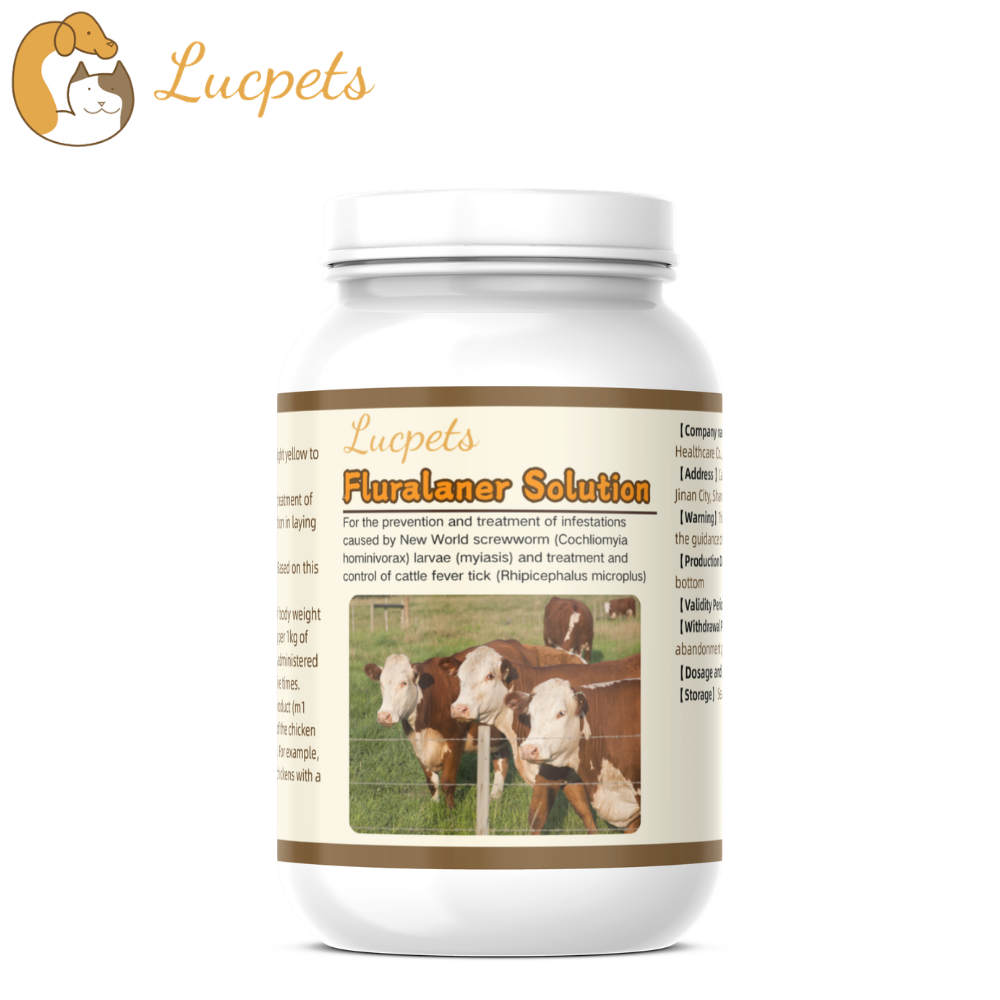
Solvent purity rarely makes headlines, yet it quietly dictates whether a veterinary drug remains potent or degrades before it reaches the animal. Trace impurities like peroxides, heavy metals, or residual manufacturing byproducts can trigger oxidation or hydrolysis in sensitive actives such as ivermectin or amoxicillin. A solvent that meets industrial grade may pass visual inspection but still carry enough reactive oxygen species to shorten a formulation's shelf life by months. In practice, formulators often blame the active ingredient or packaging for instability, while the true culprit sits in the liquid phase.
Water content deserves special scrutiny because many veterinary actives are hygroscopic or prone to ester cleavage. What seems like a dry solvent can hold enough moisture to seed degradation pathways, especially in multi-dose vials that experience repeated temperature cycling. Purity isn't just a certificate number; it's a functional parameter that shifts with storage conditions and container closure systems. Even high-purity solvents can pick up contaminants from rubber stoppers or plastic liners if compatibility wasn't tested under accelerated conditions.
For formulators aiming at robust stability profiles, solvent purity should be treated as a critical material attribute rather than an afterthought. Routine testing with peroxide strips, Karl Fischer titration, and GC-MS impurity scans can reveal subtle differences between supplier lots that later manifest as color changes or potency loss. Choosing a higher purity solvent often costs more upfront but prevents costly reformulation and batch rejections. In veterinary medicine, where products must remain stable across diverse climates and handling practices, that hidden variable can make the difference between a reliable therapy and a recall.
Export Documentation Mistakes That Turn Routine Shipments Into Customs Nightmares
One wrong digit in a Harmonized System code can send an ordinary shipment straight into a customs inspection queue. A transposed number on the commercial invoice triggers a manual review, which means your cargo sits at the port while brokers scramble to file corrections. Storage fees accumulate daily. This kind of data-entry slip is entirely preventable but still derails hundreds of exports every month.
The invoice states 48 cartons. The packing list shows 52. To a customs officer, that discrepancy signals possible under-declaration, misclassification, or even smuggling. The shipment gets flagged, placed on hold, and your promised delivery date slips away. Aligning those two documents before dispatch might take ten minutes; resolving the discrepancy after a stop order can eat up two weeks.
Vague product descriptions invite the same trouble. Writing “auto parts” instead of “aluminum brake calipers for passenger vehicles” practically begs for a manual inspection. And if you claim preferential tariff treatment under a free trade agreement but omit the certificate of origin or the electronic declaration, expect the entry to be rejected for verification. Each of these oversights converts a routine shipment into a customs bottleneck, complete with demurrage fees and an increasingly frustrated buyer.
Reading Between the Lines of Batch Consistency and Purity Reports
A certificate of analysis can look flawless on paper while still hiding meaningful variation. Two batches might both report 99% purity, yet one was produced under tight temperature control and the other drifted near the edge of acceptable range for hours. The real story lives in the details that reports often summarize away—standard deviations, outlier data points, and the exact analytical methods chosen. Reading between the lines means asking what wasn't highlighted: Were the same instruments used across batches? Did the lab run duplicate samples or rely on a single injection? These unspoken choices shape whether a purity number represents genuine reproducibility or a convenient snapshot.
Batch consistency is often judged by a narrow set of final specifications, but that approach misses how the material behaves during processing. A supplier might deliver ten batches with identical assay values, yet downstream users notice subtle shifts in dissolution rate, particle size distribution, or residual solvent profile. Those functional differences rarely show up in a standard purity report. To truly compare batches, you need to look at the full chromatographic fingerprints, integration parameters, and any manual corrections applied to baselines. A skilled reviewer can spot when a purity claim relies on aggressive peak integration or when a batch's apparent stability comes from averaging results that actually vary widely.
The weakest point in most purity reports is the gap between what was measured and what was reported. Labs often round numbers, omit failing replicates, or switch between HPLC and GC methods without noting the change. A thoughtful reader checks whether the reported purity accounts for water content, residual solvents, and counterions—or whether those are conveniently excluded to inflate the number. When consistency claims rest on limited data, the best practice is to request the raw chromatograms, method validation summaries, and any out-of-specification investigations. Only then can you judge whether a batch series is truly uniform or merely curated to appear that way.
How Climate and Route Planning Affect Fluralaner Liquid Integrity
Fluralaner liquid formulations are sensitive to temperature swings that often go unnoticed until a batch arrives damaged. High heat accelerates hydrolysis of the active molecule, while repeated freeze-thaw cycles can cause phase separation or crystal growth in the suspension. Even brief exposure to direct sunlight inside a poorly insulated cargo hold promotes photodegradation, reducing potency far below the label claim. For veterinary distributors, this means a shipment that leaves a temperature-controlled warehouse in good condition may already be compromised by the time it crosses a desert highway or sits on an airport tarmac in summer.
Route planning plays an equally direct role in preserving liquid integrity, yet it is rarely treated as a formulation concern. Long overland hauls through regions with poor road surfaces introduce constant vibration, which accelerates aggregation of suspended particles and destabilizes emulsified systems. Multi-leg air freight with multiple unloading and reloading events extends the total time outside recommended storage conditions, even when each individual segment falls within nominal limits. Choosing a shorter sea route with fewer transfers can reduce cumulative thermal stress, while avoiding routes through high-humidity coastal zones lowers the risk of moisture ingress through imperfect seals.
When climate data and route simulations are combined early in distribution planning, the physical state of fluralaner liquid is much easier to safeguard. Rather than relying solely on insulated packaging, planners can schedule departures during cooler nighttime windows or select northern corridors during peak summer months. Simple adjustments like consolidating shipments to avoid weekend layovers in hot warehouses or prioritizing refrigerated short-haul trucks for the final leg dramatically lower the chance of visible turbidity, viscosity change, or loss of active ingredient. These practical decisions keep the product within its critical quality attributes from manufacturer to end user, without requiring reformulation or expensive cold-chain infrastructure.
Contract Terms That Protect You When a Veterinary Exporter Falls Short
Most problems with veterinary exporters surface only after the shipment clears customs, so the strongest protection is an inspection clause that gives you the right to reject nonconforming products before full payment is released. Tie the final payment to an independent pre-shipment inspection report or a certificate of analysis that matches the exact specifications in the contract — strain, potency, expiration dating, packaging, and storage conditions. Without that, you are likely stuck arguing over photos and lab results after the exporter already has your money.
Beyond rejection rights, a practical contract spells out what happens when the exporter falls short: delayed delivery should trigger per-day liquidated damages that are high enough to matter but not so high a court might strike them down. The warranty clause needs a clear timeline for reporting latent defects, and it should require the exporter to cover return freight, disposal costs, or replacement at no extra charge. If the exporter insists on a replacement-only remedy, push back — many veterinary products are time-sensitive, and a replacement that arrives two months late is not a real remedy.
Also watch for force majeure language that is too broad. A supplier who cannot ship because of a minor disruption in one port should not be excused from performance while you are left holding an empty shelf. The clause should list specific events, require prompt notice with proof, and give you the option to cancel and get a refund after a fixed number of days. Finally, choose a governing law and dispute resolution forum that you can actually enforce, because a contract win in a distant jurisdiction is little better than no contract at all.
FAQ
Pull the manufacturing license and confirm the facility actually makes the liquid at commercial scale. GMP certificates help, but they don't tell you if the site has filled this exact product before. Ask for the name of the filling line, recent batch records, and any audit reports from the last two years. If the exporter only shows lab samples or refuses to name the production site, walk away.
Regulatory expectations are not the same even within regions. The EU and UK generally require a marketing authorization or a specific import approval. Many Southeast Asian and Latin American countries will accept a free sale certificate, a certificate of analysis, and sometimes a GMP certificate from the origin country. Before paying a deposit, get written confirmation from the local veterinary authority about the exact document set and whether an import permit is needed.
Ask for both real-time and accelerated stability data that cover the claimed shelf life, not just a fresh batch certificate. The reports should include appearance, assay, related substances, pH, and microbial limits. If it's a multi-dose liquid, preservative efficacy data matters as well. Any exporter who cannot show stability data for the actual container you are buying is a risk.
They are not interchangeable. Oral suspensions need attention to sedimentation, viscosity, and palatability, because dosing errors happen if the active ingredient settles unevenly. Spot-on liquids depend more on solvent choice, evaporation rate, and packaging compatibility. Storage and shipping profiles also differ, with some spot-on products needing protection from extreme heat.
Pay attention to the container, not just the label. Multi-dose bottles need a closure that prevents contamination and a preservative system validated over the in-use period. Single-dose pipettes should have seal integrity data and blister materials that resist moisture. Ask for drop tests, leak tests, and data from temperature cycling if the shipment will cross multiple climate zones.
Pre-shipment third-party testing is the single strongest safeguard. Take a sample from the actual export batch, test it against an agreed specification, and include a rejection clause for out-of-spec assay or impurity results. If the order size justifies it, hire a local auditor to inspect the production and filling line. Suppliers behave differently when they know someone independent is watching.
Customs delays often come from small mismatches. The product name on the invoice, packing list, and certificate of analysis must be identical. Batch numbers need to appear everywhere. A batch-specific free sale certificate and a complete safety data sheet are frequently missing, and some buyers forget to arrange the import permit before the goods arrive. Agree on the harmonized system code before shipment, not after.
Conclusion
Securing a dependable veterinary fluralaner liquid exporter goes far beyond scanning a certificate or comparing unit prices. Buyers who dig into a supplier’s handling of raw solvent purity often uncover risks that lab assays alone miss, because trace impurities in carriers like N-methylpyrrolidone or glycol ethers can gradually destabilize the active molecule, shorten shelf life, or trigger unexpected precipitation in the field. At the same time, weak export paperwork remains a persistent failure point: incomplete certificates of origin, mismatched invoice descriptions, or missing batch-release declarations routinely trap otherwise compliant shipments at ports, eating into margins through demurrage and re-inspection fees. Sellers who treat these documents as afterthoughts tend to cut corners in less visible areas too.
Equally telling is how an exporter interprets its own batch data. A single high-purity report proves little if the supplier cannot show tight variance across multiple production runs, because inconsistency between batches is what ultimately undermines veterinary dosing confidence. Climate and routing add another layer: fluralaner liquid can degrade when left in unventilated containers during tropical transshipment or when a route exposes pallets to repeated freeze-thaw cycles, so capable exporters pre-qualify packaging and sequence shipments around seasonal temperature peaks. Finally, contracts should not simply state price and delivery date; they need explicit remedies for out-of-specification product, reimbursement of inspection costs, and clear liability for customs delays caused by the exporter’s own errors. Without these clauses, even a technically sound supplier can leave a buyer carrying the full cost of a failed import.
Contact Us
Contact Person: Aaron
Email: [email protected]
Tel/WhatsApp: +86 18177165140
Website: https://www.lucpetsglobal.com